Logs
Source premium raw logs in bulk from vetted forestry suppliers and timber exporters. Designed for lumber mills, construction wholesalers, and industrial importers, our global network provides reliable access to commercial hardwoods and softwoods. Ensure compliance, precise grading, and secure logistics for your high-volume timber procurement.
Sourcing raw logs internationally requires strict attention to grading standards, volume calculation methods, and stringent phytosanitary regulations. Yield predictability is everything; a miscalculation in taper or an undetected internal defect directly impacts your mill's output or your buyer's margins. When buying logs in bulk, securing a reliable supply chain means managing the physical variations of natural timber while navigating complex cross-border forestry laws.
Specifying Logs: Volume and Grading
The primary challenge in log procurement is ensuring you get the usable volume you pay for. Unlike processed lumber, logs are imperfect cylinders. Suppliers use various scaling methods to calculate cubic volume—such as JAS (Japanese Agricultural Standard), GOST, Huber, or Hoppus. You must explicitly agree on the scaling rule before finalizing the contract, as different methods yield different calculated volumes for the exact same log.
Grading determines the log's end-use and price point. Specifications must define acceptable ranges for diameter at breast height (DBH), length, and taper.
| Grade Category | Typical End Use | Key Characteristics |
|---|---|---|
| Veneer / Peeler | Plywood, decorative veneers | Highly cylindrical, clear wood, minimal taper, no visible knots or sweep. |
| High-Grade Sawlog | Furniture lumber, flooring | Minimal sweep, few tight knots, straight grain, minimal end-checking. |
| Standard Sawlog | Construction timber, framing | Moderate sweep acceptable, sound knots permitted, minor defects allowed. |
| Pulpwood | Paper, MDF, biomass | Smaller diameters, higher defect tolerance, sold primarily by weight. |
Quality Control and Defect Management
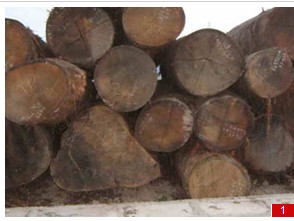
A log's value is determined by what is inside, making pre-shipment inspection critical. Defects like sweep (curvature of the log) or crook drastically reduce the yield of straight lumber. Internal defects, often visible only at the cross-section, can downgrade a veneer log to a standard sawlog.
Implementing robust Quality Control & Inspection at the loading yard ensures that the logs match the agreed-upon grade and scaling list before they are loaded into containers or the vessel hold.
Critical Pre-Shipment Inspection Points
- Verify actual diameter under bark (DUB) against the supplier's scaling list.
- Check for excessive sweep or crook that will reduce milling yield.
- Inspect end-grains for ring shake, star checking, or heart rot.
- Confirm the presence of required forestry tags, barcodes, or hammer marks.
- Ensure debarking and fumigation meet the destination country's phytosanitary requirements.
Struggling with inconsistent log grading or volume discrepancies? Let our timber sourcing specialists standardize your procurement and vet your suppliers.
Discuss your sourcing requirementsLegal Compliance and Phytosanitary Standards
Timber is one of the most heavily regulated commodities in global trade. Importers face severe penalties for receiving illegally harvested wood or introducing foreign pests.
Your supplier must provide comprehensive documentation proving legal harvest, which may include FSC or PEFC certifications, FLEGT licenses, or specific declarations required by the US Lacey Act or the EU Deforestation Regulation (EUDR). Furthermore, raw logs harbor insects and fungi. Most destination customs authorities require strict phytosanitary treatments—typically methyl bromide fumigation or specialized heat treatment—often combined with complete debarking. Navigating these requirements effectively often requires expert Compliance & Testing support to prevent shipments from being rejected or destroyed at the destination port.
Shipping Logistics, MOQs, and Pricing
Logs are heavy, bulky, and relatively low-margin per cubic meter compared to finished goods. Freight costs represent a massive percentage of your final landed cost.
Most wholesale log shipments are transported via 40ft High Cube containers. However, because fresh-cut (green) logs have a high moisture content, containers almost always hit their maximum legal weight limit long before they run out of physical space. For massive industrial volumes, chartering breakbulk vessels is more cost-effective, though this requires specialized port infrastructure and minimum orders in the thousands of cubic meters. Coordinating these heavy-freight movements requires precise Shipping & Freight management to minimize demurrage and handling fees.
Need to optimize freight costs for heavy timber shipments? Our logistics team can help you navigate weight limits, customs clearance, and container routing.
Get a logistics consultationFrequently Asked Questions
Successfully importing raw logs at scale requires balancing strict physical grading with rigorous legal and logistical oversight. By standardizing your scaling methods and enforcing pre-shipment inspections, you can protect your yield and secure a reliable timber supply chain.
Get Sourcing Help for Logs
Tell us your requirements and our experts will connect you with verified manufacturers.