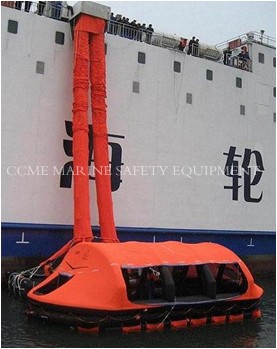
Life Rafts
Source high-quality life rafts in bulk directly from vetted manufacturers and suppliers. Designed for marine distributors, commercial fleet suppliers, and safety brands seeking reliable OEM production, our network delivers certified maritime survival equipment at wholesale scale.
Sourcing marine life rafts is an exercise in zero-tolerance procurement. Because these are critical life-saving appliances, buyers must navigate stringent international maritime regulations, complex material specifications, and rigorous testing protocols. The difference between a compliant, deployment-ready raft and a costly liability lies in the factory's quality management systems, their mastery of seam engineering, and precise pneumatic integration.
Core Materials and Construction Methods
The base fabric and seam construction dictate the lifespan, weight, and certification potential of a life raft. While legacy manufacturing relied heavily on hand-glued rubber, modern commercial production has largely shifted to advanced polymers.
| Material | Seam Construction | Weight & Packability | Primary Application |
|---|---|---|---|
| Polyurethane (PU) | High-Frequency (HF) Welded | Lightweight, compact | ISO 9650, Modern SOLAS |
| Neoprene / Butyl Rubber | Cold Glued / Taped | Heavy, bulky | Traditional SOLAS, Heavy Commercial |
| PVC | HF Welded or Glued | Moderate | Coastal / Leisure (Non-commercial) |
When evaluating a manufacturer, their seam sealing technology is the most critical variable. High-Frequency (HF) welding on PU fabrics creates a molecular bond that is generally stronger than the fabric itself and less susceptible to degradation from humidity and heat compared to glued rubber seams.
Factory Floor Quality Control
A life raft is a complex assembly of buoyancy tubes, canopy arches, hydrostatic release units (HRUs), and CO2/N2 inflation cylinders. Quality is won or lost during the assembly and testing phases.
Implementing stringent quality control & inspection protocols at the factory is non-negotiable. Inspectors should focus on:
Critical Inspection Points for Life Rafts
- Over-pressure testing: Buoyancy chambers must hold pressure at 2 to 3 times the working pressure for specified durations without pressure drop.
- Inflation system timing: Deployment tests to ensure the raft fully inflates within the required timeframe (typically under 60 seconds) at extreme temperatures.
- Relief valve calibration: Verification that pressure relief valves vent excess gas correctly during rapid inflation.
- Survival pack inventory: Ensuring A-Pack or B-Pack emergency rations, flares, and first aid kits meet the destination market's expiry and regulatory requirements.
- Canister/Valise sealing: Checking that fiberglass canisters are hermetically sealed and correctly banded for HRU deployment.
Need to verify a manufacturer's technical capabilities and quality management systems before placing a volume order?
Talk to our teamNavigating Certifications and Compliance
You cannot import or distribute commercial life rafts without the correct certifications. The regulatory landscape is strict, and falsified or expired certificates are a common risk when dealing with unvetted suppliers. Thorough factory audits are essential to verify that the manufacturer holds valid approvals from recognized classification societies (e.g., DNV, Lloyd's Register, ABS).
- SOLAS / MED (Wheelmark): Mandatory for commercial vessels on international voyages. Requires extensive prototype testing, including drop tests from up to 36 meters, wind tunnel testing, and extreme temperature deployments.
- ISO 9650-1 & 2: The standard for offshore and coastal sailing yachts. Type 1 is for extended offshore use, while Type 2 is for coastal navigation.
- USCG Approval: Required for vessels operating in US waters. Often achieved in tandem with SOLAS, but requires specific US Coast Guard documentation.
Engaging third-party compliance testing ensures that subsequent production runs maintain the exact specifications of the approved prototype.
Sourcing Mechanics: MOQ, Pricing, and Lead Times
Because life rafts are high-value, heavily regulated items, the sourcing dynamics differ significantly from standard consumer goods.
Pricing is driven primarily by passenger capacity, certification level (SOLAS is significantly more expensive than ISO), and the included emergency equipment pack (SOLAS A-Pack vs. B-Pack). Furthermore, shipping life rafts requires handling dangerous goods (Class 9 for the compressed gas cylinders and Class 1 for pyrotechnic flares), which impacts freight costs and logistics planning.
Managing complex marine safety procurement? Let us streamline your supplier vetting, QC, and international logistics.
Get a free consultationFrequently Asked Questions
Procuring life rafts requires balancing life-saving reliability with commercial viability. By partnering with technically capable manufacturers and enforcing strict quality oversight, buyers can secure compliant, durable survival equipment that meets the demands of the global maritime industry.
Get Sourcing Help for Life Rafts
Tell us your requirements and our experts will connect you with verified manufacturers.