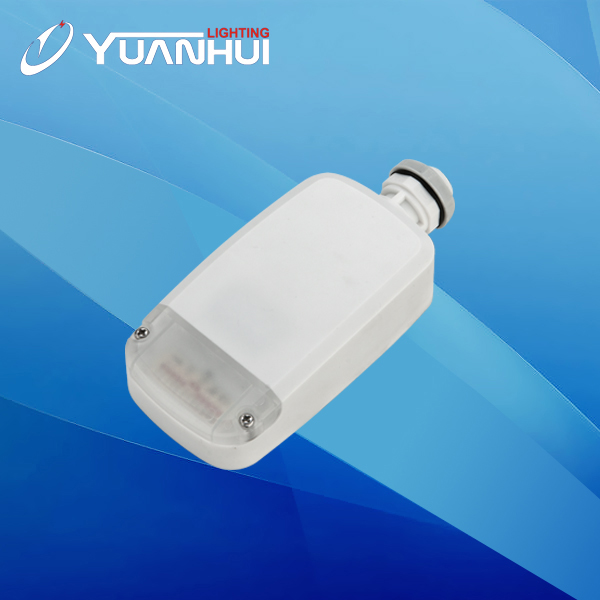
LED Sensor Lights
Source commercial-grade LED sensor lights from vetted manufacturers and suppliers in Asia. Designed for importers, wholesalers, and brands seeking reliable OEM production, our network delivers bulk pricing on high-efficiency motion, daylight, and occupancy sensing fixtures.
Sourcing professional LED sensor lights at scale requires balancing sensor reliability, luminous efficacy, and driver lifespan. The primary challenge isn't just finding a factory that can assemble fixtures; it's ensuring the integration between the sensor module, the LED driver, and the thermal management system holds up under commercial use without false triggers or premature failure.
Sensor Technology and Specification Requirements
The core of any automated lighting fixture is the sensor technology. Specifying the wrong type for the intended environment leads to poor user experience, constant false triggering, or failure to activate. You must define the exact sensor parameters with your manufacturer before production begins.
| Sensor Technology | Primary Application | Obstacle Penetration | Sensitivity Level |
|---|---|---|---|
| PIR (Passive Infrared) | Indoor offices, corridors, line-of-sight | None | Moderate (detects heat signatures) |
| Microwave / Radar | Warehouses, parking garages, outdoor | Can pass through glass and thin walls | High (detects motion frequency) |
| Photocell (Daylight) | Street lighting, perimeter security | None | Adjustable lux thresholds |
Beyond the sensor type, professional buyers must specify the standby power consumption. High-quality fixtures should consume under 0.5W while in standby mode. If a supplier cannot guarantee this, the driver and sensor integration is likely outdated.
Navigating sensor specifications and supplier capabilities can be complex. Let us help you align your technical requirements with the right manufacturing partner.
Talk to our teamManufacturing Tolerances and Quality Control
Where do LED sensor lights fail on the factory floor? The issues rarely stem from the LED chips themselves, but rather from poor thermal management and unstable driver integration. When the sensor shares a housing with high-output LEDs, heat dissipation becomes critical. Excessive heat degrades the sensor's micro-components, leading to erratic behavior.
To prevent this, rigorous Quality Control & Inspection protocols must be implemented during assembly.
Critical Factory-Level Inspections
- Sensor Calibration Test: Verifying hold times, detection radius, and lux thresholds match specifications.
- Thermal Aging (Burn-in): Minimum 24 to 48 hours at elevated temperatures to stress-test the driver and sensor integration.
- False-Triggering Validation: Specifically for microwave sensors, testing against vibration and non-human motion.
- Ingress Protection (IP) Testing: Ensuring seals on outdoor models meet IP65 or IP66 standards under water pressure.
If you are importing into highly regulated markets, coordinating Compliance & Testing (such as CE, RoHS, or UL certification) early in the sourcing process is non-negotiable. Do not rely on a supplier's outdated or generic certificates; verify that the specific bill of materials (BOM) for your order is covered.
Sourcing Realities: MOQs, Pricing, and OEM Services
When purchasing in bulk, your leverage dictates your ability to customize. Standard off-the-shelf designs require lower minimum order quantities (MOQs), but if you are developing a proprietary housing or integrating smart-home protocols (like Zigbee or DALI), you will need dedicated OEM/ODM Services.
Pricing is heavily influenced by the brand of the LED chip (e.g., Philips, Osram, Epistar) and the driver quality. A price that seems too good to be true usually indicates a non-isolated driver or a generic sensor module prone to failure.
Need realistic pricing and lead times for your next bulk order? We can negotiate with vetted factories on your behalf.
Get a free consultationFrequently Asked Questions
Successful procurement of LED sensor lights comes down to strict BOM control. The factory must understand that substituting a cheaper driver or sensor capacitor mid-production will result in a failed inspection. Establishing these boundaries early ensures your shipment performs exactly as the approved sample.
Get Sourcing Help for LED Sensor Lights
Tell us your requirements and our experts will connect you with verified manufacturers.