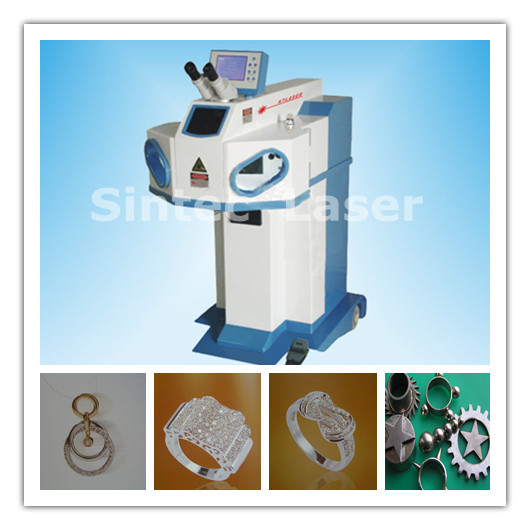
Laser Welders
Source commercial-grade laser welders from vetted manufacturers and suppliers. Designed for importers, wholesalers, and equipment distributors, our network provides reliable bulk purchasing and OEM/ODM manufacturing options. Access competitive pricing on high-performance welding systems built for industrial applications.
Industrial laser welding systems have transitioned from highly specialized aerospace tools to standard fabrication equipment, largely driven by the maturation of fiber laser technology. For importers and distributors, the sourcing challenge is no longer simply finding a factory capable of producing these machines. The market is saturated with integrators who purchase off-the-shelf components and assemble them in basic sheet metal housings. The real task is identifying manufacturers who engineer reliable cooling systems, robust optical controls, and safe, compliant enclosures that will survive rigorous industrial environments.
When procuring laser welders in volume, success depends on controlling the bill of materials (BOM) and verifying the factory's integration standards.
Specifying Core Components
A modern fiber laser welder is essentially a system of three major components: the laser source, the welding head (often a wobble head), and the water chiller. The quality of the final machine is dictated by how well these parts communicate and operate under continuous thermal load.
The Integrator Reality
Most welding machine suppliers are integrators, not primary component inventors. They purchase the laser source from major brands (like IPG, Raycus, or MAX Photonics) and the welding heads from specialized optics firms. Your supplier's primary value is in system assembly, software integration, and thermal management.
When defining your specifications with a supplier, you must dictate the component brands and power levels. Do not accept a generic "1500W fiber laser" on a proforma invoice without the brand being explicitly named.
| Power Output | Max Penetration (Stainless Steel) | Typical Application |
|---|---|---|
| 1000W | Up to 3mm | Thin sheet fabrication, kitchenware |
| 1500W | Up to 4mm | General metal fabrication, auto parts |
| 2000W | Up to 6mm | Structural components, heavy machinery |
| 3000W | Up to 8mm | Thick plate welding, specialized industrial |
Need help verifying a laser equipment manufacturer's engineering capabilities? Our sourcing specialists can help you audit factories and secure reliable supply chains.
Talk to our teamManufacturing Tolerances and Quality Control
Because most factories act as integrators, the assembly floor is where quality is won or lost. Poorly assembled machines suffer from optical contamination, chiller failures, or software faults during continuous operation.
If you are importing these machines under your own brand, utilizing comprehensive OEM/ODM Services requires strict oversight of the assembly process. Dust is the enemy of laser optics; factories must have clean-room environments for assembling or servicing the optical path.
Critical Quality Control Checkpoints
- Optical Path Cleanliness: Verify the factory uses positive-pressure clean rooms for any optical handling.
- Chiller Capacity Matching: Ensure the integrated water chiller has a cooling capacity that exceeds the laser source's heat output by at least 20 percent.
- EMI Shielding: Check that the control boards and wiring are properly shielded against electromagnetic interference.
- Wire Feeder Synchronization: Test the software integration between the laser trigger and the automatic wire feeder for seamless operation.
Relying on factory-provided inspection reports is risky. Implementing independent Quality Control & Inspection before the machines are crated ensures that the specific laser sources you paid for were actually installed and that the system performs under load.
Pricing, MOQs, and Lead Times
Laser welders are high-ticket industrial items, which heavily influences purchasing dynamics.
- Minimum Order Quantities (MOQs): Standard off-the-shelf configurations typically have MOQs as low as 1 to 5 units. However, if you require custom casing, localized software interfaces, or specific structural modifications, expect MOQs to rise to 10 to 20 units.
- Pricing Drivers: The laser source accounts for a massive portion of the machine's cost. Specifying an IPG Photonics source (premium) will significantly increase the unit price compared to a domestic Chinese source like Raycus or MAX Photonics, even at the exact same wattage.
- Lead Times: Standard configurations usually require 15 to 25 days for assembly and testing. Custom OEM orders or machines requiring specialized safety enclosures can extend lead times to 45 days or more.
Ready to negotiate better pricing and terms for your equipment imports? Let us manage the factory communication and secure your supply chain.
Get a free consultationBuyer FAQ
Successfully sourcing laser welders requires looking past the raw wattage and focusing on the integrity of the assembly process. By controlling the BOM, verifying the factory's technical capabilities, and enforcing rigorous pre-shipment testing, you can import industrial-grade equipment that performs reliably in the field.
Get Sourcing Help for Laser Welders
Tell us your requirements and our experts will connect you with verified manufacturers.