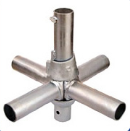
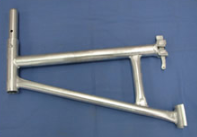
Ladder & Scaffolding Parts
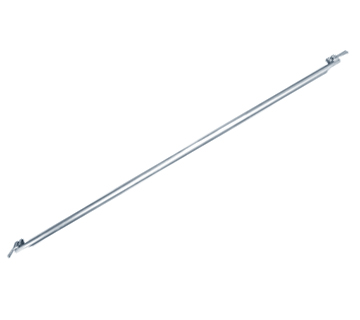
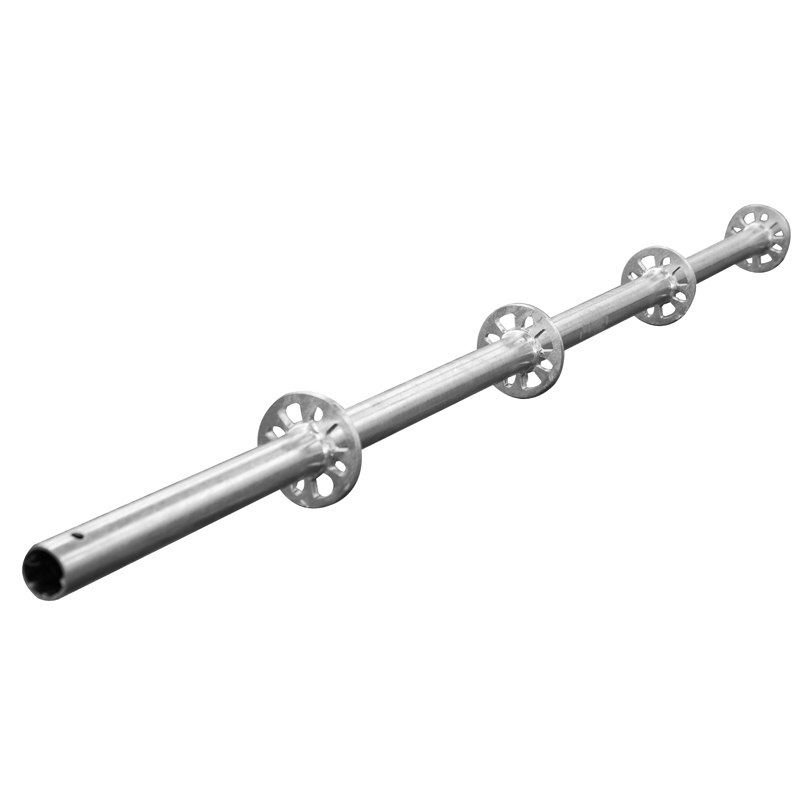
Source bulk ladder and scaffolding parts directly from vetted manufacturers and suppliers. Designed for importers, wholesalers, distributors, and brands requiring OEM production, our network delivers high-strength components built to strict international safety standards.
Sourcing structural components for ladders and scaffolding requires balancing aggressive unit costs with zero-tolerance safety requirements. Whether you are importing scaffolding couplers, base jacks, caster wheels, or aluminum ladder hinges, the integrity of the final assembly relies entirely on strict metallurgical standards and precise dimensional tolerances. A failure in a single base plate or locking pin compromises the entire structure, making rigorous supplier qualification non-negotiable.
Material Specifications and Fabrication Methods
The performance of scaffolding and ladder hardware is dictated by the raw material grade and the fabrication process. Buyers must specify exactly how parts are formed, as this impacts both load-bearing capacity and unit price.
For steel scaffolding components (like double couplers, swivel couplers, and putlogs), the primary decision is between drop-forged and pressed steel.
| Fabrication Method | Structural Integrity | Weight Profile | Primary Application |
|---|---|---|---|
| Drop-Forged Steel | Maximum tensile and yield strength | Heavier, dense construction | Heavy-duty tube and clamp scaffolding |
| Pressed Steel | Moderate strength, susceptible to deformation under extreme load | Lighter weight | Light-duty or temporary access structures |
| Cast Iron | High compressive strength, lower tensile strength | Heavy and rigid | Base plates and specific locking mechanisms |
For ladder parts, aluminum alloys are standard. Specifications should clearly state the temper and grade. 6061-T6 is standard for load-bearing hinges and structural brackets due to its high yield strength, while 6063-T5 is often used for non-structural extrusions. Ensure your supplier provides mill test certificates to verify the chemical composition and mechanical properties of the raw material before production begins.
Need to verify a factory's forging capabilities and material sourcing? We can help evaluate their production lines.
Get a free consultationSurface Treatment and Corrosion Resistance
Scaffolding parts operate in harsh, exposed environments. The surface treatment is a critical specification that directly influences the lifespan and safety of the component.
- Hot-Dip Galvanization (HDG): The industry standard for heavy scaffolding parts. Parts are submerged in molten zinc, creating a metallurgical bond. Buyers should specify a minimum zinc coating thickness (typically 80 to 100 microns for heavy construction environments).
- Electro-Galvanized (Zinc Plating): Suitable for indoor ladder parts or light-duty applications. The coating is much thinner (typically 10 to 20 microns) and will rust quickly if exposed to continuous moisture or marine environments.
- Powder Coating: Often used for ladder rungs, specialized brackets, or branded components. It offers excellent aesthetic control and moderate corrosion resistance, provided the pre-treatment (like sandblasting or phosphating) is executed correctly.
Watch Out for Thin Galvanization
Some manufacturers cut costs by reducing the immersion time during hot-dip galvanization, resulting in a coating thickness under 50 microns. This drastically reduces the part's lifespan. Always specify the required micron thickness in your purchase order.
Quality Control and International Standards
Importing scaffolding components requires strict adherence to regional safety standards. A factory claiming "high quality" is meaningless without compliance to specific testing protocols. When evaluating suppliers, you must confirm their ability to meet standards like EN 74 (for couplers), BS 1139, or OSHA requirements.
A robust Quality Control & Inspection protocol for scaffolding parts should include:
Critical Inspection Checkpoints
- Slip Test: Measuring the force required to cause a coupler to slip along a standard tube.
- Failure Load Test: Applying force until the component structurally fails to ensure it meets the required safety factor.
- Dimensional Verification: Checking thread pitches on T-bolts and internal diameters of couplers to ensure compatibility with standard 48.3mm tubes.
- Coating Thickness Measurement: Using magnetic or eddy-current gauges to verify galvanization depth.
- Visual Weld Inspection: Checking for porosity, undercut, or incomplete penetration on welded base jacks and brackets.
Relying solely on factory-provided certificates is a risk. Professional buyers utilize independent Compliance & Testing services to conduct random batch testing before shipment, ensuring the mass production matches the golden sample.
Buying Mechanics: MOQ, Pricing, and Lead Times
Pricing for metal components is highly volatile, indexing heavily against global steel and aluminum spot prices. Most factories quote based on the raw material weight plus a fabrication and treatment margin.
When negotiating, understand that custom parts (like proprietary locking pins or branded base plates) will require upfront tooling costs. If you are developing a proprietary system, utilizing professional OEM/ODM Services ensures your intellectual property is protected and the tooling remains your asset.
Looking to consolidate your scaffolding component supply chain and stabilize your pricing? Let's discuss your procurement strategy.
Talk to our teamFrequently Asked Questions
Sourcing ladder and scaffolding parts is fundamentally an exercise in risk management. By specifying exact material grades, insisting on proper fabrication methods, and validating every batch through rigorous testing, you protect both your margins and the end-users relying on your products.
Get Sourcing Help for Ladder & Scaffolding Parts
Tell us your requirements and our experts will connect you with verified manufacturers.