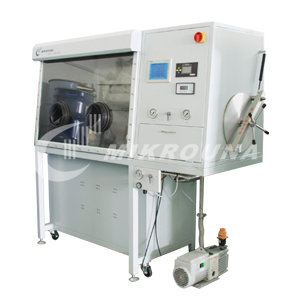
Laboratory Glove Boxes
Source premium Laboratory Glove Boxes from vetted suppliers and manufacturers across Asia. Designed for importers, distributors, and procurement managers, our network provides bulk wholesale pricing and custom OEM production capabilities to meet stringent laboratory and industrial requirements.
Sourcing laboratory glove boxes in volume requires navigating a fragmented supplier base where the line between basic isolation chambers and high-purity inert atmosphere systems is often blurred. Whether you are outfitting a network of research facilities or developing a private-label line of cleanroom equipment, the primary challenge lies in verifying technical specifications—such as precise leak rates, material integrity, and gas purification efficiency—long before committing to a production run.
Critical Specifications for Bulk Procurement
When negotiating with manufacturers, vague specifications inevitably lead to inconsistent product quality. A standard "stainless steel glove box" can vary wildly in weld quality, sensor accuracy, and atmospheric control capabilities. You must define the exact operational parameters your market requires.
| Material Type | Atmosphere Control | Typical Application | Durability & Cost |
|---|---|---|---|
| Acrylic / PMMA | Ambient or basic inert gas purge | General isolation, basic weighing, non-reactive materials | Lower cost, prone to scratching and chemical degradation |
| 304 Stainless Steel | Vacuum capable, basic purification | Standard chemical synthesis, battery research | Moderate cost, highly durable, standard for most labs |
| 316L Stainless Steel | High-vacuum, closed-loop purification (under 1 ppm O2/H2O) | Semiconductor, advanced materials, highly corrosive environments | Premium cost, exceptional chemical resistance |
Key Technical Parameters to Define
- Leak Rate: Specify acceptable volumetric leak rates (e.g., under 0.05% volume per hour).
- Purification Levels: For inert systems, state the required parts-per-million (ppm) for Oxygen and Moisture (typically under 1 ppm for lithium-ion battery research).
- Antechamber Dimensions: Ensure transition chambers match the physical workflow requirements of the end-users.
- Sensor Integration: Specify the origin and brand of O2 and H2O analyzers, as domestic Chinese sensors vary significantly in lifespan compared to imported European or Japanese alternatives.
Need help verifying supplier specifications? Our engineering team can help you match your exact parameters with capable manufacturers.
Discuss your technical requirementsManufacturing Quality and Factory Floor Realities
The reliability of a laboratory glove box is determined by fabrication precision. A supplier's ability to bend, weld, and seal metal dictates the lifespan of the equipment.
Manufacturing Defect Checkpoints
- Weld Porosity: TIG welds on stainless steel must be continuous and polished; micro-cracks lead to slow, undetectable leaks.
- Seal Integrity: O-rings on antechamber doors and glove ports must be seated in precision-machined grooves, not glued.
- Acrylic Bonding: For polymer boxes, solvent-welded seams must be free of bubbles and stress fractures.
- Blower & Pump Noise: High vibration indicates poor balancing or cheap components, which accelerates wear on the purification loop.
Catching these issues requires rigorous Quality Control & Inspection prior to shipment. Standard visual inspections are insufficient; inspectors must witness positive pressure decay tests and helium leak detection on the factory floor.
Customization and OEM Production
Many distributors choose to white-label or heavily customize standard models. Chinese manufacturers are highly receptive to OEM/ODM Services, allowing you to modify dimensions, add specialized feedthroughs (for liquids, gases, or electrical connections), or integrate HEPA filtration systems. However, custom tooling for specialized polycarbonate molds or unique stainless steel stamping will increase initial lead times.
Pricing, MOQs, and Lead Times
The market for laboratory glove boxes spans from entry-level acrylic units costing a few hundred dollars to closed-loop inert systems exceeding tens of thousands.
When sourcing these systems, ensure you are dealing directly with a capable manufacturer rather than a trading company marking up inferior goods. Conducting thorough Factory Audits is essential to verify that the supplier actually possesses the necessary CNC machining, welding, and testing equipment in-house.
Ready to streamline your procurement? Let us handle supplier vetting, price negotiation, and quality control.
Talk to our sourcing teamFrequently Asked Questions
Successfully importing laboratory glove boxes at scale requires balancing cost with uncompromising technical precision. By strictly defining your specifications and enforcing rigorous pre-shipment testing protocols, you can secure high-margin, reliable equipment that meets the exacting standards of the scientific and industrial communities.
Get Sourcing Help for Laboratory Glove Boxes
Tell us your requirements and our experts will connect you with verified manufacturers.