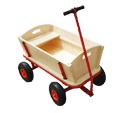
Kids' Tractors & Trailers
Source high-quality Kids' Tractors & Trailers from vetted suppliers and manufacturers across Asia. This catalog is built for importers, wholesale distributors, and toy brands looking for reliable bulk purchasing and OEM or private-label production. Discover durable ride-on toys designed for global market compliance.
Sourcing kids' ride-on tractors and trailers in volume requires balancing heavy-duty plastic molding with reliable electrical components. Because these are bulky, high-liability items, buyers must strictly manage battery safety, motor endurance, and shipping efficiency to protect their margins and brand reputation.
Core Specifications: Drive Systems and Power
The performance and cost of an electric ride-on tractor are dictated primarily by its battery and motor configuration. Importers need to specify exact voltage and amp-hour (Ah) ratings, as factories often substitute lower-capacity batteries to cut costs unless strictly controlled.
Most ride-on tractors fall into two main power categories:
| Specification | 12V Standard Systems | 24V Performance Systems |
|---|---|---|
| Motor Configuration | Dual 25W or 35W motors (rear-wheel drive) | Quad 45W to 200W motors (all-wheel drive) |
| Battery Capacity | 12V 4.5Ah to 7Ah | 24V 7Ah to 14Ah (or dual 12V wired in series) |
| Terrain Capability | Flat surfaces, short grass, pavement | Uneven terrain, inclines, thick grass, gravel |
| Trailer Towing | Light loads only; prone to motor strain | High torque; easily pulls loaded trailers |
When specifying batteries, ensure the supplier uses sealed lead-acid (SLA) or lithium-ion batteries from reputable domestic tier-one suppliers. Unbranded batteries are the leading cause of premature failure and warranty claims.
Navigating electrical specifications and battery compliance across different markets can delay your launch. Let us help you align your product specs with reliable manufacturers.
Talk to our teamManufacturing Tolerances and Material Selection
The body of a ride-on tractor is typically manufactured using injection-molded Polypropylene (PP), which offers the necessary flexibility to prevent shattering upon impact. However, the quality of the raw PP pellets matters; recycled or regrind plastic introduces weak points, particularly at high-stress areas like the trailer hitch and steering column.
Wheels are another critical specification. Standard models use hollow Polyethylene (PE) plastic wheels, which are noisy and offer poor traction. Premium models utilize EVA foam or rubber tires, which significantly improve the ride quality and grip, especially for 24V models putting down higher torque.
To ensure consistent production quality, rigorous Quality Control & Inspection is essential. Inspectors should verify the following on the assembly line:
Critical QC Checks for Tractors & Trailers
- Trailer hitch durability: Load-testing the connection pin under lateral stress.
- Wiring harness routing: Ensuring wires are protected from steering column pinch points.
- Motor synchronization: Verifying all-wheel-drive motors engage simultaneously to prevent gearbox stripping.
- Plastic finish: Checking for flash, sharp edges, or stress marks on large molded panels.
- Axle alignment: Ensuring the rear axle is perfectly straight to prevent uneven tire wear and motor drag.
Global Compliance and Safety Testing
Children's ride-on toys face some of the strictest regulatory environments in the world. Because these products combine ride-on mechanics with electrical systems, they must pass multiple layers of certification.
For the US market, this means ASTM F963 (physical and mechanical tests), CPSIA (lead and phthalates limits), and FCC regulations for any remote-control frequencies. For the EU, products must comply with EN71 (parts 1-3) and EN62115 (safety of electric toys), alongside RoHS and EMC directives.
Do not take a supplier's existing test reports at face value. Reports are often outdated or apply to a slightly different model. Comprehensive Compliance & Testing using recognized third-party labs (like SGS, TUV, or Intertek) on your specific production run is non-negotiable. Furthermore, conducting thorough Factory Audits before placing an order ensures the manufacturer holds valid ISO 9001 certifications and adheres to ethical labor standards (such as ICTI).
MOQs, Pricing Drivers, and Freight Optimization
Because ride-on tractors and their accompanying trailers are exceptionally bulky, cubic meters (CBM) per unit is the most critical metric for your landed cost. A standard 12V tractor with a trailer can consume between 0.20 and 0.40 CBM per carton. This means a 40-foot High Cube (40HQ) container might only hold 150 to 300 units, depending on the model's size and packaging efficiency.
To maximize container space, work closely with factories on knock-down (KD) packaging designs, where the trailer, wheels, and steering wheel are detached and nested efficiently within the carton. If you are utilizing OEM/ODM Services to customize colors, decals, or dashboard features, expect MOQs to sit at the higher end of the spectrum to justify the custom print runs and plastic color mixing.
Struggling to optimize container loads for bulky ride-on toys? We can negotiate MOQs and manage your packaging consolidation to keep landed freight costs down.
Get a free consultationFrequently Asked Questions
Success in importing kids' tractors and trailers relies heavily on disciplined supplier selection and rigorous pre-shipment oversight. By locking down precise electrical specifications and optimizing your packaging for freight, you can deliver a high-margin, compliant product to your market.
Get Sourcing Help for Kids' Tractors & Trailers
Tell us your requirements and our experts will connect you with verified manufacturers.