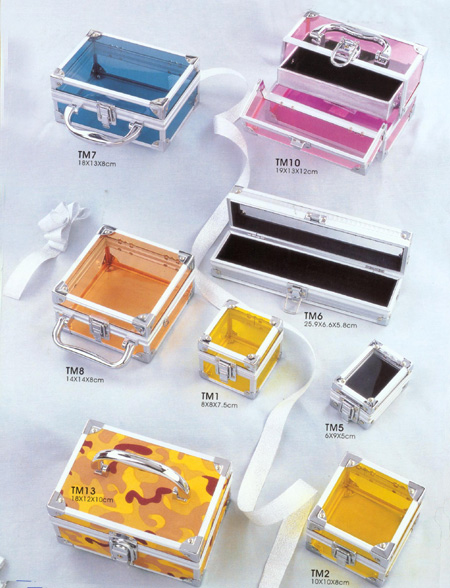
Jewelry Organizers
Source premium jewelry organizers from vetted suppliers and manufacturers. This category serves importers, wholesalers, and retail brands seeking high-volume OEM and private-label production. Partner with experienced factories offering reliable capacity for custom materials, layouts, and finishes.
Sourcing jewelry organizers at scale requires a careful balance between aesthetic appeal and structural durability. The core challenge in this category lies in specifying the right substrate, exterior finish, and interior lining while ensuring factory assembly methods prevent common defects like glue seepage, strong chemical odors, or misaligned hardware.
Key Specifications & Material Selection
The perceived value of a jewelry organizer is entirely dependent on the materials specified in your tech pack. Volume buyers must dictate exact material grades rather than relying on a factory's default off-the-shelf options.
- Substrates: Medium-Density Fiberboard (MDF) is the industry standard for wrapped boxes, but thickness matters. Specify 3mm to 5mm MDF for standard boxes, and up to 9mm for large, multi-tier cabinets to prevent warping. Acrylic organizers require virgin polystyrene (PS) or polymethyl methacrylate (PMMA) to maintain optical clarity and prevent yellowing over time.
- Exterior Finishes: For faux leather, specify the PU (polyurethane) thickness (typically 0.6mm to 0.8mm) and the backing material. Avoid PVC unless targeting the extreme budget market, as it cracks easily and carries a strong odor.
- Interior Linings: Flocked velvet is standard, but premium OEM orders often utilize long-staple velvet or specialized anti-tarnish cloth (treated to absorb sulfur and prevent silver oxidation).
- Hardware: Hinges, clasps, and drawer pulls should be zinc alloy with electroplated finishes (brass, gold, or nickel). Specify salt-spray testing requirements to ensure the hardware will not rust in humid climates.
| Substrate Material | Unit Cost Impact | Weight | Typical Application |
|---|---|---|---|
| Standard MDF (3-5mm) | Low | Medium | PU/Velvet wrapped tabletop boxes |
| Solid Wood (Walnut/Oak) | High | Heavy | Premium heirloom jewelry chests |
| Virgin Acrylic (PMMA) | Medium-High | Medium | Transparent cosmetic/jewelry drawers |
| Cardboard / Paperboard | Very Low | Light | Promotional or travel organizers |
Need help finding a factory capable of complex multi-tier organizer designs and premium material sourcing?
Talk to our teamManufacturing Processes & Quality Control
Jewelry box manufacturing is highly labor-intensive. While the cutting of MDF and acrylic is automated via CNC routing, the wrapping, gluing, and lining processes are almost entirely manual. This manual labor introduces significant variance in quality.
The most critical factor is the adhesive. Factories cutting corners will use cheap, high-VOC (Volatile Organic Compound) glues. This results in the infamous "chemical smell" that leads to high consumer return rates, and can also cause the PU leather to bubble or peel when exposed to heat during shipping.
Implementing strict quality control protocols is essential before the goods leave the factory floor.
Critical QC Checks for Jewelry Organizers
- Glue Seepage: Inspect all interior corners and ring rolls for visible glue residue.
- Odor Test: Perform a closed-box test for 24 hours to check for excessive VOC emissions.
- Hardware Alignment: Ensure hinges are perfectly flush and clasps engage smoothly without forcing.
- Lid Registration: Check that the lid sits perfectly square on the base with no overbite.
- Drawer Glide: Verify that multi-tier drawers slide without catching on the internal velvet.
Customization & OEM Capabilities
For brands developing custom product lines, OEM/ODM services allow for complete control over the interior layout. Ring roll density, necklace hook placement, and earring card slots must be precisely engineered to fit the target consumer's collection.
When designing organizers with built-in mirrors or glass lids, you must also specify drop-test compliant packaging. EPS (Expanded Polystyrene) or EPE (Expanded Polyethylene) foam inserts are mandatory to protect fragile components during international transit.
Pricing, MOQs, and Lead Times
Production costs are driven primarily by the number of tiers (which increases manual labor), the inclusion of mirrors, and the grade of the PU leather.
Want to benchmark your current jewelry organizer pricing and lead times against vetted manufacturers?
Get a free consultationFrequently Asked Questions
Managing the Supply Chain
Successfully importing jewelry organizers requires more than just finding a supplier with an attractive catalog. It requires verifying their manual assembly capabilities, ensuring their raw material supply chain meets chemical compliance standards, and enforcing strict packaging protocols. Conducting thorough factory audits prior to placing your first volume order is the most effective way to mitigate risk and ensure consistent quality across production runs.
Get Sourcing Help for Jewelry Organizers
Tell us your requirements and our experts will connect you with verified manufacturers.