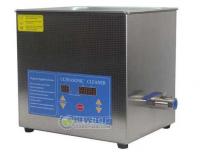
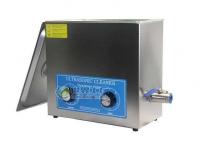
Industrial Ultrasonic Cleaners
Source industrial ultrasonic cleaners from vetted manufacturers and suppliers in China and across Asia. Designed for importers, distributors, and equipment brands seeking reliable OEM production, our network delivers commercial-grade cleaning systems built for volume procurement and heavy-duty applications.
Sourcing industrial ultrasonic cleaners requires balancing aggressive cavitation power with long-term tank durability. The primary challenge in bulk procurement is not finding a willing supplier, but verifying that a factory uses industrial-grade transducers, high-temperature bonding techniques, and adequate steel thickness to prevent premature tank erosion under continuous commercial use.
Core Specifications for Industrial Applications
When negotiating with manufacturers, consumer-grade specifications often creep into industrial quotes if you are not explicit. A true industrial unit must be engineered for continuous 8-to-12-hour operational shifts.
Transducer Frequency and Cavitation
The operating frequency dictates the size of the cavitation bubbles and the aggressiveness of the cleaning action. Specifying the wrong frequency will result in either damaged parts or ineffective cleaning.
| Frequency | Typical Application | Cavitation Profile |
|---|---|---|
| 28 kHz | Engine blocks, heavy hardware, molding tools | Aggressive, large bubbles; high impact |
| 40 kHz | PCBs, optics, medical instruments, jewelry | Gentle, microscopic bubbles; high penetration |
| 80-120 kHz | Semiconductors, ultra-precision optics | Extremely fine; removes sub-micron particles |
Tank Material and Thickness
Standard ultrasonic cleaners use SUS304 stainless steel. However, for industrial applications involving harsh alkaline or acidic cleaning solutions, you must specify SUS316L to prevent pitting and corrosion. Furthermore, tank thickness is non-negotiable: industrial tanks should be a minimum of 2.0mm thick. Thinner tanks (1.0mm to 1.5mm) will suffer from cavitation erosion—literally being eaten away by the ultrasonic action over time.
Need help verifying factory capabilities and technical specifications? Let our sourcing engineers evaluate your supplier shortlists.
Talk to our teamManufacturing Tolerances and Quality Control
The longevity of an ultrasonic cleaner is won or lost in the factory's welding and bonding processes.
Critical Factory-Floor QC Checks
- Transducer Bonding: Transducers must be secured using both high-strength epoxy resin and stud welding. Glued-only transducers will detach when the tank is heated.
- Argon Arc Welding: Tank seams must be TIG welded with argon gas protection to ensure a flawless, leak-proof seal without oxidation.
- Generator Tuning: The ultrasonic generator must be tuned to match the exact resonant frequency of the transducer array to prevent overheating and maximize output.
- Foil Testing: Uniformity of cavitation should be verified using the aluminum foil test across the entire tank footprint before shipment.
Catching bonding failures or substandard steel gauges after the goods arrive is a costly mistake. Implementing rigorous Quality Control & Inspection during production and before shipment is essential for protecting your investment.
Sourcing Mechanics: Customization, MOQs, and Lead Times
Many buyers look to customize industrial cleaners, whether modifying tank dimensions, adding filtration and oil-skimmer systems, or developing fully automated multi-stage washing lines. Engaging factories for OEM/ODM Services is standard practice, but it requires clear engineering drawings and component-level specification sheets.
Pricing is highly variable and scales directly with the number of transducers, the complexity of the generator (e.g., sweep-frequency vs. fixed-frequency), and the inclusion of auxiliary systems like circulation pumps and drying tanks. Because the barrier to entry for assembling basic ultrasonic cleaners is low, conducting thorough Factory Audits is crucial to distinguish true equipment manufacturers from simple assembly workshops.
Planning a custom equipment line? We manage the entire OEM process from engineering specs to final factory acceptance testing.
Get a free consultationFrequently Asked Questions
Successful procurement of industrial ultrasonic cleaners relies on strict specification management. By defining exact material grades, demanding robust transducer bonding methods, and validating generator performance at the factory level, you ensure your equipment delivers reliable, commercial-grade performance for years.
Get Sourcing Help for Industrial Ultrasonic Cleaners
Tell us your requirements and our experts will connect you with verified manufacturers.