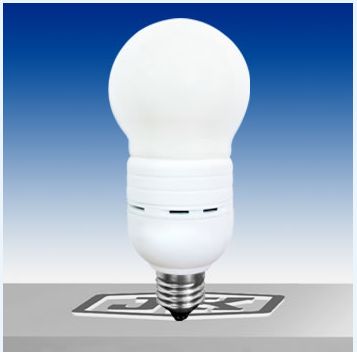
Induction Lamps
Source high-quality induction lamps in bulk directly from vetted manufacturers and suppliers. Designed for importers, industrial distributors, and procurement managers, our network offers reliable, long-lifespan lighting solutions for commercial and high-bay applications. Whether you need standard wholesale orders or custom OEM production, we ensure rigorous quality control, component verification, and regulatory compliance.
Sourcing induction lamps today requires navigating a highly specialized supply chain. While the broader lighting market has heavily pivoted to LED, induction technology remains critical for industrial, high-bay, and hazardous environments where maintenance costs are prohibitive and 100,000-hour lifespans are mandatory. The core challenge for bulk buyers is identifying factories that still maintain dedicated, high-quality production lines for electrodeless lamps, rather than cobbling together outdated or generic components.
Key Technical Specifications to Define
When negotiating with induction lamp manufacturers, precision in your specification sheet prevents costly misunderstandings and ensures the product performs reliably in harsh environments.
Critical Sourcing Specifications
- Operating Frequency: Specify Low Frequency (typically 250 kHz) for higher wattage industrial applications or High Frequency (2.65 MHz) for compact designs.
- Ballast Architecture: Determine if your application requires integrated ballasts (easier installation) or external ballasts (better heat dissipation).
- Amalgam Type: Ensure the factory uses high-quality solid amalgam to maintain lumen output across a wide temperature range (often minus 40 to plus 50 degrees Celsius).
- Luminous Efficacy: Target a baseline of 75 to 90 lumens per watt, depending on the phosphor blend and color temperature (CCT).
Manufacturing Weak Points and Quality Control
The induction lamp itself—being electrodeless—rarely fails. The ballast is almost always the bottleneck. An induction lighting system is only as reliable as the electronic components driving it.
| Component Tier | Capacitor Quality | Expected Lifespan | Best Application |
|---|---|---|---|
| Standard | Generic electrolytic | 30,000 - 50,000 hours | Budget commercial retrofits |
| Premium | Top-tier (e.g., Rubycon) | 80,000 - 100,000+ hours | Hard-to-reach industrial high-bays |
A thorough quality control inspection should focus heavily on the ballast housing, thermal potting compounds, and the specific brand of electrolytic capacitors used on the printed circuit board (PCB).
Struggling to verify the electronic components your supplier is actually using? We can audit the factory and inspect the BOM before production begins.
Talk to our teamCompliance and Electromagnetic Interference (EMI)
Because induction lamps operate via electromagnetic fields, they are inherently prone to generating EMI. This makes regulatory compliance a strict barrier to entry for many markets.
Lamps must pass stringent FCC (Part 18 for the US market) or CE/EMC (for Europe) testing. Poorly shielded ballasts or low-quality magnetic rings will fail these tests, leading to customs seizures or installation rejections. Partnering with a factory that deeply understands compliance and testing for RF emissions is non-negotiable.
MOQs, Lead Times, and Pricing Dynamics
The supplier landscape for induction lighting is concentrated, primarily in Guangdong and Zhejiang provinces in China. Because it is a mature, specialized technology, production runs are often scheduled in batches rather than running continuously.
Pricing is heavily dictated by the ballast quality and the volume of the order. Custom phosphor blends or specialized housing designs for OEM projects will increase lead times by 15 to 20 days for tooling and prototyping. If you are developing a custom fixture around the induction bulb, integrating professional product sourcing with dedicated engineering support ensures the housing will not interfere with the lamp's thermal management.
Need to consolidate orders from multiple specialized lighting manufacturers? Let us manage your supply chain and logistics from the factory floor to your warehouse.
Get a free consultationFrequently Asked Questions
Sourcing induction lamps requires a sharp focus on electronic component quality and strict EMI compliance. In a market where many factories have abandoned the technology entirely, identifying the remaining top-tier manufacturers takes diligence. By validating the ballast BOM and enforcing rigorous pre-shipment testing, you can secure the ultra-long reliability your industrial clients demand.
Get Sourcing Help for Induction Lamps
Tell us your requirements and our experts will connect you with verified manufacturers.