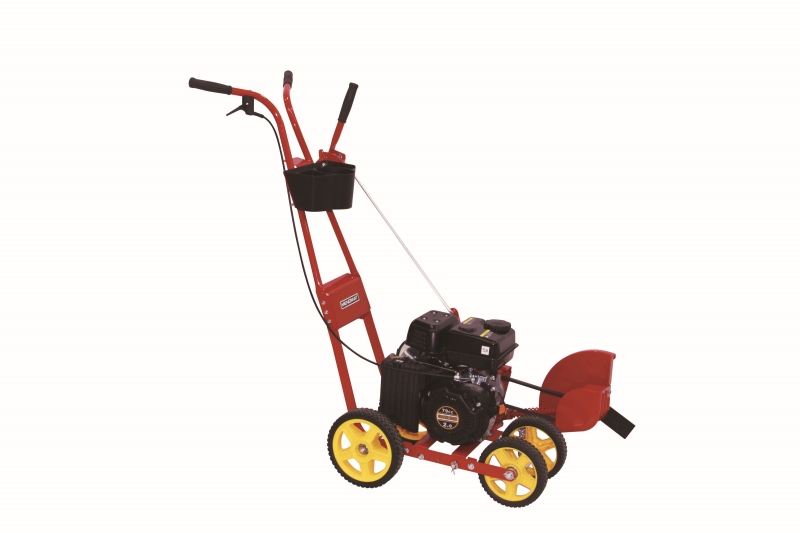
Hand Edgers
Source high-quality hand edgers from vetted suppliers and manufacturers across Asia. Designed for importers, hardware distributors, and garden tool brands, our wholesale network supports bulk purchasing and OEM/private-label production. Secure reliable manufacturing partners for your next high-volume order.
Sourcing hand edgers at scale requires a careful balance between material durability, ergonomic design, and unit cost. While the tool appears simple, the true sourcing challenge lies in the metallurgical consistency of the blade and the structural integrity of the handle joint. A poorly tempered blade will bend or chip upon striking hidden rocks, while a weak ferrule or rivet will cause handle failure under leverage. For wholesale buyers and brands, specifying the right materials and enforcing strict quality standards on the factory floor is non-negotiable.
Core Specifications and Material Selection
The performance of a hand edger is dictated by its blade composition and shaft construction. When negotiating with manufacturers, you must define these specifications clearly to avoid unwanted substitutions.
Blade Metallurgy and Heat Treatment
Most commercial hand edgers utilize stamped carbon steel, specifically 50Mn or 65Mn. For premium lines, 420J2 stainless steel offers excellent corrosion resistance, though at a higher raw material cost. Regardless of the alloy, heat treatment is the critical value-add step.
Blades should be tempered to a hardness between 42 and 48 HRC. Anything under 42 HRC risks deformation during heavy soil penetration, while hardness exceeding 50 HRC can render the steel too brittle, leading to catastrophic snapping when hitting concrete sidewalks.
Shaft and Grip Construction
- Wood: Traditional ash or hickory. Requires strict moisture content control (typically 8 to 12 percent) during manufacturing to prevent shrinking and loosening at the socket.
- Fiberglass: Pultruded fiberglass cores offer superior weather resistance and strength. The core must be fully seated into the blade socket with high-strength epoxy.
- Tubular Steel: Offers maximum durability for heavy-duty models. Wall thickness should be specified (typically 1.2mm to 1.5mm) to prevent buckling.
| Construction Tier | Blade Material | Shaft Material | Target Market |
|---|---|---|---|
| Value / Promotional | Powder-coated 50Mn (Stamping) | Tubular Steel (1.0mm) or Pine | Mass Retail / DIY |
| Mid-Range / Standard | Heat-treated 65Mn | Ash Wood or Basic Fiberglass | Garden Centers / Prosumer |
| Premium / Commercial | Forged or 420J2 Stainless | Heavy-duty Fiberglass with TPR Grip | Landscaping Professionals |
Struggling to find a manufacturer capable of consistent heat treatment? Let us connect you with vetted garden tool factories.
Talk to our teamManufacturing Tolerances and Quality Control
The primary points of failure in hand edgers occur at the foot step and the handle junction. When auditing a factory or setting up your Quality Control & Inspection protocols, focus heavily on these areas.
Foot steps are either folded directly from the main blade blank or welded on as a separate plate. Folded steps are generally stronger as they eliminate the weld seam entirely. If sourcing a welded model, inspect for continuous, slag-free welds. Spot welds are prone to failure under the repetitive downward force of a user's boot.
Pre-Shipment Inspection Focus Areas
- Verify blade hardness using a calibrated Rockwell hardness tester (Target: 42-48 HRC).
- Conduct a bend test on the blade to ensure it returns to true without permanent deformation.
- Inspect handle riveting or epoxy fill; there should be zero play between the shaft and the blade socket.
- Perform a salt spray test on powder-coated or plated surfaces to verify corrosion resistance.
- Check TPR/PVC grips for proper adhesion to the shaft, ensuring they do not twist under torque.
Buying Mechanics: MOQs, Pricing, and Lead Times
The garden tool manufacturing sector in China is heavily concentrated in Zhejiang (particularly Jinhua and Yongkang) and Shandong provinces. Engaging factories in these hubs provides access to mature supply chains for steel stamping and fiberglass pultrusion.
If you are developing a custom design—such as a proprietary ergonomic grip or a unique blade profile—utilizing OEM/ODM Services will require upfront investment in tooling (molds for TPR grips or stamping dies for blades). Tooling costs for hand edgers are generally moderate, making private labeling highly accessible.
Ready to negotiate better terms for your wholesale garden tool orders? Our sourcing experts can help.
Get a free consultationFrequently Asked Questions
Successfully sourcing hand edgers requires looking past the surface finish to verify the underlying metallurgy and structural assembly. By conducting thorough Factory Audits before production begins, you can ensure your supplier has the in-house capabilities to deliver a tool that withstands professional use.
Get Sourcing Help for Hand Edgers
Tell us your requirements and our experts will connect you with verified manufacturers.