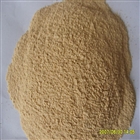
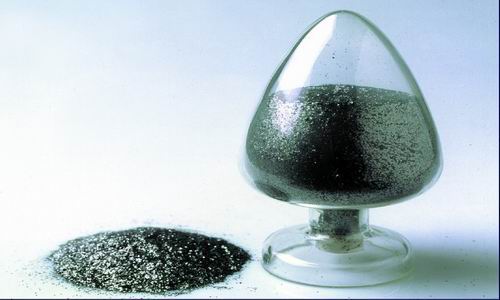
Graphite Powder
Source high-purity Graphite Powder from vetted manufacturers and suppliers in China and across Asia. Designed for importers, wholesalers, and industrial brands, our network supports bulk wholesale orders and custom production for battery, lubricant, and metallurgical applications.
Sourcing industrial-grade or battery-grade graphite powder requires strict adherence to technical specifications. Whether you are procuring material for lithium-ion battery anodes, high-temperature lubricants, friction materials, or metallurgical additives, minor variances in carbon purity or particle size distribution can compromise your entire production run. Securing a reliable supply chain means moving past trading companies to partner directly with mills that possess verifiable purification and sizing capabilities.
Critical Specifications for Bulk Orders
When approaching a manufacturer, requesting "high-quality graphite" is insufficient. Factories grade and price their powder based on strict chemical and physical parameters. You must define these clearly on your purchase order to avoid receiving off-spec material.
Key Parameters for Graphite Powder Procurement
- Fixed Carbon (FC): The primary purity metric, ranging from 80% for basic foundry use up to 99.99% for advanced battery applications.
- Particle Size Distribution (PSD): Usually specified by mesh size (e.g., -100 mesh, +325 mesh) or micron size (D50).
- Moisture Content: Must typically be kept under 0.5% to prevent clumping and application defects.
- Ash Content: The non-combustible mineral residue. High ash content indicates poor purification and lowers conductivity.
- Trace Metals: For battery and high-tech applications, iron (Fe) and other magnetic impurities must be measured in parts per million (ppm).
Natural vs. Synthetic Graphite
Your application dictates the type of graphite powder you need. China is the dominant global producer of both natural flake graphite and synthetic variants, but the manufacturing processes and cost structures differ significantly.
| Graphite Type | Typical Purity (FC) | Primary Applications | Cost Profile |
|---|---|---|---|
| Natural Flake | 85% to 99.9% | Lubricants, refractories, expandable graphite | Moderate |
| Amorphous | 70% to 90% | Foundry coatings, metallurgy, friction parts | Low |
| Synthetic (Artificial) | 99.5% to 99.99% | Li-ion battery anodes, conductive coatings | High |
Need help navigating technical specifications and finding a reliable mill? We match your exact requirements with vetted graphite producers capable of consistent volume output.
Talk to our teamManufacturing Quality and Factory Vetting
The raw graphite ore is only the starting point. The true value of a supplier lies in their milling, shaping, and purification processes.
Chemical purification (using hydrofluoric acid or alkali roasting) and thermal purification require specialized equipment and strict environmental compliance. Factories lacking proper process controls often suffer from batch-to-batch inconsistency. Before committing to a high-volume contract, conducting rigorous Factory Audits is essential to verify that the supplier actually owns the milling and purification equipment they claim, rather than outsourcing to unverified sub-tier workshops.
Common Defects to Monitor
- Oversized Particles: Inadequate milling or worn classifier screens can lead to particles outside your specified D50 or mesh range, ruining the finish of conductive coatings or lubricants.
- Magnetic Impurities: In battery applications, even trace amounts of iron or nickel can cause micro-shorts.
- Falsified Purity: Substituting lower-grade amorphous graphite for natural flake, or inflating the Fixed Carbon percentage on the Certificate of Analysis (CoA).
To mitigate these risks, implement independent Quality Control & Inspection protocols, including third-party lab testing for Loss on Ignition (LOI) and ICP-OES trace metal analysis before the material is packed.
Pricing, MOQs, and Logistics
Graphite powder is a high-weight, low-volume commodity, meaning logistics play a massive role in your landed cost.
- Pricing Drivers: Costs scale exponentially with purity requirements over 99%. Additionally, ultra-fine milling (nano-scale or sub-micron) requires significantly more energy and time, driving up the price per ton.
- Typical MOQs: For standard natural flake or amorphous powders, factories typically require a Minimum Order Quantity of 1 to 5 metric tons. Highly specialized synthetic or spherical battery grades may have lower MOQs (500 kg) due to their high value.
- Packaging and Freight: Powder is usually shipped in 1-ton bulk jumbo bags (FIBCs) or 20-25 kg multi-wall paper bags on pallets. Because of its density, containers weigh out before they cube out. Efficient Shipping & Freight consolidation is necessary to maximize container payloads and reduce per-ton shipping costs.
Secure stable pricing, compliant export handling, and reliable lead times for your graphite supply chain.
Get a free consultationFrequently Asked Questions
Sourcing graphite powder in bulk is an exercise in risk management. Success depends on aligning your precise technical requirements with a factory capable of repeating that exact specification across hundreds of tons. By enforcing strict pre-shipment testing and auditing your suppliers' purification capabilities, you can build a resilient, cost-effective supply chain.
Get Sourcing Help for Graphite Powder
Tell us your requirements and our experts will connect you with verified manufacturers.