Gear Cutting and Finishing Machines
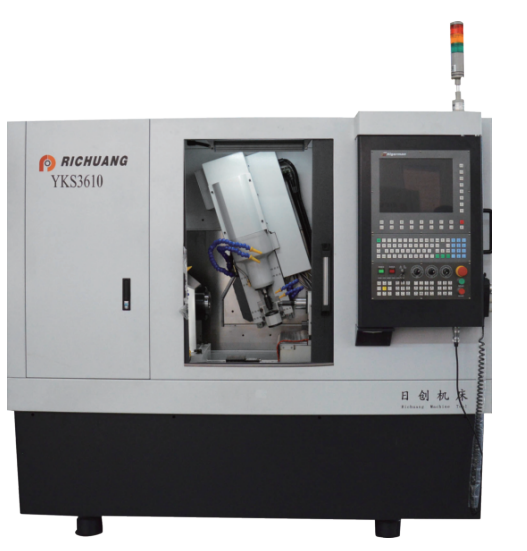
Source high-precision gear cutting and finishing machines directly from vetted manufacturers and suppliers. Designed for importers, distributors, and industrial buyers, our wholesale catalog offers advanced CNC hobbing, shaping, and grinding equipment tailored for large-scale OEM production and distribution.
Gear manufacturing requires uncompromising rigidity, thermal stability, and exact kinematic synchronization. Whether you are procuring CNC gear hobbing machines, gear shapers, or profile grinders, the primary sourcing challenge is verifying that a factory's mechanical assembly and CNC integration can consistently deliver the required DIN or AGMA precision grades over thousands of operating hours.
Core Technical Specifications to Define
When evaluating suppliers, vague specifications lead to underperforming equipment. You must explicitly define the operating envelope, control requirements, and tooling interfaces to ensure the machine matches your production demands.
Evaluating Machine Tool Builders
Not all assembly plants actually manufacture their core components. The difference between a tier-one machine tool builder and a lower-tier assembler lies in their metallurgy, component sourcing, and scraping techniques. Castings must undergo proper natural or artificial aging to prevent warping over time. Spindles and guideways—whether linear roller ways for speed or hand-scraped box ways for heavy damping—dictate the machine's vibration control during aggressive roughing or high-speed finishing.
Navigating machine tool manufacturer vetting? Let our engineers assess factory capabilities and assembly standards on your behalf.
Talk to our teamBefore committing to a high-value capital purchase, rigorous factory audits are essential. You must verify the supplier's in-house machining capabilities, casting stress-relief processes, and the environmental controls in their spindle assembly rooms.
Quality Control and Precision Verification
Gear finishing machines—such as grinders, shavers, and honers—require stringent validation before leaving the factory floor. Relying solely on the manufacturer's internal test reports is a common procurement risk.
Pre-Shipment Machine Validation
- Laser interferometer testing for positioning and repeatability accuracy on all linear axes.
- Ballbar testing to verify circular interpolation and servo tuning.
- Spindle runout and thermal drift measurement under continuous load.
- Test cutting of a sample gear, followed by CMM inspection to verify profile, lead, and pitch accuracy (e.g., DIN 3962 Class 4 or better).
Implementing independent quality control and inspection ensures the machine meets your exact tolerance requirements, mechanical alignments, and software configurations before it is containerized.
Procurement Mechanics: Pricing, MOQs, and Lead Times
Industrial machine tools are capital-intensive and built to order. Lead times and pricing are heavily influenced by the choice of CNC controller (Fanuc, Siemens, Heidenhain, or domestic alternatives), spindle types (direct drive versus gear-driven), and automation add-ons like gantry loaders or robotic cells.
| Machine Type | Typical Lead Time | Key Price Drivers |
|---|---|---|
| CNC Gear Hobbing | 60 to 90 days | Controller brand, max module capacity, automation integration |
| Gear Shaping | 90 to 120 days | Stroke rate, cutting head rigidity, hydro-static guide options |
| Profile Gear Grinding | 120 to 180 days | Dressing unit precision, on-board inspection probes, coolant systems |
MOQs in this category are strictly 1 unit. Because these machines are heavy, sensitive to shock, and vulnerable to corrosion during transit, they require specialized heavy-lift transport, flat-rack containers, and careful moisture protection (VCI packaging). Coordinating specialized shipping and freight is just as critical as the manufacturing phase to ensure the equipment arrives calibrated and undamaged.
Need reliable sourcing and logistics for heavy machinery? We manage the end-to-end procurement and freight process.
Get a free consultationFrequently Asked Questions
Sourcing gear cutting and finishing machines requires balancing upfront capital costs with long-term reliability and precision. By strictly defining technical parameters, auditing assembly practices, and enforcing rigorous pre-shipment testing, you can secure world-class manufacturing equipment. If you need experienced engineering and procurement support on the ground, our team is ready to assist.
Get Sourcing Help for Gear Cutting and Finishing Machines
Tell us your requirements and our experts will connect you with verified manufacturers.