Gaskets
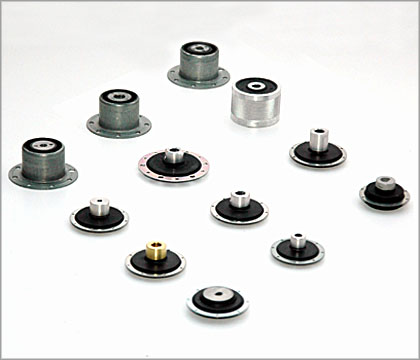
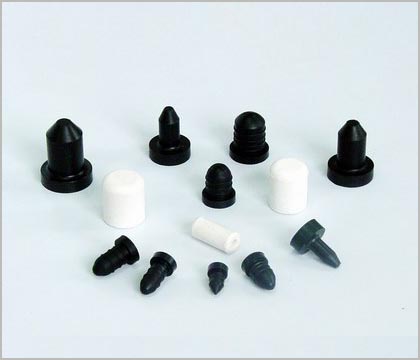
Source high-quality industrial and commercial gaskets directly from vetted manufacturers and suppliers in China. Designed for importers, distributors, and brands requiring reliable OEM production, our wholesale gasket sourcing ensures precision sealing solutions tailored to your exact material and dimensional specifications.
Sourcing industrial gaskets at volume requires navigating a complex matrix of material science, operating environments, and manufacturing tolerances. A gasket's performance relies heavily on its compression set and chemical resistance; failure in either leads to catastrophic leaks, system failures, and expensive downtime. For procurement professionals, the primary challenge is matching the exact elastomer, polymer, or metallic compound to the application while ensuring the manufacturer maintains strict dimensional stability across thousands or millions of units.
Material Selection and Application Matching
The core of any gasket sourcing strategy is specifying the correct material. Factories often offer standard compounds, but high-performance applications require precise formulations. When engaging with suppliers for OEM/ODM Services, you must explicitly define the required Shore A hardness, tensile strength, elongation at break, and specific gravity.
| Material Compound | Operating Temp Range | Primary Strengths | Common Vulnerabilities |
|---|---|---|---|
| NBR (Nitrile) | -30°C to 100°C | Excellent oil and fuel resistance, cost-effective | Poor ozone and weather resistance |
| EPDM | -40°C to 150°C | Superior weather, ozone, and steam resistance | Incompatible with petroleum-based oils |
| FKM (Viton™) | -20°C to 200°C+ | Exceptional chemical and high-temperature resistance | Higher raw material cost, poor low-temp flexibility |
| PTFE (Teflon™) | -200°C to 260°C | Near-universal chemical inertness, low friction | Prone to creep/cold flow under pressure |
Need to match a custom compound to a specific industrial application without compromising on quality?
Talk to our teamManufacturing Processes and Quality Control
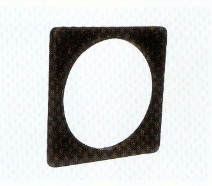
Gaskets are typically produced via die-cutting, compression molding, injection molding, or waterjet cutting. The chosen method heavily influences tooling costs, material waste, and dimensional accuracy.
Die-cutting is highly efficient for flat, non-metallic gaskets, but edge concavity can occur on thicker materials. Compression and injection molding are ideal for complex, three-dimensional profiles (like O-rings and custom seals), but they introduce risks such as mold flash, incomplete cavity fills, and variations in vulcanization.
To prevent these defects from reaching your assembly line or end-users, robust Quality Control & Inspection protocols must be established at the factory level.
Critical Factory-Floor Quality Checks
- Tooling precision: Verify cavity consistency to prevent excessive flash and dimensional drift.
- Curing parameters: Monitor time and temperature strictly to ensure optimal cross-linking and minimize compression set.
- Surface inspection: Check for flow marks, voids, or inclusions that create leak paths.
- Post-cure baking: Ensure secondary curing processes (especially for FKM/Viton) are completed to remove volatile compounds.
- Batch traceability: Confirm raw material lot numbers are tracked through to the finished product.
Supplier Verification and Compliance Standards
Not all rubber and polymer manufacturers operate to the same standards. A factory producing basic plumbing washers may lack the cleanroom environments or precision mixing equipment required for medical-grade or automotive gaskets.
When vetting suppliers, verify their quality management systems. Automotive applications generally require IATF 16949 certification, while food and beverage applications demand FDA, WRAS, or NSF compliance. Relying on comprehensive Factory Audits ensures the supplier actually possesses the specialized equipment—such as rheometers for testing rubber batches—rather than outsourcing production to unverified sub-tier workshops. Furthermore, if your market requires strict adherence to REACH or RoHS directives, independent Compliance & Testing is non-negotiable to verify the absence of restricted phthalates or heavy metals.
Pricing, MOQs, and Lead Times
Gasket pricing is driven by raw material costs, part volume, and the number of cavities in the mold. Standard sizes (like standard metric O-rings) can often be sourced with minimal tooling fees, but custom profiles require upfront investment in steel or aluminum molds.
When negotiating, clarify whether the tooling fee covers a single-cavity prototype mold or a multi-cavity mass-production mold. Multi-cavity molds cost more upfront but drastically reduce the per-piece unit price for high-volume orders.
Looking to optimize your tooling investments and secure reliable high-volume pricing?
Get a free consultationFrequently Asked Questions
Sourcing gaskets at scale is an exercise in risk mitigation. The cost of a failed seal in the field invariably dwarfs the fraction of a cent saved on substandard raw materials. By enforcing strict material specifications, validating factory capabilities, and maintaining rigorous quality control, buyers can secure reliable, high-performance sealing solutions that protect both their products and their brand reputation.
Get Sourcing Help for Gaskets
Tell us your requirements and our experts will connect you with verified manufacturers.