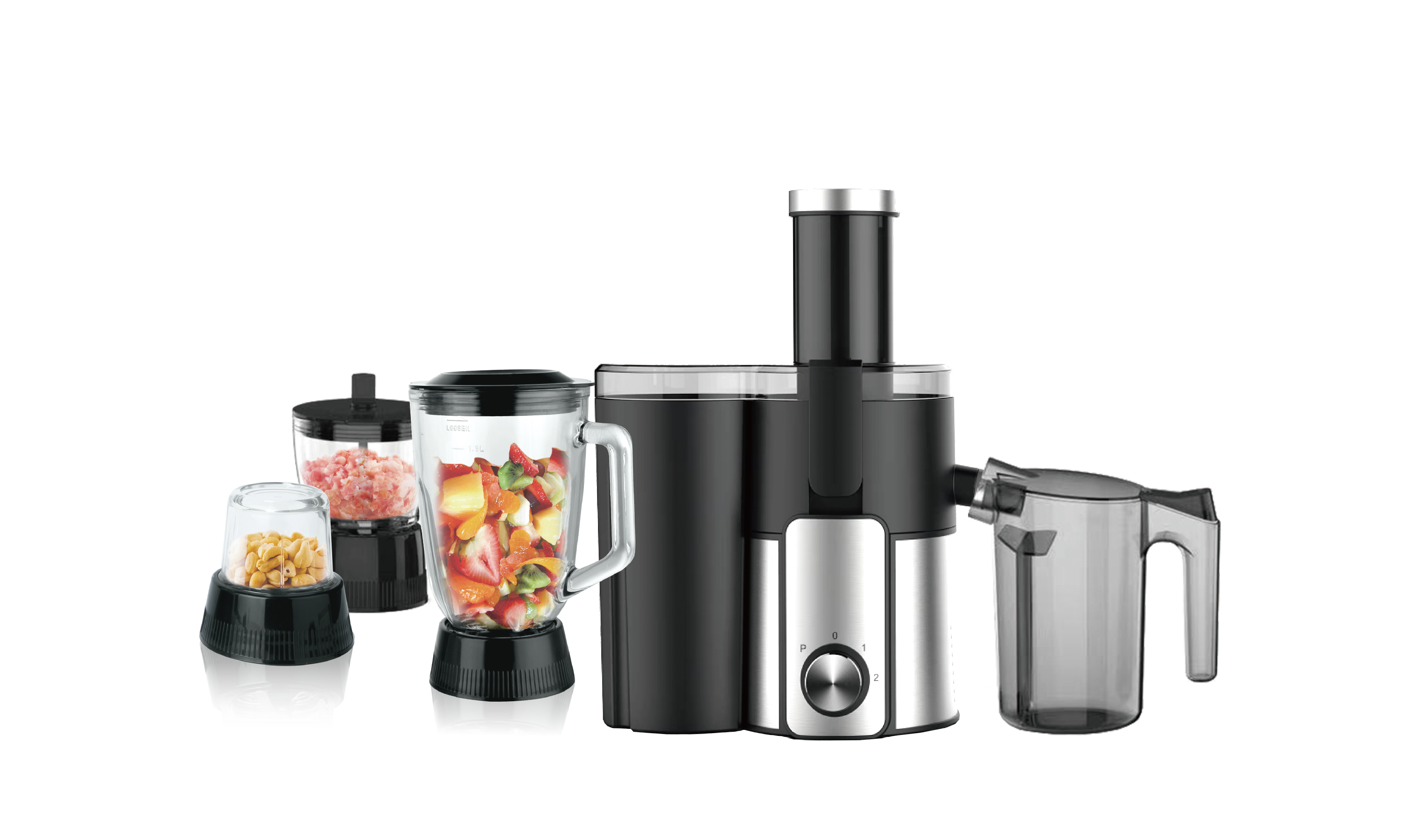
Fruit & Vegetable Juicer Machines
Source commercial and industrial Fruit & Vegetable Juicer Machines from vetted suppliers and manufacturers across Asia. Designed for importers, distributors, and brands seeking reliable bulk procurement and OEM/ODM production, our verified factory network ensures high-yield performance, food-grade compliance, and competitive pricing.
Sourcing commercial and industrial fruit and vegetable juicer machines requires balancing extraction yield, motor durability under continuous load, and strict food-contact compliance. Whether you are procuring high-capacity centrifugal extractors for hospitality distribution or precision masticating cold-press units for an OEM brand, success hinges on identifying manufacturers capable of delivering consistent machining tolerances and reliable electrical components.
Critical Specifications for Commercial Juicing Equipment
When evaluating suppliers, the technical data sheet must align with your target market's operational demands. Extraction yield and continuous run time are the primary performance metrics that separate professional-grade equipment from consumer appliances.
- Motor Architecture: Commercial units require AC induction motors or heavy-duty Brushless DC (BLDC) motors for continuous operation. Specify 100 percent copper windings; cheaper aluminum (CCA) windings will overheat under sustained loads and trigger thermal cutoffs prematurely.
- Material Grades: All food-contact zones (augers, mesh screens, bowls) must be fabricated from SUS304 or SUS316L stainless steel, or food-grade Tritan/Ultem for heavy-duty plastics.
- Machining Tolerances: The clearance between the auger and the filter screen dictates the extraction yield. Poor tolerances leave wet pulp, significantly reducing the machine's ROI for the end-user.
| Specification | High-Speed Centrifugal | Slow Cold-Press (Masticating) |
|---|---|---|
| Typical RPM | 10,000 to 20,000 RPM | 40 to 80 RPM |
| Extraction Yield | Moderate (wetter pulp) | High (dry pulp) |
| Motor Type | Universal AC | AC Induction / BLDC |
| Primary Application | High-volume juice bars | Premium bottled juice, wellness centers |
Struggling to verify technical specifications with overseas suppliers? Let our engineering team evaluate your factory options.
Talk to our teamFactory Floor Realities: Where Quality is Won or Lost
The visual appearance of a juicer housing can easily mask subpar internal engineering. When conducting factory audits, focus heavily on the supplier's supply chain for critical components. Do they machine their own stainless steel filters, or are they outsourcing to tier-two workshops with poor quality control?
Key Inspection Points for Juicer Production
- Motor winding verification (testing for pure copper vs CCA)
- Continuous load testing (running the unit at maximum torque to monitor thermal cutoff limits)
- Food-contact material certification (requesting raw material batch tests)
- Vibration and acoustic testing (excessive decibel levels indicate poor bearing alignment)
- Waterproofing of electrical housings (IPX4 or higher for commercial environments)
If you are developing a proprietary design, engaging specialized OEM/ODM services is crucial. Custom auger tooling requires precise CNC machining capabilities that standard assembly-focused factories simply do not possess. Furthermore, rigorous quality control and inspection during the trial run phase is mandatory to catch tooling defects before mass production begins.
Regulatory Compliance and Food Safety
Importing food-processing machinery requires strict adherence to regional regulations. Your supplier must provide valid, verifiable test reports for food-contact materials (FCM). This includes FDA compliance for the US market and LFGB certification for the EU. Electrical safety certifications (CE, UL, ETL) are equally critical, particularly for commercial environments where workplace safety standards apply. Navigating this often requires third-party compliance and testing to ensure the factory's claims hold up under scrutiny.
Typical MOQs, Pricing Drivers, and Lead Times
Unit costs in this category are driven primarily by the motor's copper weight, the grade of stainless steel used, and the complexity of the filter mesh.
Need to negotiate better terms or lower MOQs for a trial run? We can manage the supplier relationship on your behalf.
Get a free consultationFrequently Asked Questions
The true cost of sourcing commercial juicer machines is rarely found on the initial proforma invoice. Factoring in motor longevity, extraction efficiency, and post-sale spare parts availability is what ultimately determines your profitability. Prioritize suppliers with transparent component sourcing and proven machining capabilities over those simply offering the lowest unit price.
Get Sourcing Help for Fruit & Vegetable Juicer Machines
Tell us your requirements and our experts will connect you with verified manufacturers.