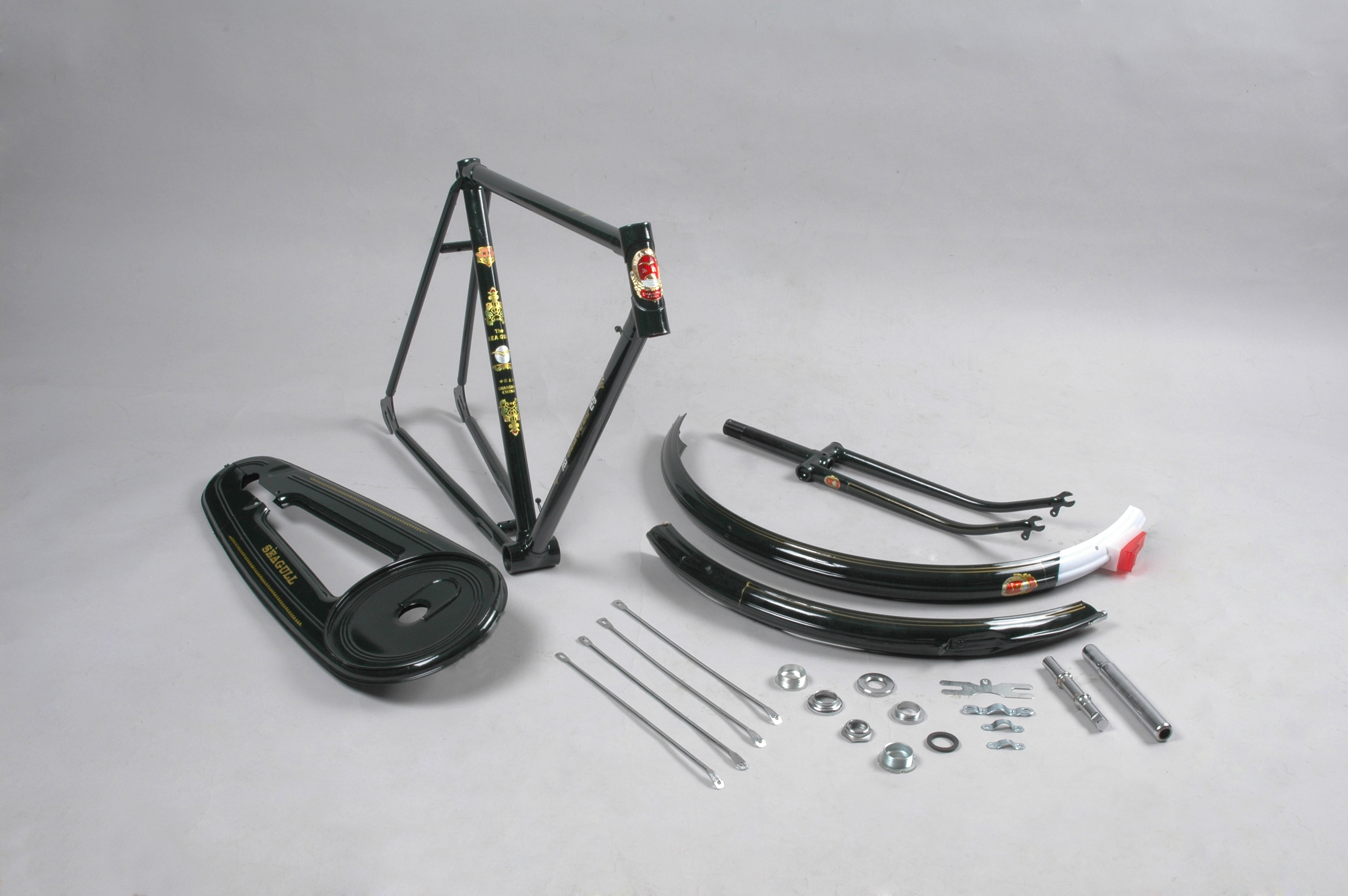
Frames
Source high-quality bicycle frames directly from vetted suppliers and manufacturers in Asia. Built for importers, distributors, and cycling brands seeking reliable OEM and private-label production, our wholesale frame sourcing ensures strict adherence to international safety standards and performance specs.
The bicycle frame is the structural and geometric foundation of the entire build. Sourcing frames in volume is rarely just about unit cost; it requires strict oversight of material integrity, precise alignment tolerances, and rigorous fatigue testing. Whether you are scaling an established brand, importing aftermarket upgrades, or launching a new line of e-bikes, securing a factory that consistently delivers to specification is critical to minimizing downstream assembly issues and brand liability.
Material Specifications and Geometry Tolerances
Defining a frame for bulk production requires precise technical documentation. Beyond the standard geometry chart (reach, stack, head tube angle, chainstay length), buyers must specify integration points. This includes bottom bracket standards (e.g., BSA, T47, BB86), head tube dimensions (tapered versus straight), dropout spacing (such as 148mm Boost or 142mm thru-axle), and cable routing paths, particularly for modern fully integrated cockpits.
| Manufacturing Aspect | Aluminum Alloy (6061/7005) | Carbon Fiber (T700/T800) |
|---|---|---|
| Forming Process | Hydroforming, butting, and precision mitering | EPS molding and precise pre-preg carbon layup |
| Joining Method | TIG welding (standard or smooth-weld) | Monocoque or tube-to-tube bonding |
| Post-Processing | T4/T6 heat treatment for stress relief | Resin curing, clear coating, and void inspection |
| Tooling Investment | Moderate (tube dies and welding jigs) | High (precision steel or aluminum molds) |
Need a factory capable of precision carbon layup or complex hydroforming? We match your technical requirements with vetted frame builders in Asia.
Talk to our teamManufacturing Oversight and Quality Control
The factory floor is where a good design either succeeds or fails. For aluminum frames, the critical phase is post-weld heat treatment. Without proper T4 solution heat treatment and T6 artificial aging, the frame will lack the necessary tensile strength and yield under stress. For carbon frames, the primary risk is internal wrinkling or voids during the layup and curing process, which create stress risers.
Catching these issues requires rigorous Quality Control & Inspection before the frames are painted and packaged.
Critical Frame Inspection Points
- Frame Alignment Check: Verification of head tube, seat tube, and bottom bracket concentricity and planar alignment.
- Weld Integrity: Visual and dye-penetrant inspection of TIG welds for undercut or porosity (alloy).
- Internal Void Inspection: X-ray or ultrasonic testing of high-stress junctions like the bottom bracket (carbon).
- Thread and Facing Tolerances: Ensuring bottom bracket shells and disc brake mounts are faced and tapped cleanly.
- Surface Finish: Adhesion testing for paint and clear coat durability.
Compliance and Fatigue Testing
Bicycle frames imported into major markets must comply with stringent safety standards. The globally recognized benchmark is ISO 4210, which dictates specific fatigue tests (pedaling forces, horizontal forces, and vertical forces) and impact tests for different bicycle categories (City, Trekking, MTB, and Racing). If you are sourcing frames for electric bicycles, they must also accommodate the specific weight and torque requirements outlined in standards like EN 15194. Engaging a partner for Compliance & Testing ensures your production runs meet these legal thresholds before shipping.
Pricing Drivers, MOQs, and Lead Times
Frame pricing is highly dependent on material, finishing, and whether you are using an open mold or developing custom geometry.
Custom geometry requires new tooling. For alloy, this means custom tube hydroforming dies and welding jigs. For carbon, proprietary molds represent a significant upfront capital expenditure. Many brands opt for "open mold" designs—existing factory geometries that can be customized with specific carbon layups, paint schemes, and decals via OEM/ODM Services.
Planning a new frame geometry or looking to utilize reliable open molds? Let us manage the tooling, sampling, and production schedule.
Get a free consultationFrequently Asked Questions
Sourcing bicycle frames in bulk is a technical exercise that dictates the success of your entire bicycle assembly. By partnering with vetted manufacturers who maintain strict alignment tolerances and rigorous fatigue testing protocols, you protect your brand's reputation and bottom line. When you are ready to streamline your procurement and ensure consistent quality, expert sourcing support can make all the difference.
Get Sourcing Help for Frames
Tell us your requirements and our experts will connect you with verified manufacturers.