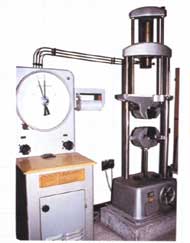
Force Measuring Instruments
Source precision Force Measuring Instruments from vetted manufacturers and suppliers. Designed for importers, wholesalers, distributors, and brands seeking OEM or private-label production, our network delivers reliable tension and compression testing equipment built to exact industrial and regulatory standards.
Procuring force measuring instruments in volume requires strict attention to sensor accuracy, firmware stability, and calibration standards. Whether you are sourcing digital push-pull gauges for consumer electronics testing or high-capacity load cells for industrial manufacturing, the reliability of the instrument is entirely dependent on the supplier’s engineering capabilities and quality management systems.
Specifying Force Measuring Instruments
When negotiating with manufacturers, vague specifications lead to inconsistent product batches. Professional buyers must define the critical parameters upfront to ensure the factory selects the correct strain gauges and analog-to-digital converters (ADCs).
- Accuracy and Resolution: Define accuracy as a percentage of Full Scale (FS), typically ±0.1% to ±0.5% for industrial gauges. Resolution must align with the end-user's precision requirements.
- Sampling Rate: For dynamic testing (like break testing or snap-action switches), a high sampling rate (up to 2000 Hz) is necessary to accurately capture peak force without data loss.
- Data Output and Connectivity: Specify required interfaces (USB, RS-232, Bluetooth) and ensure the factory provides robust, English-language data logging software if the units are digital.
| Sensor Configuration | Typical Capacity Range | Primary Application |
|---|---|---|
| Internal Load Cell | Up to 1000 N (approx. 100 kgf) | Handheld use, portable quality control, light manufacturing |
| External Load Cell | Over 1000 N | Integration into motorized test stands, heavy industrial material testing |
Manufacturing Tolerances and Quality Control
The core of any force measuring instrument is the load cell. The manufacturing process involves bonding strain gauges to a machined metal body (usually aluminum or stainless steel). If the factory cuts corners on the bonding adhesive, curing time, or temperature compensation, the instrument will suffer from creep, hysteresis, and zero-drift over time.
Relying solely on factory self-reporting for calibration is a major risk. Implementing rigorous Quality Control & Inspection protocols before shipment is critical to verify that the instruments perform within their stated tolerances.
Pre-Shipment Inspection Points for Force Gauges
- Linearity and Hysteresis Verification: Testing at 20%, 40%, 60%, 80%, and 100% of full scale.
- Overload Protection Check: Verifying mechanical or software stops engage before sensor damage occurs (typically 120% to 150% of FS).
- Firmware Stability: Ensuring zero-tare functions and peak-hold memory operate without freezing.
- Accessory Fitment: Checking threads and tolerances on interchangeable tension hooks and compression flat heads.
Need to ensure your supplier meets strict calibration standards? Our engineers can help establish rigorous testing protocols for your next order.
Talk to our teamOEM and Customization Requirements
Many brands require modified force measuring instruments to fit specific industry niches. Engaging a factory for OEM/ODM Services allows you to customize the product beyond simple logo placement.
Customization can include modifying the physical housing for better ergonomics, altering the firmware to display specific units of measurement (e.g., converting to specialized torque metrics), or developing proprietary data-logging software with your brand's UI. When pursuing OEM projects, ensure the factory has an in-house R&D team capable of modifying the PCB layout and providing updated CE/RoHS documentation, which you can verify through independent Compliance & Testing.
Typical MOQs, Pricing, and Lead Times
Pricing for force measuring instruments is driven primarily by the quality of the internal load cell, the processing power of the PCB, and the material of the housing (die-cast metal vs. injection-molded plastic).
When negotiating, be aware that unusually low prices often indicate the use of commercial-grade ADCs rather than industrial-grade components, leading to noisy data and fluctuating zero-points.
Managing supplier negotiations and quality control for precision instruments is complex. Let us handle the sourcing mechanics so you can focus on distribution.
Get a free consultationFrequently Asked Questions
Sourcing highly sensitive testing equipment requires a deep understanding of the manufacturer's true capabilities. Before committing to a large order or an OEM development contract, executing comprehensive Factory Audits is the most effective way to verify that the supplier possesses the precision machining, cleanroom assembly, and calibration rigs necessary to produce reliable instruments.
Get Sourcing Help for Force Measuring Instruments
Tell us your requirements and our experts will connect you with verified manufacturers.