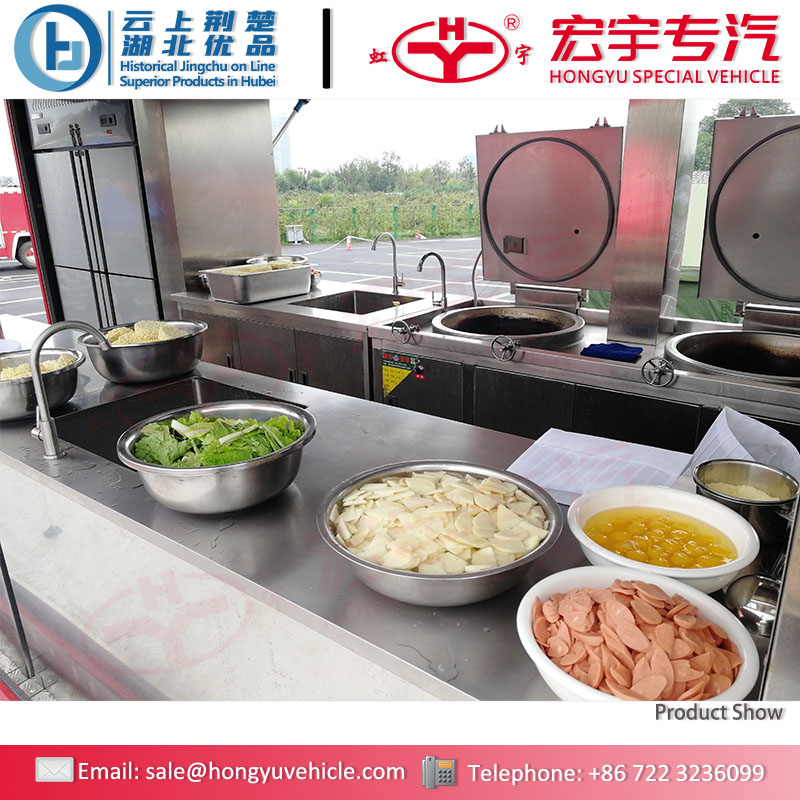
Food Trucks
Source high-quality Food Trucks from vetted manufacturers and wholesale suppliers. Built for importers, fleet operators, and distributors, our network provides OEM and custom-built mobile kitchens meeting rigorous international compliance standards for chassis safety and food-grade equipment.
Sourcing commercial food trucks and mobile kitchen trailers at scale is a complex engineering and compliance challenge. You are not just buying a vehicle; you are importing a commercial kitchen integrated into a road-legal chassis. Balancing custom layout requirements with strict regional road safety regulations and local health department codes requires working with manufacturers who understand international standards, not just domestic fabrication.
Chassis and Body Construction Standards
The foundation of any mobile kitchen dictates its lifespan and payload capacity. High-volume buyers must specify structural materials carefully, as this is where low-tier factories often cut corners to reduce costs.
Frames should be constructed from galvanized steel tubing to prevent rust, especially in coastal or high-humidity environments. The exterior body panels typically dictate the aesthetic and weight of the unit, while the internal walls must meet food-grade sanitation standards.
| Material | Durability & Weight | Best Application |
|---|---|---|
| Stainless Steel (304/201) | Heavy, highly durable, rust-resistant | High-end builds, heavy-duty commercial kitchens |
| Fiberglass (FRP) | Lightweight, seamless, moderate durability | Curved designs, lightweight towing requirements |
| Aluminum Alloy | Very lightweight, rust-proof, prone to denting | Airstream-style trailers, weight-restricted towing |
Insulation is another critical spec. Ensure the factory uses high-density polyurethane foam (typically 40mm to 50mm thick) rather than cheap EPS (expanded polystyrene), which degrades and offers poor thermal resistance in high-heat cooking environments.
Need a reliable manufacturer capable of meeting your specific structural and electrical requirements? Let's discuss your custom build.
Talk to our teamCritical Systems: Electrical, Plumbing, and Equipment
A food truck's internal systems must be flawlessly integrated. Electrical faults or plumbing leaks inside sealed walls require tearing the truck apart to fix. When auditing suppliers or specifying builds, mandate strict adherence to your target market's voltage and certification standards.
- Electrical Systems: Wiring must handle high-draw commercial equipment. Ensure the manufacturer uses the correct gauge wiring, proper grounding, and certified breaker panels. Components must carry the appropriate marks (UL, CE, or ETL) for your region. Engaging professional Compliance & Testing services early prevents customs seizures and failed local health inspections.
- Plumbing: Health codes universally require separated fresh and wastewater systems. Wastewater tanks must typically be 15 percent to 50 percent larger than fresh water tanks. Specify food-grade PVC or PEX piping and demand reliable, high-GPM water pumps and certified instant water heaters.
- Ventilation: Commercial exhaust hoods with stainless steel baffle filters and high-CFM centrifugal fans are mandatory for any truck with fryers or gas ranges.
Pre-Production Specification Checklist
- Verify WMI (World Manufacturer Identifier) status for VIN issuance
- Specify 304 stainless steel for all food-contact surfaces and sinks
- Confirm axle weight ratings (GAWR) exceed the fully loaded equipment weight
- Detail electrical schematics including 110V/220V conversion requirements
- Specify anti-slip aluminum checker plate or commercial vinyl flooring with floor drains
Vetting Manufacturers and Road Legality
Not all fabricators are legally authorized vehicle manufacturers. To import a food trailer or truck, the factory must be able to issue a valid VIN (Vehicle Identification Number) recognized by your country's transport authority (like the DOT in the US or VCA in Europe).
VIN and WMI Verification
Always verify a factory's WMI code before placing a deposit. If a factory cannot issue a compliant VIN, the vehicle cannot be registered for road use, rendering the import useless.
Conducting thorough Factory Audits is essential. You need to verify their welding quality, chassis alignment processes, and quality management systems (ISO 9001). A visual inspection of their facility will quickly separate genuine vehicle manufacturers from basic sheet-metal workshops assembling parts on purchased frames.
Pricing, MOQs, and Lead Times
Because food trucks are highly customized and physically large, buying mechanics differ from standard consumer goods.
Shipping oversized units requires specialized logistics. While small trailers (under 16 feet) can sometimes be loaded into 40HQ containers, larger trucks or wide-body trailers require RoRo (Roll-on/Roll-off) or Flat Rack shipping. Coordinating these movements requires experienced Shipping & Freight management to avoid exorbitant port storage fees and ensure safe loading.
Managing custom mobile kitchen builds, factory inspections, and oversized freight is complex. We handle the end-to-end process.
Get a free consultationFrequently Asked Questions
Successfully importing food trucks requires treating the process as a hybrid of automotive manufacturing and commercial kitchen construction. By strictly defining your specifications, verifying compliance early, and managing the freight logistics proactively, you can secure high-margin, road-ready mobile kitchens.
Get Sourcing Help for Food Trucks
Tell us your requirements and our experts will connect you with verified manufacturers.