Food Sterilizers
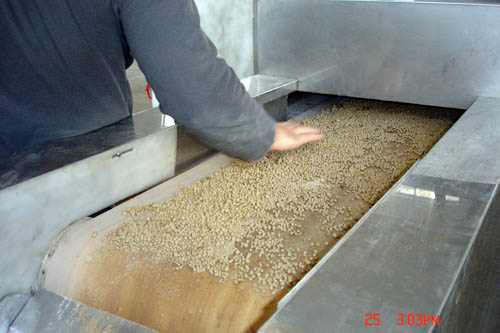
Source commercial-grade food sterilizers from vetted manufacturers and suppliers in China and across Asia. Designed for importers, distributors, and food processing brands seeking reliable bulk purchasing or OEM production. Secure high-capacity sterilization equipment built to stringent international compliance standards.
Sourcing commercial food sterilizers requires balancing thermal efficiency with stringent pressure vessel safety. Whether you are procuring continuous UHT (Ultra-High Temperature) systems for liquid dairy or batch retort autoclaves for flexible pouches, the primary challenge is matching the equipment's heating medium and control logic to your specific food matrix and packaging type.
Defining Specifications for Commercial Sterilization
The physical properties of the food (viscosity, pH) and the thermal tolerance of the packaging dictate the required sterilization technology. Specifying the wrong chamber type or heating medium often leads to packaging deformation, compromised seals, or an inability to achieve the target lethality (F0 value).
| Technology Type | Optimal Application | Key Specification to Define |
|---|---|---|
| Saturated Steam Retort | Tin cans, glass jars | Steam distribution manifold design |
| Water Cascade / Spray | Flexible pouches, plastic trays | Circulation pump flow rate (m³/h) |
| Water Immersion | Fragile containers, high-viscosity foods | Heat exchanger surface area |
| Continuous UHT | Liquid dairy, juices, sauces | Holding tube length and flow velocity |
When negotiating with suppliers, you must provide the exact dimensions of your product, the required throughput per hour, and the maximum allowable pressure differential for your packaging.
Validating a manufacturer's engineering capabilities is critical for high-pressure vessels. Merhein's technical team can help verify schematics and control logic before production begins.
Discuss your equipment specsFactory Floor Realities: Where Quality is Won or Lost
Chinese manufacturers dominate the global supply of stainless steel food processing machinery, particularly in industrial hubs across Shandong and Zhejiang provinces. However, the gap in engineering pedigree between tier-one pressure vessel manufacturers and lower-tier assembly workshops is vast.
When evaluating a factory's capability to produce reliable sterilizers, pay close attention to the following areas:
- Material Integrity: SUS304 stainless steel is standard for external frames and non-contact cladding, but the internal chamber, piping, and food-contact surfaces must be SUS316L to resist chloride corrosion from water and food acids.
- Welding Standards: Sterilizers operate under intense pressure and thermal cycling. Pressure vessels require submerged arc welding or high-grade TIG welding. Insist on reviewing X-ray flaw detection records for all load-bearing seams.
- Instrumentation and Control: The PLC (Programmable Logic Controller) is the brain of the sterilizer. Tier-one export models utilize globally supported systems like Siemens, Allen-Bradley, or Omron. Localized or proprietary controllers will severely complicate your aftermarket maintenance and integration.
- Door Sealing Mechanisms: Pneumatic or hydraulic interlocking doors must feature redundant safety fail-safes to prevent opening while the chamber is pressurized.
Because the risks associated with pressure vessel failure are so high, we highly recommend conducting comprehensive factory audits to verify a supplier's manufacturing licenses and engineering capacity before placing a deposit. Furthermore, implementing rigorous quality control & inspection during the assembly phase ensures that sensor calibration and welding tolerances meet your exact specifications.
Critical Compliance and Certifications
Food sterilizers sit at the intersection of food safety equipment and hazardous heavy machinery. Customs clearance and local facility integration require specific, verifiable documentation.
Mandatory Regulatory Documentation
- Pressure Vessel Certification: ASME BPVC (North America) or CE PED (Europe).
- FDA / HACCP Compliance: The PLC must support 21 CFR Part 11 compliant data logging for temperature and pressure tracking.
- Material Test Reports (MTRs): Verifying the exact chemical composition of the stainless steel used.
- Electrical Safety: UL listing or CE marking for all control panels and high-voltage components.
Engaging expert compliance & testing services early in the sourcing process prevents costly customs seizures and ensures the equipment can be legally commissioned in your target market.
Pricing, Lead Times, and Procurement Mechanics
Commercial food sterilizers are capital equipment. They are rarely held in stock and are almost exclusively built to order based on your specific capacity requirements and facility layout.
Because these units are incredibly heavy and often feature oversized dimensions, routing them efficiently requires specialized shipping & freight handling. Large retort vessels frequently require flat-rack containers or breakbulk shipping, which must be factored into your landed cost calculations early on.
Navigating heavy machinery logistics, factory acceptance testing, and complex supplier negotiations? Let Merhein manage the end-to-end procurement process.
Talk to our teamFrequently Asked Questions
A successful food sterilizer procurement hinges on rigorous pre-shipment validation and verified pressure vessel certifications. Protect your capital investment by validating the factory's engineering pedigree from day one, ensuring your equipment delivers decades of reliable, compliant performance.
Get Sourcing Help for Food Sterilizers
Tell us your requirements and our experts will connect you with verified manufacturers.