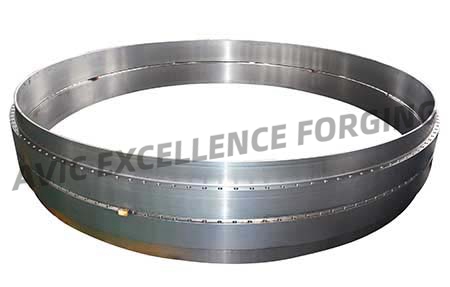
Flanges
Source industrial flanges from vetted suppliers and manufacturers across Asia. Designed for wholesalers, distributors, and procurement managers buying in bulk, our network delivers reliable, high-volume production. Whether you need standard dimensional tolerances or custom OEM specifications, find the right factory here.
Sourcing industrial flanges in volume requires strict adherence to international standards and uncompromising material integrity. Whether you are supplying the petrochemical sector, waterworks, or commercial plumbing, the primary sourcing challenge is rarely finding a factory that claims to make flanges. The real difficulty lies in identifying a forge or foundry capable of maintaining metallurgical consistency, precise machining tolerances, and full traceability across thousands of units.
Defining Your Flange Specifications
When approaching manufacturers, technical clarity dictates the accuracy of your quotes and the viability of the production run. Flanges are heavily standardized, and your RFQ must explicitly detail the governing standard (such as ASME B16.5, DIN, EN 1092-1, or JIS) alongside specific dimensional and material requirements.
Key specifications to define upfront include:
- Pressure Class: Ranging from Class 150 to Class 2500 (or PN6 to PN100).
- Facing Type: Raised Face (RF), Flat Face (FF), Ring Type Joint (RTJ), or Tongue and Groove (T&G). The facing finish (measured in Ra or AARH) is critical for gasket sealing.
- Material Grade: Carbon steel (e.g., ASTM A105), stainless steel (e.g., 304/304L, 316/316L), or specialized alloys.
- Connection Style: Weld neck, slip-on, blind, threaded, or socket weld.
Need help identifying capable forging mills for high-pressure applications? Let us connect you with vetted flange manufacturers.
Talk to our teamForging vs. Casting: Choosing the Right Manufacturing Method
The manufacturing process fundamentally dictates the structural integrity and pressure rating of the flange. While casting is cheaper, forging is mandatory for high-pressure and critical applications.
| Manufacturing Method | Typical Application | Structural Integrity |
|---|---|---|
| Forged Flanges | High pressure, oil & gas, petrochemical | Excellent grain structure, high mechanical strength, no internal porosity |
| Cast Flanges | Low pressure, water distribution, HVAC | Lower mechanical strength, risk of internal voids or casting defects |
Because the risk of catastrophic failure in high-pressure systems is severe, verifying a supplier's actual production capabilities is essential. Many trading companies claim to be manufacturers but outsource the raw forging process. Conducting thorough Factory Audits ensures your supplier actually owns the necessary drop-forging hammers, ring rolling machines, and CNC turning centers.
Quality Control and Defect Prevention
Flange quality is won or lost in raw material control and final machining. A flange that is off by a fraction of a millimeter in its Pitch Circle Diameter (PCD) will not align with its mating part in the field, rendering the entire batch useless.
Implement a rigorous inspection protocol before shipment. Key areas to monitor include:
Flange Quality Inspection Checklist
- Mill Test Reports (MTRs): Verify chemical composition and mechanical properties of the raw steel batch.
- Positive Material Identification (PMI): Use XRF analyzers to confirm alloy grades, especially for stainless and duplex steels.
- Dimensional Accuracy: Check outside diameter, inside diameter, bolt hole alignment (PCD), and flange thickness against the standard.
- Facing Finish: Measure the serration depth and surface roughness (AARH) to ensure proper gasket seating.
- Non-Destructive Testing (NDT): Require Ultrasonic Testing (UT) or Magnetic Particle Inspection (MPI) for high-pressure forged flanges to detect micro-cracks.
Catching machining errors or material substitutions at the factory level is much more cost-effective than dealing with site rejections. Integrating professional Quality Control & Inspection into your supply chain ensures these checks are performed by qualified metallurgists and engineers before the container is loaded.
Typical Pricing, MOQs, and Lead Times
Flange pricing is inherently tied to global steel billet and ingot commodities. Because flanges are heavy, dense products, pricing is often calculated by weight (per metric ton) for standard carbon steel variants, moving to per-piece pricing for complex alloys or large-diameter weld necks.
Freight Considerations
Flanges max out shipping container weight limits long before they fill the volume. A standard 20-foot container will hit its maximum payload of roughly 24 to 28 metric tons while mostly empty. Efficiently planning your Shipping & Freight strategy is critical to maintaining margins.
Struggling to manage the logistics of heavy hardware shipments? We optimize freight consolidation and supply chain operations for bulk buyers.
Get a free consultationFrequently Asked Questions
Sourcing industrial flanges in volume is an exercise in risk management and logistical efficiency. Success requires balancing raw material market fluctuations, strict metallurgical compliance, and the realities of shipping heavy freight. By partnering with technically verified forging mills and maintaining strict oversight on the factory floor, buyers can secure reliable, high-volume supply chains that protect both their margins and their end-users.
Get Sourcing Help for Flanges
Tell us your requirements and our experts will connect you with verified manufacturers.