Fishing Vessels
Source premium Fishing Vessels from vetted manufacturers and wholesale suppliers. Designed for importers, marine distributors, and OEM brands buying in bulk, our network delivers reliable production across aluminum, fiberglass, and inflatable fishing boats. Secure competitive pricing and reliable quality for your marine catalog.
Sourcing fishing vessels at scale requires strict adherence to hull integrity, stability standards, and marine-grade materials. Whether you are importing aluminum bass boats, fiberglass center consoles, or heavy-duty inflatable dinghies, the margin for error in marine manufacturing is zero. Success depends on partnering with factories that possess certified welding capabilities, climate-controlled lamination facilities, and rigorous buoyancy testing protocols.
Engineering and Material Specifications
The core of any fishing vessel is its hull material and design. Buyers must specify exact grades and thicknesses to ensure durability in harsh, corrosive marine environments. Substituting inferior materials to cut costs often results in structural failure or rapid degradation.
| Hull Type | Standard Material Grade | Primary Application | Critical Sourcing Risk |
|---|---|---|---|
| Marine Aluminum | 5083 or 5052 Alloy | Inland and coastal fishing | Weld porosity, improper anodic protection |
| Fiberglass (FRP) | Isophthalic gelcoat / E-glass | Offshore and deep-sea | Osmotic blistering, inconsistent lay-up thickness |
| Rigid Inflatable (RIB) | 1.2mm PVC or CSM (Hypalon) | Utility and portable fishing | Adhesive degradation under high UV exposure |
When specifying dimensions, always define the Length Overall (LOA), beam width, deadrise angle (which dictates offshore performance versus draft depth), and maximum transom weight capacity. The transom must be engineered to handle the torque and weight of modern high-horsepower outboard motors.
Need help verifying supplier specifications and factory capabilities? Connect with our sourcing experts.
Talk to our teamManufacturing Tolerances and Quality Control
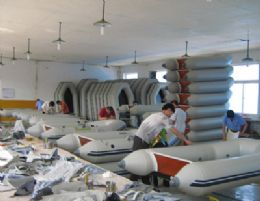
The production of fishing vessels involves highly specialized labor. For aluminum boats, the quality of TIG/MIG welding is paramount. Factories must employ certified marine welders, as microscopic porosity in hull seams can lead to catastrophic leaks. Verifying these capabilities prior to production often requires professional Factory Audits to review standard operating procedures and worker certifications.
For fiberglass vessels, the lamination process must occur in temperature and humidity-controlled environments. Hand-laid fiberglass is standard, but vacuum infusion offers a superior strength-to-weight ratio.
Critical Pre-Shipment Inspection Points
- Weld penetration and continuous seam integrity on aluminum hulls.
- Gelcoat thickness and uniformity to prevent spider cracking on FRP models.
- Transom reinforcement and structural knee bracing.
- Buoyancy foam volume and distribution (must meet level flotation standards).
- Pressure retention testing over 24 hours for inflatable chambers.
Catching defects before the vessel leaves the factory is critical. Utilizing independent Quality Control & Inspection during the build process ensures that structural elements, which are often hidden once the deck is mated to the hull, meet your exact specifications.
Compliance and Regulatory Standards
Fishing vessels are heavily regulated. Depending on your target market, the manufacturer must build to specific standards. In the European Union, CE marking under the Recreational Craft Directive (RCD 2013/53/EU) is mandatory. In the United States, adherence to ABYC standards and NMMA certification is highly recommended for liability and market acceptance. You must ensure your factory understands these standards and can provide the necessary documentation, or you will need to arrange independent Compliance & Testing before export.
Logistics, MOQs, and Production Economics
Shipping fully assembled fishing vessels is inherently complex due to their volume. While inflatable boats and small aluminum skiffs can be densely packed into standard 40HQ containers, larger center consoles often qualify as Out of Gauge (OOG) cargo, requiring flat racks or Roll-on/Roll-off (RoRo) shipping. Coordinating this requires expert Shipping & Freight management to avoid exorbitant logistics costs eroding your margins.
Pricing is driven primarily by raw material costs (global aluminum and resin indexes) and labor. Custom tooling for new fiberglass molds or specific aluminum extrusions will require upfront investment, though these costs can be amortized over large production runs.
Optimize your marine supply chain. Speak with us about consolidating your shipments and securing better factory terms.
Get a free consultationFrequently Asked Questions
Successfully sourcing fishing vessels means balancing material science, structural engineering, and complex international logistics. By partnering with factories that maintain strict quality control and regulatory compliance, you can build a resilient and profitable marine product line.
Get Sourcing Help for Fishing Vessels
Tell us your requirements and our experts will connect you with verified manufacturers.