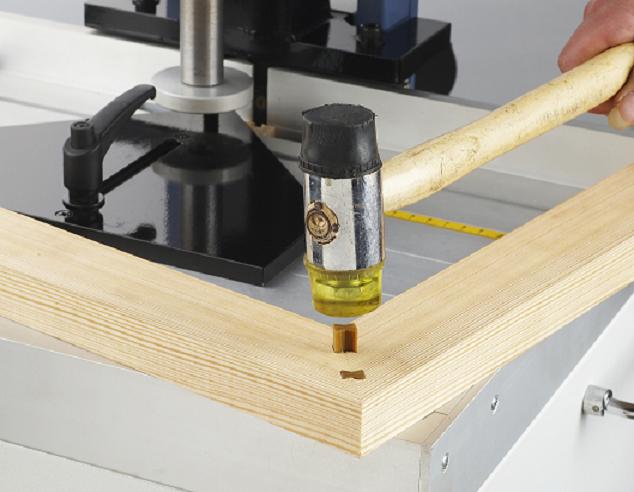
Finger Jointers
Source industrial-grade finger jointers from vetted suppliers and manufacturers in Asia. Designed for equipment importers, machinery distributors, and large-scale woodworking facilities, our catalog features robust manual and fully automatic finger jointing lines for high-yield timber production and structural jointing.
Sourcing heavy-duty finger jointers requires balancing precision machining with rugged durability. For industrial woodworking operations, the difference between a high-yield production line and a bottleneck lies in the rigidity of the shaper, the precision of the spindles, and the consistency of the hydraulic or pneumatic press. When importing woodworking machinery in bulk or outfitting a large-scale facility, identifying manufacturers capable of delivering consistent, export-grade equipment is critical.
Key Technical Specifications to Define
When negotiating with machinery manufacturers, vague specifications lead to substandard builds. To ensure the factory quotes the exact machine your market requires, you must clearly define the operational parameters of both the shaper (profiler) and the assembler (press).
- Working Dimensions: Specify the maximum and minimum timber length, width, and thickness. A standard line might handle widths of 30mm to 150mm and thicknesses of 15mm to 80mm, but structural glulam lines require significantly larger capacities.
- Spindle Speed and Motor Power: The cutter head spindle must maintain high RPM (typically 6,000 to 9,000 RPM) under heavy load to ensure a clean, tear-out-free cut. Specify the exact kW rating for the spindle motors.
- Feed Speeds: For automatic lines, specify the feed speed in meters per minute (m/min). High-production lines often run between 20 to 40 m/min on the shaping section.
- Pressing Force: The assembly section must apply adequate, uniform pressure to ensure tight joints. Specify the required hydraulic or pneumatic pressure (e.g., 50 to 100 kg/cm² depending on the wood species and joint profile).
Component Quality and Factory Configurations
The visual appearance of a finger jointer often masks the quality of its internal components. Manufacturers competing on price will routinely substitute premium internal parts for cheaper domestic alternatives, which drastically impacts machine lifespan and joint tolerance.
| Component | Standard Configuration | Premium/Export Configuration |
|---|---|---|
| Machine Frame | Welded steel plate (prone to vibration) | Heavy-duty cast iron (superior damping) |
| Spindle Bearings | Unbranded domestic bearings | SKF, NSK, or FAG high-speed bearings |
| Control System (PLC) | Basic domestic PLC and contactors | Siemens, Omron, or Delta systems |
| Pneumatics/Hydraulics | Standard domestic cylinders | SMC, Festo, or Rexroth components |
Vibration is the enemy of a clean finger joint. If the machine frame lacks the necessary mass, the cutter head will chatter, resulting in loose joints and excessive glue consumption. Verifying these material choices requires strict oversight, which is why conducting thorough Factory Audits prior to placing a deposit is standard practice for professional machinery buyers.
Ensure your equipment meets strict export standards. Let our engineering team handle supplier vetting and technical negotiations.
Talk to our machinery expertsQuality Control and Factory Acceptance Testing (FAT)
You cannot afford to discover a defect after a multi-ton machine has arrived at your facility. Quality control for industrial machinery relies heavily on Factory Acceptance Testing (FAT).
Mandatory Pre-Shipment Testing
Never authorize final payment until the machine has been tested using your exact timber specifications. Demand video evidence of a continuous run, demonstrating the feed speed, joint tightness, and software reliability under load.
During FAT, inspectors should verify spindle runout using dial indicators, check the alignment of the feed tracks, and ensure all safety interlocks (CE/UL requirements) function correctly. Implementing rigorous Quality Control & Inspection protocols at the factory floor is the only way to guarantee the equipment performs to spec out of the box.
Pricing, Lead Times, and Logistics
Purchasing industrial woodworking machinery operates on different timelines and terms compared to standard consumer goods.
Shipping finger jointing lines requires specialized logistics. A fully automatic line usually requires at least one 40ft High Cube container. The machinery must be properly coated in anti-rust oil, vacuum-sealed, and heavily strapped to the container floor to prevent shifting. Coordinating these requirements with reliable Shipping & Freight forwarders ensures your equipment arrives without transit damage.
Complex machinery shipments require careful planning. We manage the end-to-end supply chain, from factory floor to your facility.
Get a logistics consultationSourcing reliable finger jointers requires looking past the spec sheet and scrutinizing the factory's engineering capabilities and component supply chain. By defining strict technical parameters and enforcing rigorous pre-shipment testing, importers can secure high-performance machinery that delivers decades of reliable service.
Get Sourcing Help for Finger Jointers
Tell us your requirements and our experts will connect you with verified manufacturers.