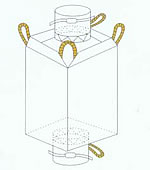
FIBC Bags
Source high-performance FIBC Bags from vetted Chinese and Asian manufacturers. Designed for importers, industrial distributors, and brands requiring reliable bulk packaging, our network delivers custom jumbo bags, food-grade bulk containers, and UN-certified FIBCs engineered for rigorous load-bearing and regulatory compliance.
Sourcing Flexible Intermediate Bulk Containers (FIBCs) at scale requires precision. Because these bags transport hundreds or thousands of kilograms of material—from agricultural goods to hazardous chemicals—a failure in the supply chain translates directly to a catastrophic failure on the warehouse floor. Securing reliable production means looking past basic dimensions to scrutinize polymer extrusion quality, weaving tension, and rigorous batch testing protocols.
Defining Your FIBC Specifications
To get accurate quotes and ensure safety compliance, you must specify exact structural and material parameters to your manufacturing partner. Vague requests result in bags that bulge, tear, or degrade under UV exposure.
Core Load and Fabric Metrics
- Safe Working Load (SWL): Typically ranging from 500 kg to 2000 kg. The factory must engineer the lifting loops and bottom discharge mechanisms to handle this specific weight.
- Safety Factor (SF): Industry standards dictate a 5:1 ratio for single-trip bags and a 6:1 ratio for multi-trip bags.
- Fabric Weight (GSM): The gram-per-square-meter metric of the woven polypropylene (PP). Standard bags use 130 to 220 GSM fabric. Higher GSM increases puncture resistance but raises unit costs.
- UV Stabilization: Uncoated PP degrades in sunlight. Specify the required UV protection (e.g., retaining 50 percent of tensile strength after 200 hours of UV exposure).
Construction Profiles
The way the woven PP panels are stitched together dictates how the bag behaves when filled.
| Construction | Characteristics | Typical Application |
|---|---|---|
| U-Panel | Two side panels stitched to a single continuous piece forming the bottom and opposite sides. | Standard industrial bulk materials. |
| Circular (Tubular) | Woven as a continuous cylinder with no vertical seams. Base is stitched on separately. | Fine powders, minimizing sift risks. |
| Baffled (Q-Bags) | Internal fabric baffles across corners to maintain a rigid square shape when filled. | Optimizing shipping container space. |
| 4-Panel | Four separate fabric pieces stitched together. Prone to bulging but highly customizable. | Specialized dimensions or mixed materials. |
Need help matching bag construction to your material handling requirements? Our sourcing engineers can guide you.
Discuss your FIBC specsElectrostatic and Regulatory Classifications
When handling fine powders or operating in environments with combustible dust, static electricity buildup during filling and discharge is a critical hazard. FIBCs are categorized by their anti-static properties:
- Type A: No static protection. Safe only for non-combustible materials in environments free of flammable gases.
- Type B: Prevents propagating brush discharges but cannot dissipate static. Safe for dry, combustible dusts, provided there are no flammable vapors nearby.
- Type C (Conductive): Features interwoven conductive threads. Must be physically grounded during filling and discharging.
- Type D (Dissipative): Made from specialized fabrics that safely dissipate static into the atmosphere without requiring a ground connection.
If you are sourcing Type C or D bags, or UN-certified bags for hazardous materials, verifying the supplier's testing capabilities is non-negotiable. Using rigorous factory audits ensures the manufacturer actually possesses the specialized testing rigs required for these certifications, rather than just claiming compliance.
Quality Control on the Factory Floor
FIBC manufacturing relies heavily on manual sewing. Even with top-tier PP resin, poor stitch density or incorrect thread tension will compromise the bag's integrity.
Critical Pre-Shipment Inspections for FIBCs
- Top Lift Test: Subjecting the bag to its specified Safety Factor load (e.g., 5 times the SWL) to verify loop and seam strength.
- Drop Test: Dropping a filled bag from a specified height to check for catastrophic seam failure.
- Tear Propagation Test: Ensuring a minor puncture does not rapidly split the woven fabric under tension.
- Cleanliness Inspection: For food-grade or pharma-grade bags, verifying production occurred in an ISO-certified cleanroom environment.
- Sift-Proofing Verification: Checking filler cords and felt strips on seams to ensure fine powders cannot escape.
Implementing strict quality control protocols before the bags are baled and loaded into shipping containers is the only way to prevent defective batches from entering your supply chain.
Pricing, MOQs, and Lead Times
FIBC pricing is highly sensitive to the global cost of polypropylene resin, which fluctuates with oil prices. Additional costs stem from the bag's weight (GSM), the complexity of the top/bottom spouts, inner PE liners, and specialized treatments like anti-static coatings.
When planning your procurement, account for the fact that FIBCs are shipped baled and compressed. Maximizing container space is crucial for keeping landed costs low. Proper supply chain management can help align your production runs with optimal freight consolidation strategies.
Looking to optimize your bulk packaging costs without compromising on safety factors? Let's review your current sourcing setup.
Talk to our teamFrequently Asked Questions
Sourcing FIBC bags in volume is an exercise in risk management. A supplier's ability to consistently extrude high-tensile tape, weave uniform fabric, and execute flawless industrial stitching dictates the safety of your logistics. Partnering with experienced professionals ensures that every batch meets your exact load and compliance requirements before it ever leaves the factory.
Get Sourcing Help for FIBC Bags
Tell us your requirements and our experts will connect you with verified manufacturers.