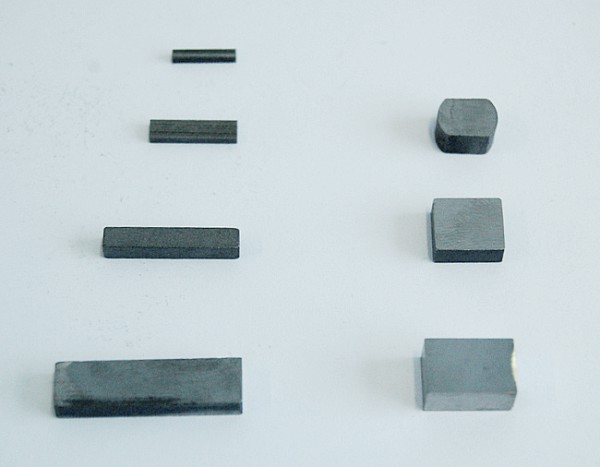
Ferrite Beads and Chips
Source high-quality ferrite beads and chips in bulk from vetted manufacturers and suppliers. Designed for electronics importers, wholesale distributors, and OEM brands, our network delivers reliable EMI/RFI suppression components with strict quality control and competitive volume pricing.
Sourcing passive EMI suppression components at scale requires moving beyond unit price and focusing on batch-to-batch consistency. When you are purchasing ferrite beads and chips by the millions, the true cost is determined by yield rates, impedance stability, and flawless performance on automated surface-mount technology (SMT) assembly lines. Securing a reliable supply chain means partnering with factories that maintain precise control over their raw material mixing, sintering profiles, and termination plating.
Defining Your Component Specifications
To get accurate quotes and avoid production delays, your RFQs must clearly define the electrical and physical parameters of the ferrite chips. Standardizing these specifications ensures suppliers are quoting apples-to-apples.
Critical Specifications for Ferrite RFQs
- Impedance (Z): Specified in Ohms (Ω), typically measured at 100 MHz.
- DC Resistance (DCR): Maximum allowable resistance in Ohms. Lower DCR is critical for power lines to prevent voltage drops and heat generation.
- Rated Current (Idc): Maximum continuous current (in mA or A) the bead can handle without exceeding temperature limits or saturating.
- Package Size: Standard EIA footprints (e.g., 0201, 0402, 0603, 0805, 1206).
- Operating Temperature Range: Standard commercial (minus 55 to 125 degrees Celsius) or automotive grades.
A common sourcing pitfall is ignoring the DC bias characteristics. As the current running through a ferrite bead increases, its effective impedance drops. Suppliers must provide impedance vs. DC bias curves to ensure the component performs as expected under actual load conditions.
Manufacturing Variables and Quality Control
The performance of a ferrite chip is locked in during the manufacturing process. The core material—typically a nickel-zinc (NiZn) or manganese-zinc (MnZn) ferrite—is mixed, pressed, and co-fired with internal silver electrodes.
Sintering and Micro-Structure
The co-firing (sintering) process requires exact temperature profiling. Variations here cause micro-cracks or alter the magnetic permeability, leading to impedance drift across the batch.
Termination and Plating
End terminations usually consist of silver, nickel, and tin layers. Poor nickel barrier plating allows solder to leach the silver during reflow, causing 'tombstoning' or poor joint reliability.
Tape and Reel Packaging
Components must be packaged according to EIA-481 standards. Defective carrier tape or weak cover tape peels can jam high-speed pick-and-place machines, halting assembly lines.
Because visual inspection cannot verify magnetic properties, rigorous inline electrical testing is mandatory. Before committing to a large-scale order, conducting Factory Audits is crucial to verify that the manufacturer has automated 100-percent electrical sorting and strict statistical process control (SPC) in place.
Need to verify a ferrite component manufacturer's quality systems? We can help audit their facilities and production lines.
Talk to our teamFurthermore, electronics destined for global markets must meet strict environmental directives. Partnering with suppliers who can provide verifiable Compliance & Testing documentation for RoHS and REACH is non-negotiable to prevent customs seizures and market rejections.
Pricing, MOQs, and Lead Times
Ferrite beads are low-cost, high-volume commodities, meaning pricing is heavily influenced by raw material costs (silver, nickel, zinc) and production scale.
Miniaturization drives cost. While an 0603 or 0805 ferrite chip is highly commoditized and inexpensive, ultra-compact 0201 or 01005 sizes require significantly more advanced manufacturing equipment, resulting in a higher unit cost.
When managing high-volume supply chains, buffer stock is essential. Implementing robust Quality Control & Inspection prior to shipment ensures that the reels arriving at your contract manufacturer are defect-free and ready for immediate SMT assembly.
Optimize your passive component supply chain. Speak with our sourcing experts about securing reliable ferrite bead production.
Get a free consultationFrequently Asked Questions
Securing a stable supply of ferrite beads and chips requires balancing electrical precision with high-volume manufacturing reliability. By prioritizing suppliers with automated quality control and verified sintering processes, you protect your downstream assembly yields and overall product performance.
Get Sourcing Help for Ferrite Beads and Chips
Tell us your requirements and our experts will connect you with verified manufacturers.