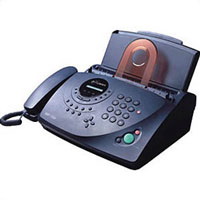
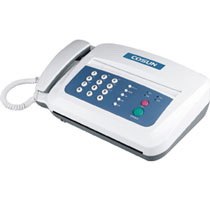
Fax Machines
Source commercial and institutional fax machines from vetted suppliers and manufacturers across Asia. Designed for importers, distributors, and brands requiring reliable OEM/ODM production, our wholesale network delivers high-volume communication hardware built to strict global compliance and connectivity standards.
While consumer communication has shifted entirely to digital IP networks, dedicated fax machines remain a strictly mandated hardware requirement in global medical, legal, and government sectors due to secure, point-to-point transmission regulations. Sourcing these units in bulk requires navigating legacy telecom standards, precise mechanical engineering for document feeding, and stringent regional compliance.
For B2B buyers, the challenge lies in identifying assembly facilities that still maintain high-quality production lines for Public Switched Telephone Network (PSTN) hardware, rather than settling for factories offloading outdated, poorly integrated components.
Core Print Engine and Modem Specifications
The foundation of any enterprise-grade fax machine is its print engine and modem architecture. When negotiating with manufacturers, the bill of materials (BOM) must specify industrial-grade components capable of handling high daily duty cycles without thermal degradation or mechanical failure.
| Print Technology | Mechanism & Consumables | Primary Market Application |
|---|---|---|
| Direct Thermal | Thermal printhead on chemically treated paper | Budget-conscious, low-volume desktop environments |
| Laser / LED | Toner cartridge and photosensitive drum | High-volume institutional (medical/legal/government) |
| Thermal Transfer | Thermal ribbon onto standard plain paper | Mid-tier office environments requiring archival longevity |
Beyond the print engine, modem speed is critical. Enterprise models should universally support Super G3 (33.6 Kbps) protocols, stepping down automatically to G3 (14.4 Kbps) for degraded line conditions. Buyers must also specify the internal memory capacity (SRAM or Flash) to ensure the machine can store incoming faxes (often specified in page counts, such as a 500-page memory buffer) if the paper tray empties during an unattended transmission.
Struggling to find reliable OEM manufacturers for legacy telecom hardware? Let us connect you with vetted factories capable of custom fax machine production.
Talk to our teamMechanical Reliability: The ADF and Paper Path
The most frequent point of failure in any document imaging hardware is the Automatic Document Feeder (ADF). When sourcing OEM/ODM Services for fax machines, the mechanical design of the separation pad and pickup rollers dictates the product's lifespan.
Factories cutting corners will use lower-grade elastomers for pickup rollers, leading to rapid degradation, misfeeds, and multi-page pulls.
Critical Factory-Level Mechanical Checks
- Elastomer durometer testing for ADF pickup and separation rollers.
- Paper path tolerance checks for varying paper weights (typically 60 to 90 GSM).
- Hinge durability testing on the scanner/ADF lid (minimum 50,000 cycle rating).
- Thermal management verification for power supplies during continuous transmission.
Global Telecom Compliance and Quality Control
Unlike standard consumer electronics, fax machines must interface directly with regional telecom infrastructure. This requires rigorous adherence to local standards, which vary significantly between North America, Europe, and Asia. A machine designed for the US market (FCC Part 68) may fail to negotiate a handshake on a European PBX system without proper firmware and hardware localization (such as TBR21 compliance).
Implementing strict Quality Control & Inspection protocols at the factory level is non-negotiable. Line testing must include PSTN simulators to verify modem handshakes, error correction mode (ECM) functionality, and line noise tolerance. Furthermore, electrical safety and EMI/EMC certifications (CE, RoHS, UL) must be verified through legitimate third-party Compliance & Testing labs, as counterfeit certifications remain a risk with lower-tier suppliers.
Production Realities: MOQ, Pricing, and Lead Times
Because fax machines require specialized tooling for paper handling and telecom integration, production runs require careful planning.
Pricing is driven primarily by the print engine (laser engines command a significant premium over direct thermal) and the complexity of the ADF. Buyers should negotiate a comprehensive spare parts package as part of the initial contract, ensuring local service centers have access to proprietary gears, rollers, and mainboards to support the product's warranty lifecycle.
Need precise cost modeling and factory vetting for your next telecommunications hardware order? We manage the sourcing process from BOM verification to final shipment.
Get a free consultationFrequently Asked Questions
Successfully importing commercial fax machines requires balancing legacy telecom requirements with modern manufacturing precision. By focusing on mechanical durability in the paper path and ensuring rigorous regional telecom compliance, buyers can secure reliable, high-margin hardware for institutional markets. Partnering with experienced sourcing professionals ensures these technical requirements are met before a single unit leaves the factory floor.
Get Sourcing Help for Fax Machines
Tell us your requirements and our experts will connect you with verified manufacturers.