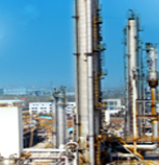
Environmental Protection Engineering
Source commercial-grade environmental protection engineering equipment and modular systems directly from vetted manufacturers. Designed for EPC contractors, importers, and large-scale distributors, our wholesale network provides reliable, compliant solutions for wastewater, emission control, and waste management projects.
Sourcing equipment and modular systems for environmental protection engineering requires balancing stringent regulatory compliance with aggressive project budgets. Whether you are procuring skid-mounted wastewater treatment units, industrial dust collection systems, or solid waste sorting lines, the stakes are high. Substandard fabrication can lead to premature corrosion, system failures, and severe regulatory penalties. Success depends on partnering with fabricators capable of meeting exact engineering tolerances and international environmental standards.
Specifying Environmental Engineering Systems
Procuring heavy engineering equipment is rarely a standard catalog purchase. Buyers must clearly define operational parameters, environmental conditions, and material requirements to ensure the factory builds to the correct standard.
When drafting your technical specifications, focus on the following core variables:
- Throughput and Capacity: Clearly define expected flow rates (cubic meters per hour), peak loads, and processing volumes.
- Operating Environment: Specify ambient temperatures, humidity, and exposure to corrosive agents (acids, alkalis, or saline environments).
- Power and Automation: Define voltage requirements, motor efficiency ratings (e.g., IE3 or IE4), and PLC integration protocols (Siemens, Allen-Bradley, or standard Modbus).
Material selection is arguably the most critical factor in environmental engineering, directly impacting the lifespan and cost of the equipment.
| Material | Primary Application | Cost Profile | Durability / Corrosion Resistance |
|---|---|---|---|
| Carbon Steel (Epoxy Coated) | Standard structural frames, dry dust collectors | Low | Moderate; requires regular coating maintenance |
| Stainless Steel 304 | General wastewater tanks, neutral pH environments | Medium | High; suitable for non-chloride environments |
| Stainless Steel 316L | Corrosive wastewater, chemical dosing systems | High | Excellent; high resistance to chlorides and acids |
| FRP (Fiberglass Reinforced Plastic) | Scrubbers, highly acidic storage tanks | Medium to High | Superior chemical resistance; lower structural rigidity |
Need help matching your project specifications with the right fabrication facility? We can help you identify capable manufacturers.
Talk to our engineering sourcing teamManufacturing Tolerances & Quality Control
Quality is won or lost on the factory floor, particularly in the welding and coating stages. In environmental engineering, a single compromised weld can lead to catastrophic leaks or structural failure under hydrostatic pressure.
To mitigate these risks, implement rigorous Quality Control & Inspection protocols at key production milestones. Do not wait until the equipment is fully assembled and painted to verify weld integrity.
Critical Factory Acceptance Testing (FAT) Checks
- Verify raw material certificates (MTCs) against specified steel grades before fabrication begins.
- Conduct Non-Destructive Testing (NDT) on critical welds (X-ray or ultrasonic testing).
- Perform hydrostatic or pneumatic pressure testing on all sealed tanks and piping manifolds.
- Measure dry film thickness (DFT) of anti-corrosion coatings to ensure they meet specified microns.
- Run dry-cycle mechanical tests on pumps, agitators, and motors to check for abnormal vibration or overheating.
Vetting Heavy Engineering Suppliers
The Chinese industrial manufacturing sector is vast, but only a fraction of suppliers have the in-house engineering capabilities to handle complex environmental protection projects. Many listed suppliers are trading companies that outsource fabrication to smaller, less regulated workshops, leading to inconsistent quality and a lack of accountability.
Thorough Factory Audits are essential. When evaluating a facility, look for comprehensive ISO 9001 (Quality Management) and ISO 14001 (Environmental Management) certifications. Furthermore, verify their ASME or equivalent pressure vessel certifications if your project involves pressurized components. It is also critical to review their Compliance & Testing records to ensure previous exports have met destination-market electrical and safety standards (such as CE, UL, or CSA).
Beware of Outsourced Fabrication
Always verify the factory's in-house capabilities. If a supplier claims to manufacture large-scale water treatment plants but lacks heavy lifting equipment (overhead cranes over 20 tons), large-scale bending machines, and a dedicated sandblasting/painting facility, they are likely subcontracting the core work.
Project Pricing, MOQs, and Lead Times
Unlike consumer goods, environmental engineering equipment is typically sourced on a project basis. Minimum Order Quantities (MOQs) are often listed as 1 set or 1 unit, but pricing is highly dependent on customization, material indices (such as global steel prices), and the scale of the system.
Because these systems are bulky and often irregularly shaped, logistics can significantly impact the landed cost. Work with a partner experienced in Shipping & Freight for heavy machinery to optimize container loading, arrange flat-rack or open-top containers, and manage breakbulk shipping for oversized tanks.
Ensure your project stays on budget and on schedule. Speak with our team about supplier vetting and production management.
Get a free consultationFrequently Asked Questions
Successfully importing environmental protection engineering solutions requires moving beyond basic price comparison. The true value lies in rigorous technical specification, uncompromising quality control during fabrication, and seamless logistics. By partnering with vetted, capable fabricators, you can secure high-performance systems that deliver long-term reliability and compliance for your projects.
Get Sourcing Help for Environmental Protection Engineering
Tell us your requirements and our experts will connect you with verified manufacturers.