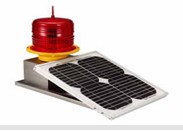
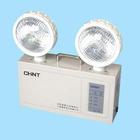
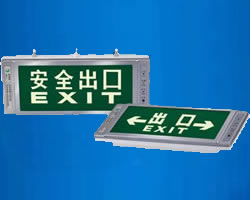
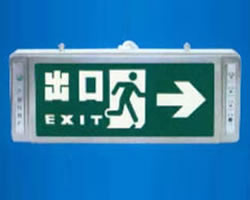
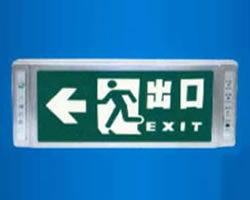
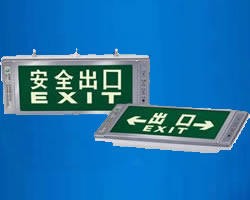
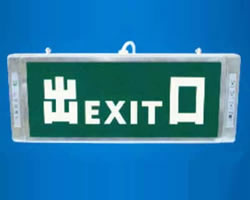
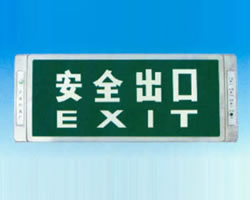
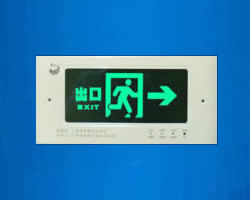
Emergency and Security Lighting
Source reliable Emergency and Security Lighting from vetted suppliers and manufacturers. Designed for importers, wholesalers, and commercial brands looking for OEM/private-label production, our network delivers high-performance safety illumination systems built to strict international compliance standards.
Emergency and security lighting systems are life-safety devices first and luminaires second. The core sourcing challenge isn't merely achieving the specified lumen output; it is ensuring absolute reliability during a power failure years after the initial installation. Sourcing these fixtures at volume requires strict oversight of battery chemistries, thermal management within the housing, and rigorous adherence to regional fire and safety codes.
Specifying for Reliability and Lifespan
The failure of an emergency light is typically a failure of the battery or the emergency driver, not the LED array. When negotiating with manufacturers, the bill of materials (BOM) must be explicitly detailed. Relying on a factory's "standard configuration" often results in cost-cutting on the internal components that dictate the fixture's functional lifespan.
Battery Chemistry Selection
The battery is the most critical component in any emergency luminaire. Its chemistry dictates the operating temperature range, charging cycle life, and overall maintenance schedule.
| Chemistry | Typical Lifespan | Temp Tolerance | Primary Application |
|---|---|---|---|
| NiCd (Nickel Cadmium) | 3-5 years | Excellent (up to 55°C) | Industrial, high-ambient environments |
| NiMH (Nickel Metal Hydride) | 3-5 years | Moderate | Standard commercial, environmentally sensitive markets |
| LiFePO4 (Lithium Iron Phosphate) | 5-8+ years | High | Premium fixtures, low-maintenance installations |
Beyond the battery, specify the exact emergency driver IC and ensure the housing utilizes V-0 flame-retardant polycarbonates or heavy-gauge aluminum for security applications.
Manufacturing Vulnerabilities and Quality Control
High-quality emergency lighting requires precision on the factory floor, particularly in the Surface Mount Technology (SMT) processes for the emergency driver and the battery integration phase. Factories must have dedicated burn-in rooms and automated testing equipment to simulate power failures.
Conducting thorough factory audits is essential to verify that a supplier actually possesses in-house integrating spheres, battery aging testers, and high-pot (high potential) testing stations.
SMT Precision
The emergency driver board must be manufactured with high-precision SMT lines to ensure the battery management system (BMS) functions flawlessly without parasitic drain.
Battery Aging & Cycle Testing
Quality factories will subject incoming battery cells to charge/discharge cycle testing to identify dead cells before they are soldered into packs.
100% Burn-In & Simulation
Finished units must undergo a minimum 12-to-24 hour burn-in test, followed by an automated power-cut simulation to verify the switch-over time is under 1 second.
Need to verify a supplier's testing capabilities before committing to an order?
Talk to our teamImplementing strict quality control & inspection protocols before shipment is non-negotiable. Inspectors must physically disconnect the power supply on a statistically significant sample of the finished goods to verify the emergency operation duration meets your specified standard (e.g., 90 minutes or 3 hours).
Compliance and Certification Requirements
Emergency lighting is heavily regulated. Importing non-compliant fixtures exposes your business to severe liability and customs seizures. You cannot rely on a supplier's assurance that a product "meets standards"; you must verify the test reports against the specific BOM you are ordering.
Regional Standards
The US market requires strict adherence to UL 924, dictating a minimum 90-minute emergency run time. The European market operates under EN 60598-2-22, typically requiring 3 hours of emergency operation. Security lighting often requires IK08 to IK10 impact resistance certifications.
If you are modifying an existing design or developing a new fixture, utilizing professional compliance & testing services ensures your products pass local regulatory bodies before mass production begins.
Buying Mechanics: Pricing, MOQs, and Lead Times
Pricing in this category is highly elastic based on the battery capacity, housing material (e.g., die-cast aluminum vs. injection-molded plastic), and the presence of advanced features like auto-test/self-diagnostic capabilities.
When utilizing OEM/ODM services to build a proprietary line of security lighting, factor in an additional 30 to 45 days for tooling and initial prototype validation.
Ready to scale your private-label emergency lighting line with reliable manufacturing partners?
Get a free consultationFrequently Asked Questions
Sourcing emergency and security lighting is an exercise in risk management. Success depends on partnering with manufacturers who treat these fixtures as the critical safety infrastructure they are, backed by transparent BOMs and verifiable testing protocols.
Get Sourcing Help for Emergency and Security Lighting
Tell us your requirements and our experts will connect you with verified manufacturers.