Drywall Anchors
Source commercial-grade drywall anchors from vetted suppliers and manufacturers across Asia. Designed for hardware importers, distributors, and brands seeking reliable bulk sourcing or private-label OEM production. Secure competitive pricing, strict quality control, and scalable manufacturing for high-volume fastener programs.
Sourcing drywall anchors in volume is a margin-driven exercise that leaves zero room for material failure. Whether you are supplying commercial hardware distributors or building a private-label fastener brand, securing consistent pull-out strength across millions of units requires strict oversight of polymer grades, casting tolerances, and packaging workflows. Success depends on partnering with manufacturers who control their raw material inputs and maintain rigorous tooling standards.
Core Materials and Technical Specifications
The performance of a drywall anchor is dictated entirely by its material composition and thread geometry. Buyers must specify exact material grades on purchase orders to prevent factories from substituting cheaper, inferior alternatives that lead to installation failures.
| Material | Common Application | Key Sourcing Considerations |
|---|---|---|
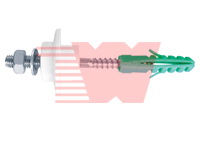
| Nylon (Polyamide 6/6) | Premium ribbed/expansion anchors | High elasticity, resists cracking in cold environments; costs more than PE. |
| Polyethylene (PE) | Standard commercial expansion anchors | Prone to brittleness if high levels of recycled regrind are used. |
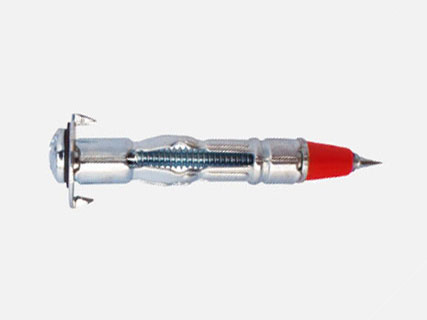
| Zinc Alloy (Zamak) | Self-drilling threaded anchors | Requires precise die-casting to ensure the drill point does not snap during torque. |
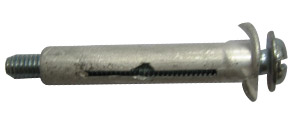
| Carbon Steel | Heavy-duty hollow wall anchors | Must specify zinc-plating thickness (e.g., 3-5 microns) to prevent premature corrosion. |
When negotiating with suppliers, demand transparency regarding the percentage of virgin versus recycled plastic used in injection molding. High ratios of regrind will drastically lower the shear and pull-out strength of nylon and PE anchors.
Manufacturing Tolerances and Quality Control
Drywall anchors are produced via high-speed injection molding (for plastics) or die-casting (for zinc alloys). Because these are high-volume, low-margin items, factories often push their tooling to the limit, resulting in degraded molds and inconsistent product batches.
Implementing a robust Quality Control & Inspection protocol is critical before containers are loaded. Pre-shipment inspections should focus on both dimensional accuracy and functional testing.
Critical Factory-Level QC Checks
- Thread Integrity: Inspect for flashing (excess plastic/metal) that impedes screw insertion.
- Drill Point Sharpness: For self-drilling anchors, verify the tip angle and casting completeness.
- Material Brittleness: Conduct cold-temperature installation tests to identify excessive regrind use.
- Plating Adhesion: Test zinc-plated steel anchors for uniform coverage and resistance to flaking.
- Collar Flange Dimensions: Ensure the flange is wide enough to prevent the anchor from pushing through the drywall.
Need to verify a factory's injection molding capabilities and quality management systems before committing to a high-volume fastener program?
Talk to our teamPrivate Labeling and Kitting Solutions
In the fastener industry, packaging is often as complex as the product itself. Most B2B buyers require anchors to be kitted with matching screws in specific quantities (e.g., 50-piece blister packs, 200-piece plastic organizers, or bulk carton configurations).
Sourcing factories that offer in-house automated sorting and packaging can significantly reduce your landed costs. If you are developing a proprietary retail line, leveraging OEM/ODM Services allows you to customize anchor colors, mold your brand logo onto the anchor flange, and design custom injection-molded cases. Integrating this with professional Branding & Design ensures your packaging meets both structural and retail display requirements.
Buying Mechanics: MOQ, Pricing, and Lead Times
Fastener economics rely on massive scale. Pricing is heavily influenced by raw material index costs (zinc, crude oil for plastics, steel) and the complexity of your packaging requirements.
When requesting quotes, always specify whether the price includes the matching screws (and detail the screw specifications: material, head type, drive type, and plating). Clarify the exact packaging configuration, as manual sorting and packing can add unexpected labor costs to your final invoice.
Optimize your fastener supply chain. We help buyers negotiate accurate MOQs, secure competitive pricing, and manage complex kitting requirements.
Get a free consultationNavigating the fastener supply chain requires deep technical oversight to ensure that unit economics do not compromise structural integrity. By carefully vetting supplier capabilities and enforcing strict material specifications, you can build a highly profitable, reliable product line. For comprehensive support in managing this process, professional Product Sourcing can bridge the gap between your engineering requirements and the factory floor.
Get Sourcing Help for Drywall Anchors
Tell us your requirements and our experts will connect you with verified manufacturers.