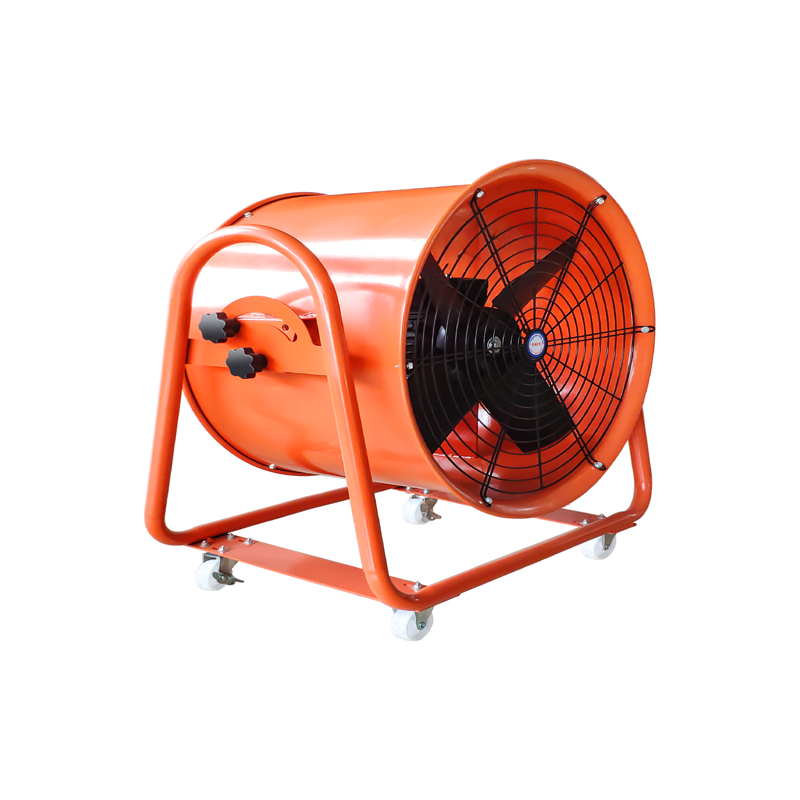
Draught Fans
Source industrial draught fans directly from vetted manufacturers and wholesale suppliers. Built for procurement managers, distributors, and brands requiring OEM/ODM production, our network delivers reliable forced and induced draft solutions. Secure bulk pricing on high-performance ventilation machinery.
Industrial draught fans serve as the critical lungs for boiler systems, industrial kilns, and large-scale ventilation networks. Procuring these units in volume requires moving past basic airflow metrics to scrutinize impeller balancing, motor thermal ratings, and casing integrity. In continuous-duty applications, a poorly manufactured fan doesn't just underperform—it causes catastrophic vibration, bearing failure, and expensive facility downtime.
Defining Core Specifications for Bulk Procurement
When negotiating with manufacturers, vague specifications lead to inconsistent production. You must define the exact operational envelope the fan will face. Forced Draft (FD) fans pushing ambient air require vastly different material tolerances than Induced Draft (ID) fans pulling corrosive, high-temperature exhaust gases.
| Parameter | Standard Duty (FD) | High-Temperature (ID) |
|---|---|---|
| Operating Temperature | Under 80 Celsius | Up to 250+ Celsius |
| Impeller Material | Carbon Steel (Q235) | Stainless Steel or Alloy |
| Bearing Cooling | Standard Air Cooled | Water-Cooled Bearing Box |
| Motor Placement | Direct Drive (A-Type) | Coupling / Belt Drive (C/D-Type) |
Beyond material selection, precise aerodynamic parameters must be established upfront: total pressure (Pa), static pressure, volumetric flow rate (CFM or m³/h), and the specific gas density at the operating altitude.
Manufacturing Variances and Quality Control
The primary differentiator between a premium draught fan and a substandard unit is the manufacturing precision of the rotating assembly. Imbalance is the enemy of industrial fans.
Reputable factories utilize dynamic balancing machines to calibrate the impeller to ISO 1940 standards (typically G6.3 for standard industrial fans, or G2.5 for high-speed applications). If a supplier skips rigorous dynamic balancing, the resulting vibration will rapidly destroy the motor bearings and compromise the structural integrity of the casing.
Need to verify a manufacturer's balancing equipment and quality control processes before placing a bulk order?
Talk to our teamTo ensure longevity, strict oversight is required on the factory floor. Implementing comprehensive Quality Control & Inspection protocols should focus on:
- Weld Integrity: Continuous, slag-free welding on the casing and impeller blades to prevent stress fractures.
- Motor Quality: Verification of 100 percent copper windings, appropriate insulation class (Class F or H), and ingress protection (IP54/IP55).
- Coating Thickness: Industrial-grade epoxy or polyurethane coatings measured with a dry film thickness gauge to ensure corrosion resistance.
Conducting thorough Factory Audits prior to finalizing your supplier ensures they possess the necessary CNC laser cutting, automated welding, and dynamic balancing machinery required for consistent bulk production.
OEM/ODM and Application-Specific Customization
For distributors and brands supplying specialized industries (such as mining, power generation, or chemical processing), off-the-shelf units rarely suffice. Leveraging OEM/ODM Services allows you to tailor the machinery to specific regulatory environments or proprietary system designs.
Critical OEM Customization Parameters
- Explosion-proof motors (ATEX/Exd IIB T4) for hazardous environments
- Variable Frequency Drive (VFD) compatibility for energy efficiency
- Custom voltage and frequency ratings (e.g., 480V/60Hz for North America)
- Acoustic insulation enclosures or silencers for noise-restricted zones
- Private-label branding, custom paint codes, and localized nameplates
MOQs, Pricing Drivers, and Lead Times
Because draught fans are capital-intensive, heavy machinery, Minimum Order Quantities (MOQs) are highly flexible compared to consumer goods.
Pricing is heavily influenced by global steel indices, the origin of the motor (domestic Chinese brands vs. imported brands like Siemens or ABB), and the complexity of the drive system.
Additionally, because these units are bulky and often require custom crating, freight costs can represent a significant portion of the landed price. Coordinating Shipping & Freight early in the procurement cycle—including evaluating Flat Rack containers or LCL consolidation for smaller runs—is essential for accurate margin calculation.
Struggling to align custom specifications with reliable production timelines and freight logistics?
Get a free consultationFrequently Asked Questions
Sourcing draught fans in bulk is an exercise in risk mitigation. The initial unit price is only a fraction of the total cost of ownership; a poorly balanced impeller or a substandard motor will quickly erase any upfront savings through maintenance costs and system downtime. Partnering with facilities that prioritize engineering tolerances over rapid assembly is the only sustainable strategy for industrial procurement.
Get Sourcing Help for Draught Fans
Tell us your requirements and our experts will connect you with verified manufacturers.