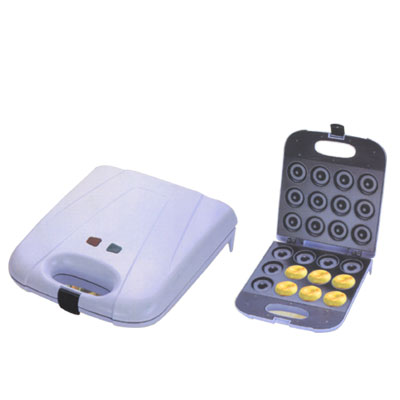
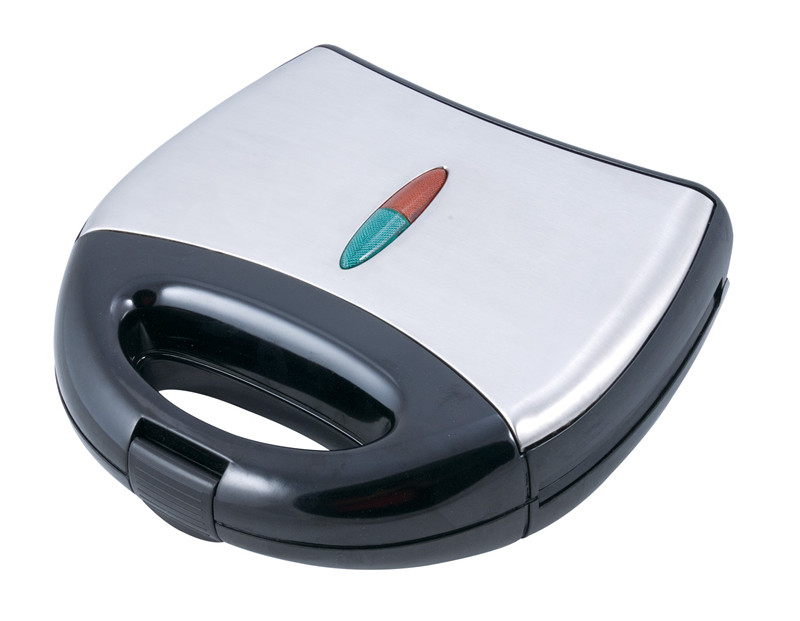
Donut Machines
Source commercial donut machines from vetted manufacturers and suppliers. Designed for importers, wholesalers, and food service equipment distributors, our network provides high-capacity automatic and semi-automatic units. Ensure food-grade compliance, thermal stability, and reliable performance for your bulk procurement and OEM projects.
Procuring commercial donut machines at scale requires navigating a complex intersection of food safety compliance, thermal engineering, and mechanical reliability. For distributors and brands, the sourcing challenge is rarely finding a supplier—it is identifying a manufacturing partner capable of delivering consistent heating distribution, durable conveyor mechanics, and strict adherence to international electrical and sanitation standards.
When importing these units, the difference between a high-margin asset and a warranty liability usually comes down to the gauge of stainless steel, the quality of the thermostat, and the precision of the automated forming mechanisms.
Core Engineering and Material Specifications
Commercial donut equipment must handle continuous operation in high-heat, oil-heavy environments. When negotiating specifications with a factory, buyers must dictate the exact component standards rather than accepting off-the-shelf default builds.
The SS201 vs. SS304 Trap
Many budget-tier manufacturers quote low prices by utilizing SS201 stainless steel for the chassis and even food-contact areas. For commercial food service equipment, you must explicitly specify SS304 (or SS316 for high-corrosion environments) for the hopper, frying tank, and forming molds to meet health department regulations and prevent rapid oxidation.
Key Technical Parameters to Define
- Output Capacity: Typically measured in pieces per hour (pcs/hr). Tabletop automatic units usually range from 300 to 500 pcs/hr, while floor-standing industrial lines can exceed 1,200 pcs/hr.
- Heating Elements: The distribution of heating tubes dictates thermal stability. Poorly spaced tubes result in cold spots, leading to uneven frying. Specify high-density, multi-loop heating elements.
- Thermostatic Control: Standard units use basic bimetallic thermostats with a high failure rate. Upgrading to PID temperature controllers ensures oil temperature remains within a tight tolerance (usually 50 to 300 degrees Celsius), preventing burnt oil or undercooked dough.
- Drive Motors: The conveyor and turning mechanisms rely on continuous-duty motors. Specify brushless DC motors or branded AC motors (e.g., Siemens or equivalent) to reduce field failures.
Need help verifying supplier engineering capabilities? Talk to our team.
Discuss your equipment specsProduction Automation Levels
Selecting the right tier of machinery depends on your target market—whether you are supplying small bakeries, food trucks, or high-volume industrial commissaries.
| System Type | Forming | Frying & Turning | Typical Target Market |
|---|---|---|---|
| Manual Dispenser | Hand-crank | Manual | Small cafes, food trucks |
| Semi-Automatic | Automated | Manual | Mid-sized bakeries |
| Fully Automatic | Automated | Automated (Chain Drive) | High-volume franchises, industrial |
If you are developing a proprietary machine design or modifying existing models for your brand, leveraging professional OEM/ODM Services ensures your technical requirements are properly translated to the factory floor.
Quality Control and Compliance
Food processing machinery faces stringent regulatory hurdles. Importing non-compliant equipment can result in customs seizures or severe liability issues.
Before mass production begins, verify that the factory holds genuine, verifiable certifications. Do not accept self-declared CE marks without reviewing the technical file. Partnering with experts for Compliance & Testing can mitigate the risk of importing uncertified electrical equipment.
Critical Factory-Level Inspection Points
- Dielectric voltage-withstand testing (Hi-Pot test) on all units.
- Verification of SS304 material using spectrometer analysis.
- Oil leak testing on the frying tank weld seams (minimum 24-hour hold).
- Calibration check of the thermostat against a calibrated external probe.
- Conveyor chain tension and turning-paddle timing alignment.
Implementing rigorous Quality Control & Inspection protocols before the machines are crated is the only reliable way to catch misaligned drives or faulty wiring.
Sourcing Economics: Pricing, MOQs, and Lead Times
The pricing of commercial donut machines is highly elastic, driven primarily by capacity, automation level, and component origin.
- Pricing Drivers: A basic tabletop automatic unit might wholesale between $400 and $800, whereas heavy-duty, dual-lane industrial machines range from $2,500 to over $6,000.
- Voltage Customization: Factories in Asia default to 220V/50Hz. If your market requires 110V/60Hz (North America) or 380V 3-phase, this must be negotiated upfront. It often increases lead times by 7 to 10 days and may require a higher MOQ to justify the custom motor and heating element procurement.
Optimize your procurement strategy and landed costs. Talk to our team.
Get a sourcing consultationFrequently Asked Questions
Successfully sourcing commercial donut machines requires looking past polished Alibaba listings to scrutinize the underlying engineering and material grades. By defining strict technical parameters and enforcing rigorous pre-shipment inspections, buyers can secure reliable, high-margin equipment that performs flawlessly in demanding food service environments.
Get Sourcing Help for Donut Machines
Tell us your requirements and our experts will connect you with verified manufacturers.