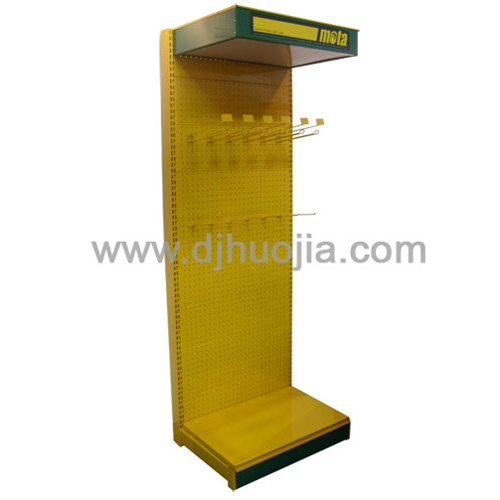
Display Racks
Source premium display racks from vetted suppliers and manufacturers across Asia. Designed for commercial importers, retail distributors, and brands requiring reliable OEM and ODM production in bulk. Secure competitive wholesale pricing and scalable manufacturing tailored to your exact merchandising specifications.
Sourcing commercial display racks at scale requires balancing structural integrity with aesthetic execution and shipping efficiency. Whether you are outfitting a national retail chain or distributing to independent storefronts, the manufacturing tolerances dictate both the lifespan of the fixture and the ease of store-level assembly. A minor misalignment in pre-drilled holes or inadequate powder coating can lead to thousands of dollars in retailer chargebacks or unsellable inventory.
Material Specifications and Fabrication
The core of any commercial display fixture is its material grade and the precision of its fabrication. Buyers must specify the exact gauge of metal, the density of composite woods, and the specific welding techniques required to handle the intended load capacity.
| Material Type | Typical Application | Critical Sourcing Specification |
|---|---|---|
| Cold-Rolled Steel (CRS) | Heavy-duty shelving, structural frames | Specify gauge (typically 1.2mm to 2.0mm) and carbon content. |
| Steel Wire / Mesh | Dump bins, lightweight pegboards | Wire diameter and grid spacing tolerances; spot weld integrity. |
| MDF / Particle Board | Gondola endcaps, boutique shelving | Density profile and edge-banding adhesive quality (EVA vs. PUR). |
| Acrylic / PETG | Cosmetics, high-end electronics | Thickness, UV resistance, and edge-polishing method (flame vs. diamond). |
Surface Treatments and Finish Quality
For metal racks, the surface treatment is the primary defense against corrosion and retail wear-and-tear. Powder coating is the industry standard, but its durability depends entirely on the factory's pre-treatment process. If the steel is not properly degreased and phosphated before coating, the finish will flake off under minimal stress. Specify a coating thickness of 60 to 80 microns and require a cross-hatch adhesion test during production.
Struggling with inconsistent factory finishes? Let our engineers review your technical specifications and match you with capable fabrication partners.
Discuss your projectQuality Control Defect Hotspots
Display racks look simple on paper, but mass production introduces compounding errors. Verifying a factory's capability through proper factory audits before tooling begins is essential. Once production starts, in-line inspections should focus on the following areas:
Critical Inspection Points for Display Racks
- Hole alignment: Ensure CNC punching tolerances allow for smooth assembly of Knock-Down (KD) parts.
- Weld strength: Check for slag, porosity, or sharp burrs on MIG/TIG joints that could injure store staff.
- Load-bearing tests: Conduct physical weight tests at 1.5x the stated capacity to check for deflection or bowing.
- Coating consistency: Inspect for 'orange peel' texture, thin spots in corners, or color variations between batches.
- Hardware counts: Verify that blister packs contain the exact count of screws, bolts, and leveling feet.
Catching these issues requires rigorous quality control protocols. Waiting until the final pre-shipment inspection is often too late, as reworking welded or powder-coated steel is prohibitively expensive and time-consuming.
Pricing, MOQs, and Lead Times
Display rack pricing is driven by raw material costs (primarily steel and aluminum indices), tooling requirements, and the complexity of the finish. However, the hidden cost driver in this category is freight.
Because fully assembled fixtures ship mostly empty space, engineering your racks as Knock-Down (KD) or flat-pack designs is non-negotiable for volume buyers. A well-engineered KD design can increase container utilization by over 300 percent compared to rigid, welded structures. When engaging in OEM/ODM services, prioritize factories with in-house structural engineers who can optimize the design for both load capacity and minimal cubic meters (CBM).
Need to optimize your display fixtures for lower freight costs? We can help re-engineer your designs for maximum container efficiency.
Get a sourcing assessmentFrequently Asked Questions
Successful display rack sourcing is ultimately an exercise in logistics engineering. By strictly defining your material tolerances, mandating comprehensive pre-treatment for finishes, and optimizing every design for flat-pack shipping, you can secure durable fixtures that protect your margins and your brand's retail presentation.
Get Sourcing Help for Display Racks
Tell us your requirements and our experts will connect you with verified manufacturers.