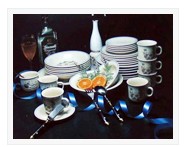
Dinnerware Sets
Source premium and everyday dinnerware sets in bulk from vetted manufacturers and suppliers. Designed for importers, wholesalers, distributors, and brands seeking reliable OEM and private-label production, our network delivers consistent quality, compliant glazes, and scalable manufacturing to meet your volume requirements.
Sourcing dinnerware sets at scale requires balancing aesthetic appeal with strict functional and regulatory requirements. Whether you are importing standard 16-piece stoneware sets for big-box retail or developing a custom bone china collection for hospitality distributors, success hinges on controlling the manufacturing variables: clay composition, firing temperatures, glaze stability, and packaging integrity.
Material Specifications and Selection
The foundation of any dinnerware set is its base material. Buyers must specify the exact ceramic type, as this dictates durability, water absorption, and the feasible types of surface decoration.
| Material | Firing Temp | Water absorption | Primary Application |
|---|---|---|---|
| Porcelain | 1300 C and above | Under 0.5% | High-durability retail, hospitality |
| Stoneware | 1100 C to 1200 C | 1% to 3% | Casual dining, reactive glaze designs |
| Bone China | 1200 C to 1250 C | Under 0.1% | Premium retail, luxury hospitality |
| New Bone (Magnesia) | 1150 C to 1250 C | Under 1% | Mid-tier retail, bone china alternative |
When developing private-label collections, specifying the exact material composition prevents suppliers from substituting lower-grade clays to cut costs. For instance, genuine bone china must contain a minimum of 30 percent bone ash to achieve its characteristic translucency and strength; standardizing this requirement in your PO is critical.
Need help identifying the right manufacturer for your specific material requirements?
Talk to our teamManufacturing Tolerances and Quality Control
Dinnerware production involves high-temperature kiln firing, which introduces natural variance. Controlling this variance separates reliable manufacturers from inconsistent ones. Warping, pinholing, and glaze crawling are common defects when kiln temperatures fluctuate or cooling is rushed to speed up production.
Implementing rigorous quality control protocols during and after production is essential.
Pre-Shipment Inspection Focus Areas
- Dimensional tolerance: Plates must stack evenly without wobbling (check for planar deformation).
- Surface defects: Inspect for black spots, pinholes, blisters, and uneven glaze application.
- Decal alignment: Ensure custom patterns are applied symmetrically and fired correctly to prevent peeling.
- Thermal shock resistance: Test samples by moving them rapidly between boiling water and cold water.
- Packaging drop tests: Verify that ISTA-standard drop tests pass to prevent transit breakage.
Regulatory Compliance and Heavy Metals
For North American and European markets, dinnerware must pass strict food contact safety regulations. The primary concern is leachable lead and cadmium, often found in brightly colored glazes or poorly fired decals. You must ensure your supplier uses food-safe glazes and that the final product undergoes third-party compliance testing to meet FDA (US), Prop 65 (California), or LFGB (EU) standards before the goods leave the factory.
Customization and OEM Production
Brands looking to differentiate often utilize OEM/ODM services to create custom molds or proprietary decal designs.
Decal Printing vs. Reactive Glazes
Advantages
- Decals: Precise logo placement, consistent patterns across the entire set, excellent for corporate or licensed branding.
- Reactive Glazes: Unique, artisanal finish on every piece, high perceived value in modern retail.
Disadvantages
- Decals: Requires a secondary firing process (increasing cost), can fade over time if not fired at high enough temperatures.
- Reactive Glazes: Highly unpredictable; color matching across different production batches is notoriously difficult.
When ordering custom shapes, factor in the cost and time for mold creation. Sample approval should always include a full production-grade sample, not just a 3D print or unglazed clay model, to verify how the glaze interacts with the custom contours.
Typical MOQs, Pricing, and Lead Times
Dinnerware is a volume business. Production economies of scale dictate minimum order quantities, especially when custom packaging or proprietary designs are involved.
Pricing is heavily influenced by the number of pieces in the set (e.g., 12-piece vs. 16-piece), the material grade, and the complexity of the packaging. Mail-order packaging (designed to survive individual parcel shipping without a master carton) adds significant cost but is mandatory for direct-to-consumer fulfillment.
Evaluate your current dinnerware sourcing costs and explore qualified factory alternatives.
Get a free consultationFrequently Asked Questions
Sourcing high-quality dinnerware sets requires strict oversight of raw materials, firing processes, and packaging standards. By establishing clear specifications and robust inspection protocols upfront, buyers can minimize breakage, ensure regulatory compliance, and secure reliable landed costs.
Get Sourcing Help for Dinnerware Sets
Tell us your requirements and our experts will connect you with verified manufacturers.