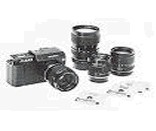
Digital Cameras
Source high-quality Digital Cameras from vetted suppliers and manufacturers across Asia. Designed for importers, distributors, and consumer electronics brands, our wholesale network supports bulk orders, custom OEM/ODM production, and private-label manufacturing to meet your exact technical and market requirements.
Sourcing digital cameras in bulk requires navigating a highly fragmented supplier base, primarily clustered in the manufacturing hubs of Shenzhen and Dongguan. The primary challenge isn't finding a factory capable of assembling a camera housing; it is identifying a manufacturer with the supply chain leverage to secure authentic image sensors and the cleanroom facilities necessary for precise optical alignment. For volume buyers, controlling component specifications at the factory level is the only reliable way to ensure the final product meets market expectations.
Component Specifications and the "Interpolation" Pitfall
The performance of any digital camera is dictated by two core components: the Image Sensor (CMOS or CCD) and the Digital Signal Processor (DSP). A common trap in consumer electronics sourcing is relying on top-line marketing specifications rather than hardware realities.
Many lower-tier factories advertise "48 Megapixel" or "4K" cameras. In reality, these are often built on inexpensive 5MP or 8MP sensors, using firmware interpolation to artificially inflate the pixel count. While acceptable for toy or promotional categories, this approach yields heavy noise and poor low-light performance that will ruin a mid-range or premium brand's reputation. When engaging in OEM/ODM Services to build your product line, you must explicitly specify the exact sensor brand (e.g., Sony IMX series, OmniVision) and the native, un-interpolated resolution required.
| Market Segment | Sensor Hardware | DSP Capability | Primary Focus |
|---|---|---|---|
| Entry-Level / Promotional | Interpolated CMOS (e.g., 5MP upscaled) | Basic 1080p, software stabilization | Cost reduction, basic functionality |
| Mid-Range Consumer | True 8MP–12MP CMOS (e.g., OmniVision) | Native 2.7K, upscaled 4K | Vlogging, general point-and-shoot |
| Premium / Action | True 20MP+ CMOS (e.g., Sony IMX) | Native 4K/60fps, Electronic Image Stabilization (EIS) | High dynamic range, frame rate stability |
Need help verifying supplier component claims and securing true native-resolution sensors? Our engineers can audit the BOM before you commit.
Talk to our teamManufacturing Tolerances and Quality Control
Digital camera assembly is unforgiving. The alignment between the lens array and the image sensor requires microscopic precision. Furthermore, assembly must occur in a controlled cleanroom environment (typically Class 10,000 or better). A single speck of dust trapped between the lens and the sensor during assembly will result in a permanent dark spot on every photograph the camera takes.
Effective Quality Control & Inspection cannot be limited to simply turning the device on and off. A rigorous inspection protocol for digital cameras requires specialized testing equipment on the factory floor.
Critical Pre-Shipment Inspection Points
- Cleanroom assembly verification: Ensure no dust or particulate matter is trapped behind the lens.
- Optical testing: Use ISO 12233 resolution charts to verify center and edge-to-edge sharpness.
- Color accuracy and white balance: Test under multiple controlled lighting conditions (tungsten, daylight, fluorescent).
- Firmware stability: Verify UI language translation accuracy, menu navigation speed, and crash resistance.
- Drop and vibration testing: Ensure the internal ribbon cables and lens barrel mechanisms withstand transit.
Battery Compliance
Digital cameras utilize high-density lithium-ion batteries. Always verify that the battery cells themselves, not just the camera, have passed UN38.3 and MSDS testing. Without these, your shipment will be flagged or rejected by freight forwarders.
Pricing Drivers, MOQs, and Lead Times
Unit costs in this category are highly elastic, driven heavily by the global semiconductor market. The image sensor and DSP alone can account for up to 40 percent of the total Bill of Materials (BOM) cost. Secondary cost drivers include the housing material (injection-molded polycarbonate versus CNC-machined aluminum alloy) and the quality of the LCD/OLED display panel.
When negotiating with suppliers, ensure your contract locks in the specific IC (Integrated Circuit) components. Factories facing chip shortages may attempt to silently substitute a specified DSP for a cheaper, pin-compatible alternative, which can severely impact frame rates and image processing speeds. Comprehensive Compliance & Testing is essential to ensure the final batch matches the approved golden sample, particularly for CE, FCC, and RoHS certifications required for import.
Struggling with inconsistent pricing or shifting MOQs? Let us negotiate with vetted electronics manufacturers on your behalf.
Get a free consultationFrequently Asked Questions
Successfully sourcing digital cameras in bulk requires moving past superficial specifications and taking control of the internal component selection. By enforcing strict BOM transparency and rigorous optical testing protocols, you can eliminate the quality fade that plagues consumer electronics imports and deliver a product that performs exactly as advertised.
Get Sourcing Help for Digital Cameras
Tell us your requirements and our experts will connect you with verified manufacturers.