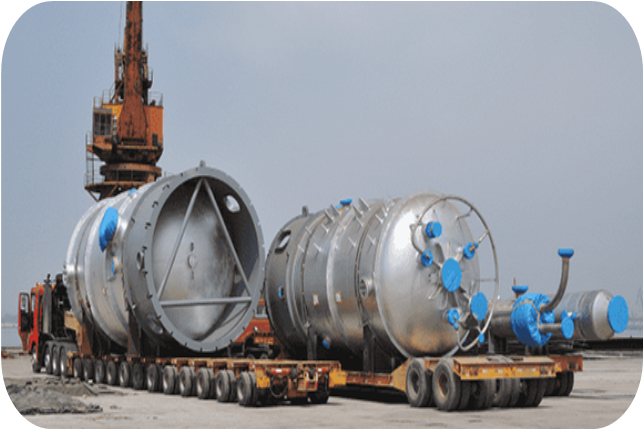
Crystallizers
Source industrial crystallizers from vetted manufacturers and suppliers in China. Designed for chemical, pharmaceutical, and food processing applications, this page serves importers, procurement managers, and distributors looking for bulk wholesale pricing, custom OEM production, and reliable factory partners.
Sourcing industrial crystallizers requires precise alignment between your process chemistry and the manufacturer's fabrication capabilities. Whether you are procuring continuous vacuum crystallizers for bulk chemical processing or sanitary batch cooling crystallizers for active pharmaceutical ingredients (APIs), the core challenge lies in verifying vessel integrity, heat transfer efficiency, and material provenance. Procuring heavy chemical machinery overseas demands rigorous technical oversight from the RFQ stage through to final shipment.
Defining Your Crystallizer Specifications
To avoid protracted back-and-forth with suppliers, your technical specification sheet must be exhaustive. Chemical machinery manufacturers in hubs like Jiangsu and Shandong are highly capable, but they will build exactly to the print provided. If parameters are left ambiguous, factories may default to standard local specifications that might not meet your regional compliance or process requirements.
When approaching manufacturers, ensure your RFQ explicitly details the following:
Critical RFQ Parameters for Crystallizers
- Material of construction (e.g., SS304, SS316L, Titanium, Hastelloy, or Glass-lined) with required mill test certificates.
- Design and operating temperatures/pressures for both the inner vessel and the heating/cooling jacket.
- Agitator type (anchor, paddle, pitched blade) and motor specifications (explosion-proof ATEX/IECEx ratings).
- Heat exchange area and specific cooling/heating medium to be used.
- Control system requirements (local relay logic vs. integrated PLC/HMI like Siemens or Allen-Bradley).
Manufacturing Quality and Fabrication Risks
The operational lifespan of a crystallizer is dictated by the quality of its metallurgy and welding. Substandard material is a primary risk when sourcing chemical equipment; a supplier might substitute high-nickel SS316L with a lower-grade alloy that will rapidly corrode under harsh chemical exposure.
Verifying the factory's internal quality management system is non-negotiable. Legitimate manufacturers will perform Positive Material Identification (PMI) on all incoming steel. Furthermore, because crystallizers operate under pressure or vacuum, weld integrity is critical. Look for factories that utilize automated orbital welding for sanitary applications and conduct 100% Non-Destructive Testing (NDT)—such as radiographic or ultrasonic testing—on all pressure-bearing seams.
Conducting thorough factory audits before placing a deposit ensures the supplier actually holds the necessary manufacturing licenses (like the ASME U-Stamp or China's D-class pressure vessel license) and isn't outsourcing the fabrication to a sub-tier workshop.
Need on-site verification of a pressure vessel manufacturer's capabilities and certifications?
Get a free consultationCompliance and Factory Acceptance Testing (FAT)
Regulatory compliance for pressure vessels is strictly enforced in most Western markets. If you are importing to North America, the vessel must typically comply with the ASME Boiler and Pressure Vessel Code (BPVC). For the European Union, the Pressure Equipment Directive (PED 2014/68/EU) and CE marking are mandatory.
Certification Verification
Do not accept a simple "CE certificate" at face value. Pressure vessel compliance requires certification from a recognized Notified Body. Always verify the Notified Body number and the specific module of compliance (e.g., Module G or Module H).
A comprehensive Factory Acceptance Test (FAT) is the most critical milestone in the sourcing process. This should be conducted at the manufacturer's facility prior to crating. A robust FAT protocol includes hydrostatic pressure testing, agitator run-testing (checking for runout and vibration), surface finish measurement using a profilometer, and riboflavin wash-down testing for sanitary units. Utilizing independent quality control and inspection teams to oversee the FAT ensures that any deviations are corrected before the equipment leaves the factory floor.
Pricing, MOQs, and Lead Times
Unlike consumer goods, industrial crystallizers are capital equipment. The Minimum Order Quantity (MOQ) is universally one unit.
Lead times are heavily dependent on the scale and complexity of the unit, typically ranging from 45 days for standard 500L pilot-scale crystallizers to 120 days or more for highly customized, multi-stage continuous crystallization systems.
Pricing is driven primarily by the global commodities market for raw materials (stainless steel, titanium) and the origin of the critical components. Specifying Western-brand mechanical seals (e.g., John Crane, Burgmann), motors (ABB, SEW), and instrumentation will significantly increase the unit cost but ensures local serviceability once the equipment is installed in your facility.
Planning a capital equipment purchase? Let us help you manage the technical vetting and procurement process.
Talk to our teamBecause these are large, irregularly shaped, and heavy pieces of machinery, shipping requires specialized handling. Out-of-Gauge (OOG) cargo, flat rack containers, or breakbulk shipping methods are often necessary for larger industrial units. Coordinating this with experienced shipping and freight forwarders early in the design phase can prevent costly logistical bottlenecks at the port of loading.
Frequently Asked Questions
Sourcing industrial crystallizers effectively requires treating the manufacturer as an engineering partner rather than a simple vendor. Success depends on rigorous technical specifications, verified material provenance, and uncompromising inspection protocols during fabrication.
Get Sourcing Help for Crystallizers
Tell us your requirements and our experts will connect you with verified manufacturers.