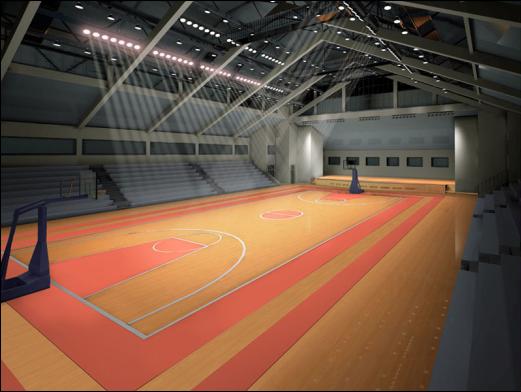
Court Equipment
Source commercial-grade basketball court equipment from vetted manufacturers and suppliers. Designed for importers, wholesalers, and sports brands seeking high-volume OEM or private-label production, our network delivers reliable infrastructure, from heavy-duty backboards to court padding, built to international safety standards.
Sourcing basketball court equipment at volume requires a strict focus on structural integrity, weather resistance, and safety compliance. Whether outfitting institutional gymnasiums, municipal outdoor parks, or commercial training facilities, buyers must navigate technical specifications ranging from steel tensile strength to glass tempering standards. A failure in material selection or manufacturing oversight can result in liability issues, premature weathering, or dead rebound performance.
Critical Specifications for Court Infrastructure
The core of any basketball court setup lies in the backboard and its support structure. Specifying the correct materials dictates the equipment's lifespan and performance tier.
For support poles and extension arms, commercial-grade systems rely on Q235 or Q345 structural steel. The gauge of the steel is critical; main support poles should typically feature a wall thickness of 3.0mm to 4.0mm. For outdoor installations, specifying hot-dip galvanization prior to powder coating is non-negotiable to prevent internal rusting.
Backboard material selection separates professional-grade equipment from recreational tiers:
| Specification | Tempered Glass | Acrylic |
|---|---|---|
| Typical Thickness | 10mm to 12mm | 10mm to 15mm |
| Rebound Performance | Excellent (Pro standard) | Good (Deadens slightly) |
| Impact Resistance | High (Shatters safely if broken) | Very High (Crack resistant) |
| Primary Application | Indoor / Premium Outdoor | High-vandalism Outdoor |
Manufacturing and Quality Control Red Flags
Quality is won or lost during the fabrication and finishing stages. Inconsistent welding on the main mast or extension arms introduces structural weak points that will fail under the repetitive stress of dunking. Look for continuous MIG welding with properly ground seams.
Surface treatment is another frequent failure point. Factories cutting corners may apply powder coating directly to bare steel without proper sandblasting or chemical etching, leading to flaking within months of outdoor exposure.
Factory Floor QC Priorities
- Weld seam continuity on main extension arms and base plates.
- Powder coating thickness (minimum 80 microns) and UV-resistance rating.
- Glass tempering certification (e.g., EN 12150 or equivalent) to ensure safe fragmentation.
- Breakaway rim tension calibration (usually set to release at 105 kg of force).
- Padding density and tear resistance (EVA or PU foam covered in heavy-duty vinyl).
Relying on a factory's internal testing is risky when importing heavy infrastructure. Implementing independent Quality Control & Inspection during the production run and before shipment ensures that structural and finishing standards are met before the goods are containerized.
Need to verify structural integrity and finishing quality before shipment? Talk to our inspection experts.
Discuss your QC requirementsOEM Customization and Compliance
Brands and institutional suppliers rarely buy off-the-shelf designs. Customization spans structural dimensions (such as specific overhang lengths to meet FIBA regulations), proprietary breakaway rim mechanisms, and branded safety padding.
When engaging factories for OEM/ODM Services, ensure that technical drawings clearly define tolerances for the rim height adjustment mechanisms (whether hydraulic, crank, or spring-assisted). If targeting the professional or high-end institutional market, verify the supplier's capability to manufacture strictly to FIBA Level 1 or Level 2 dimensional and performance standards. Before committing to a large OEM run, conducting thorough Factory Audits is essential to confirm the manufacturer has the actual heavy machinery (laser cutters, robotic welders) and not just an assembly workshop.
MOQs, Pricing, and Logistics Realities
Basketball court equipment is dense, heavy, and bulky. A single professional portable backstop can weigh over 1,000 kg.
Because of the extreme weight and awkward dimensions of backboards and steel masts, shipping air freight is virtually impossible. Container space optimization is a critical factor in your landed cost. Proper packaging—using custom steel crates for glass backboards rather than simple wooden pallets—is necessary to prevent transit damage. Coordinating with a partner experienced in heavy-goods Shipping & Freight will help you manage consolidation and optimize container loads.
Shipping heavy court infrastructure requires precise container planning. Let our freight team optimize your next shipment.
Get a logistics consultationSuccessfully sourcing court equipment requires looking past the glossy catalog photos to scrutinize the raw materials, welding techniques, and anti-corrosion treatments. Securing reliable manufacturing partners and implementing strict pre-shipment quality controls will protect your brand's reputation and your bottom line.
Get Sourcing Help for Court Equipment
Tell us your requirements and our experts will connect you with verified manufacturers.