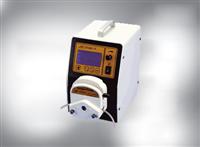
Cosmetics Production Equipment
Source industrial-grade cosmetics production equipment directly from vetted manufacturers and suppliers. Designed for importers, distributors, and cosmetics brands scaling their manufacturing, our catalog covers everything from high-shear vacuum emulsifiers to automated filling lines for bulk and custom production.
Sourcing cosmetics production equipment requires balancing high-shear mixing capabilities with stringent sanitation standards. Whether you are outfitting a new GMP-compliant facility or upgrading an existing filling line, procuring industrial chemical machinery directly from Asian manufacturers offers significant capital advantages. However, navigating equipment specifications, automation integrations, and material compliance demands rigorous technical oversight.
Core Specifications for Cosmetics Machinery
Cosmetics manufacturing relies heavily on vacuum homogenizing emulsifiers, mixing tanks, and precision filling machines. When negotiating with suppliers, the technical specifications dictate both the machinery's lifespan and the quality of the final cosmetic product.
For emulsifiers and mixers, buyers must specify the homogenizer speed (typically up to 3000 or 3600 RPM for stable emulsions), the vacuum degree (often reaching -0.09 MPa to prevent oxidation and bubbles), and the type of heating/cooling jackets (steam vs. electric heating).
| Component | Standard Configuration | Premium/GMP Configuration |
|---|---|---|
| Contact Materials | SUS304 Stainless Steel | SUS316L Stainless Steel |
| Surface Finish (Ra) | Under 0.8 micrometers | Under 0.4 micrometers (Mirror Polish) |
| Control System | Button Control Panel | Siemens/Allen-Bradley PLC Touchscreen |
| Motor Brand | Domestic Chinese Brand | ABB, Siemens, or SEW |
Specifying internationally recognized brands for critical components like PLCs, inverters (e.g., Delta or Yaskawa), and motors ensures that replacement parts can be sourced locally in your destination country, minimizing downtime.
Need to verify a machinery manufacturer's technical capabilities? Let us handle the factory audit and technical vetting to ensure your equipment meets local compliance.
Talk to our teamQuality Control and CGMP Compliance
Cosmetics machinery must meet Current Good Manufacturing Practice (CGMP) standards. This means zero dead corners in the tank design, sanitary valves, and appropriate sealing materials (like PTFE or Viton) that can withstand high temperatures and harsh cleaning chemicals (CIP/SIP systems).
Before any machinery ships, a rigorous Factory Acceptance Test (FAT) is mandatory. Relying on the supplier's internal testing is risky; executing independent Quality Control & Inspection at the factory ensures the machine performs under simulated production loads.
Critical Factory Acceptance Test (FAT) Checks
- Verify surface roughness (Ra) of all internal contact parts using a profilometer.
- Test vacuum retention over a 24-hour period to ensure seal integrity.
- Run the homogenizer at maximum RPM with a water/oil substitute to check for abnormal vibration or heat generation.
- Verify that electrical components match the destination country's voltage and frequency (e.g., 480V/60Hz for the US).
- Confirm CE or UL certification marks on all major electrical panels and motors.
Conducting Factory Audits before placing a deposit is equally critical. The main manufacturing hubs for cosmetics machinery in China are Guangdong (Guangzhou) and Jiangsu (Gaoyou, Wuxi). Jiangsu tends to specialize in heavy-duty mixing and emulsifying tanks, while Guangdong offers highly integrated, automated filling and packaging lines.
Pricing Drivers, Lead Times, and Logistics
Machinery pricing is highly variable and depends entirely on the customization level, capacity (ranging from 50L lab-scale to 5000L industrial tanks), and component sourcing.
Upgrading from domestic electrical components to international brands (Siemens, ABB) typically increases the machine's cost by 15 to 25 percent, but drastically reduces long-term maintenance costs.
Logistics for chemical machinery require specialized handling. Large emulsifying tanks and automated filling lines often exceed standard container dimensions, requiring Open Top or Flat Rack containers. Coordinating Shipping & Freight for Out of Gauge (OOG) cargo requires precise weight distribution, anti-rust packaging, and heavy-duty lashing to prevent transit damage.
Planning a complete production line upgrade? We coordinate equipment sourcing, FAT execution, and international heavy-freight logistics.
Get a free consultationFrequently Asked Questions
Sourcing cosmetics production equipment is a high-stakes capital investment. Success depends not just on negotiating a favorable price, but on rigorous specification management, independent factory testing, and flawless logistics execution. Careful oversight at every stage ensures your machinery arrives ready for immediate, compliant production.
Get Sourcing Help for Cosmetics Production Equipment
Tell us your requirements and our experts will connect you with verified manufacturers.