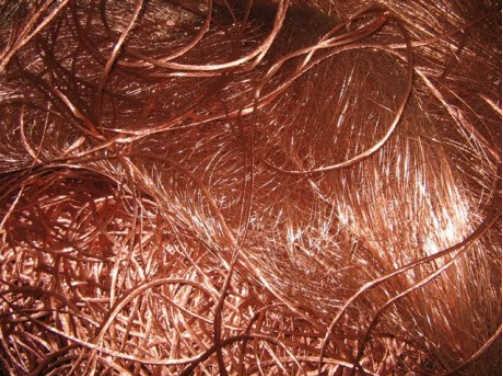
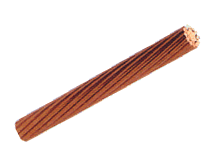
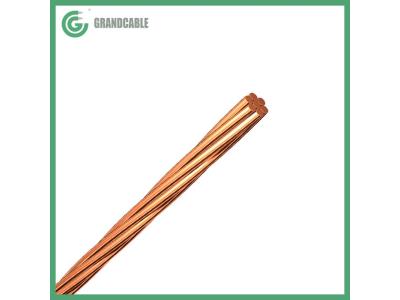
Copper Wire
Source high-quality Copper Wire in bulk directly from vetted manufacturers and suppliers. Designed for importers, wholesalers, distributors, and brands requiring OEM production, our network delivers industrial-grade copper wire at competitive wholesale prices for electrical, construction, and manufacturing applications.
Sourcing copper wire in volume requires strict adherence to conductivity standards, dimensional tolerances, and purity grades. The core challenge for procurement managers is not simply finding a factory with drawing capacity; it is securing a manufacturing partner that maintains consistent metallurgical properties across multi-ton production runs while tying processing fees transparently to international copper indices.
Defining Your Copper Wire Specifications
When negotiating with manufacturers, vague specifications lead to inconsistent conductivity and mechanical failures. Copper wire is primarily categorized by its purity, temper, and gauge. Defining these parameters clearly is the first step in establishing a reliable supply chain.
Purity and Copper Grades
The metallurgical composition dictates both the electrical performance and the cost of the wire. Most bulk sourcing falls into two primary grades:
| Grade Specification | Minimum Purity | Conductivity (IACS) | Typical Applications |
|---|---|---|---|
| C11000 (ETP - Electrolytic Tough Pitch) | 99.90% | 100% to 101% | Building wire, power cables, general electrical |
| C10100/C10200 (OFHC - Oxygen-Free) | 99.95% to 99.99% | 101% to 102% | High-end audio, aerospace, sensitive electronics |
Temper and Dimensional Tolerances
Temper refers to the hardness and flexibility of the wire, determined by the annealing process.
- Soft / Annealed: Highly flexible, used in standard electrical cables and winding wire.
- Half-Hard / Hard-Drawn: Higher tensile strength, used in overhead transmission lines and grounding applications.
You must also specify the exact diameter (in millimeters or AWG) alongside acceptable tolerance ranges. A factory drawing wire with poor die maintenance will produce varying diameters, impacting resistance and total weight per kilometer.
Need to secure a reliable high-volume copper wire supplier? Let's discuss your technical specifications.
Talk to our teamManufacturing Quality and Factory Vetting
Copper wire production involves rod breakdown, intermediate drawing, fine drawing, and continuous annealing. Quality is won or lost in the factory's machinery maintenance and process control. Worn drawing dies create surface scratches, while improper annealing leaves the wire brittle or heavily oxidized.
When evaluating a new supplier, conducting thorough Factory Audits is critical to verify their equipment capabilities, ISO 9001 certifications, and raw material sourcing (ensuring they use high-grade copper cathodes rather than recycled scrap).
Critical Quality Control Checkpoints
To prevent receiving defective wire, establish a rigorous inspection protocol before the goods leave the facility.
Pre-Shipment Inspection Focus Areas
- Dimensional verification using micrometers to ensure diameter tolerances are met.
- Surface inspection for oxidation, discoloration, scratches, or drawing die marks.
- Elongation and tensile strength testing to verify the correct temper.
- Electrical resistance testing (ohms per kilometer) to confirm IACS conductivity standards.
- Spool and packaging integrity to prevent tangling or moisture damage during transit.
Implementing professional Quality Control & Inspection at the factory level ensures these parameters are verified before you pay the final balance.
Pricing Structures, MOQs, and Lead Times
Copper wire pricing is highly volatile and differs fundamentally from finished consumer goods. Pricing is almost universally calculated using a two-part formula: LME Spot Price + Fabrication/Processing Fee.
The London Metal Exchange (LME) or Shanghai Futures Exchange (SHFE) price dictates the raw material cost, which changes daily. The factory's profit and operational costs are contained within the processing fee (often quoted per metric ton).
Packaging and Logistics
Copper is dense and susceptible to moisture. Wire must be properly spooled onto wooden, plastic, or steel drums, wrapped in anti-rust VCI film, and securely palletized. Improper packaging leads to spool collapse or heavy oxidation during sea freight. Working with a partner who understands proper Compliance & Testing for international standards (like RoHS or REACH) and robust packaging protocols will save you from costly total-loss scenarios.
Looking to optimize your copper supply chain and negotiate better fabrication fees?
Get a free consultationFrequently Asked Questions
Securing bulk copper wire is an exercise in managing raw material volatility and enforcing strict metallurgical tolerances. By focusing on transparent LME-based pricing and rigorous factory-level quality control, buyers can build a resilient and cost-effective supply chain. If you need expert oversight to manage drawing tolerances, factory vetting, and shipment coordination, our team is ready to assist.
Get Sourcing Help for Copper Wire
Tell us your requirements and our experts will connect you with verified manufacturers.