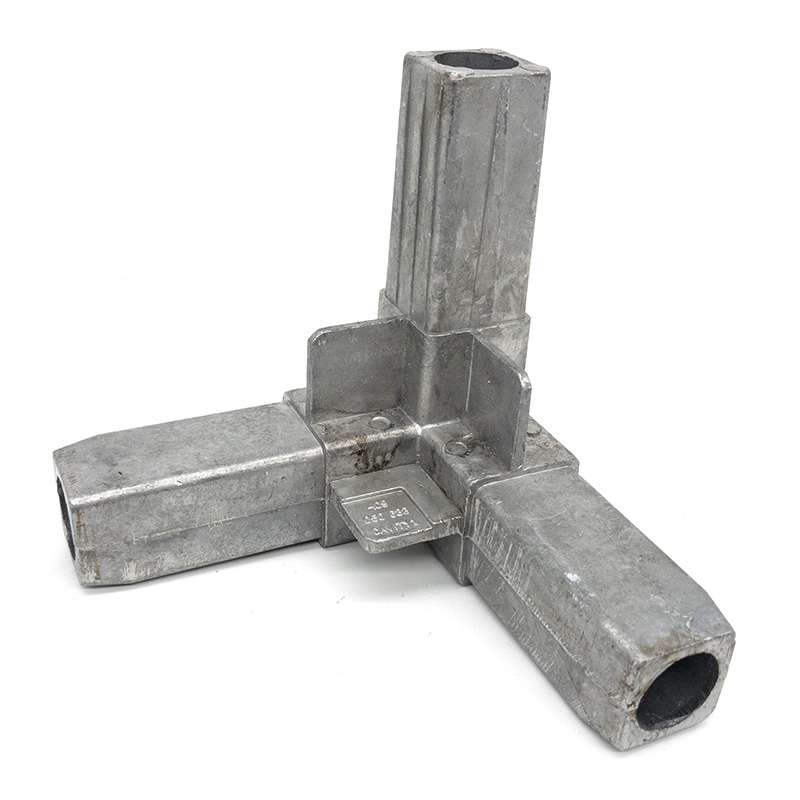
Connectors & Shelf Supports
Source high-quality Connectors & Shelf Supports from vetted suppliers and manufacturers across Asia. Built for importers, wholesalers, distributors, and furniture brands requiring reliable OEM and private-label production, ensuring consistent tolerances and load-bearing performance for bulk hardware procurement.
The structural integrity of flat-pack and modular furniture relies entirely on the quality of its connectors and shelf supports. While these components—cam locks, minifix systems, connecting bolts, and shelf pins—represent a fraction of a furniture unit's total cost, a failure in dimensional tolerance or material strength results in wobbly assemblies, stripped threads, and ultimately, product returns. Sourcing these components in high volume requires strict oversight of die-casting precision, stamping tolerances, and plating consistency.
Critical Specifications for Furniture Connectors
When negotiating with factories, generic material descriptions like "zinc" or "steel" are insufficient. Manufacturers often substitute lower-grade alloys to cut costs, which drastically reduces the load-bearing capacity and lifespan of the hardware.
| Material Grade | Typical Application | Key Advantage | Common Factory Shortcut |
|---|---|---|---|
| Zinc Alloy #3 | Cam locks, complex brackets | Excellent die-casting fluidity, stable dimensions | Using recycled scrap zinc (increases brittleness) |
| Cold-Rolled Steel (SPCC) | Connecting bolts, shelf pins | High tensile strength, cost-effective | Undersized wire gauge to save material weight |
| Nickel-Plated Iron | Budget shelf supports | Visual appeal, basic corrosion resistance | Flash plating (under 2 microns) causing rapid rust |
| Nylon / POM | Dowels, corner blocks | Flexibility, non-marring | Mixing high volumes of regrind plastic |
For load-bearing components like heavy-duty shelf brackets or bed frame connectors, always specify the exact alloy and require material test reports.
Manufacturing Risks and Quality Control
The production of furniture hardware involves high-speed die-casting, stamping, and automated threading. Defects often originate from poorly maintained tooling or rushed plating processes.
Die-Casting and Threading Tolerances
In cam lock and minifix systems, the interaction between the cam and the bolt requires precise geometry. If the die-casting mold is worn, the resulting flash (excess metal) can prevent the cam from engaging properly. Similarly, high-speed thread rolling machines must be calibrated frequently; otherwise, connecting bolts will suffer from shallow or stripped threads.
Struggling with inconsistent hardware tolerances? Let us help you establish rigorous factory-level quality controls.
Talk to our teamPlating and Surface Finish
Corrosion is a primary cause of rejection for metal furniture hardware. Factories typically outsource plating to specialized facilities, which introduces a critical blind spot in the supply chain. If the parts are not thoroughly cleaned before plating, or if the electroplating bath is contaminated, the finish will peel or oxidize.
Implementing rigorous Quality Control & Inspection protocols, including pre-shipment salt spray testing, is essential to verify plating integrity before the hardware leaves the factory.
Pre-Shipment Hardware Inspection Checklist
- Verify dimensional tolerances using digital calipers against approved CAD drawings.
- Conduct torque testing on cam locks and bolts to ensure threads do not strip under standard assembly pressure.
- Perform a 24-hour to 48-hour neutral salt spray test to validate plating thickness and rust resistance.
- Check for die-casting flash, sharp edges, or burrs that could damage furniture panels.
- Ensure plastic components (like dowels) pass drop tests without shattering.
Production Economics: MOQs, Lead Times, and Tooling
Furniture hardware is a high-volume, low-margin commodity. To achieve competitive unit pricing, factories rely on continuous production runs.
If you are developing proprietary assembly systems, utilizing specialized OEM/ODM Services ensures your intellectual property is protected and that tooling is engineered to withstand millions of cycles. Because tooling costs are relatively low for small hardware, creating custom-branded or uniquely shaped connectors is highly accessible for volume buyers.
Planning a custom hardware line? We can manage the tooling, sampling, and production process from end to end.
Get a free consultationSourcing Hubs and Supplier Verification
The vast majority of global furniture hardware is produced in specific industrial clusters in China. Guangdong province (particularly Jieyang and Guangzhou) is renowned for high-end zinc alloy die-casting and premium finishes. Zhejiang province (Wenzhou) offers highly competitive pricing for high-volume steel stamping and standard connectors.
Because thousands of trading companies pose as manufacturers in these regions, conducting thorough Factory Audits is crucial. You must verify that the supplier actually owns die-casting machines and stamping presses, rather than just assembling parts bought on the open market.
Procuring connectors and shelf supports in bulk is an exercise in managing micro-tolerances at a macro scale. Success requires moving beyond catalog browsing to actively managing material specifications, tooling precision, and plating standards directly on the factory floor.
Get Sourcing Help for Connectors & Shelf Supports
Tell us your requirements and our experts will connect you with verified manufacturers.