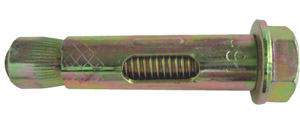
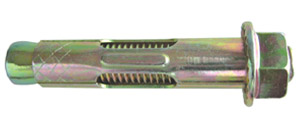
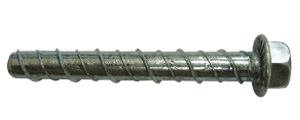
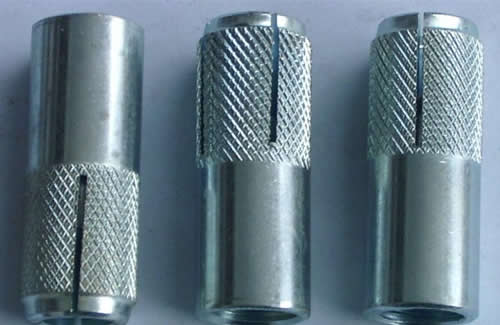
Concrete Anchors
Source high-performance concrete anchors from vetted manufacturers and suppliers in Asia. Built for importers, industrial distributors, and hardware brands requiring reliable OEM and private-label production in bulk. Secure competitive wholesale pricing with stringent quality control for your fastening supply chain.
Sourcing concrete anchors in commercial volumes requires strict attention to metallurgical integrity and machining precision. Because these fasteners bear critical structural loads, inconsistent steel grades, improper heat treatment, or flawed surface coatings can lead to catastrophic failure on the job site. For professional buyers, navigating the Asian fastener manufacturing base means separating the high-volume commodity producers from the specialized factories capable of meeting strict international construction standards.
Material Selection and Surface Treatments
The foundation of a reliable concrete anchor is its raw material and surface finish. While carbon steel and stainless steel are standard, the specific grades and treatments dictate the anchor's load capacity and environmental resistance.
Most structural anchors are cold-forged from carbon steel (typically Grades 4.8, 5.8, or 8.8 for high-tensile requirements) or stainless steel (304 for general exterior use, 316 for marine or highly corrosive environments). For carbon steel variants, the anti-corrosion treatment is a primary cost driver and quality variable.
| Coating Type | Corrosion Resistance | Cost Impact | Typical Application |
|---|---|---|---|
| Electro-Galvanized (Zinc Plated) | Low to Medium | Baseline | Indoor or dry environments |
| Hot-Dip Galvanized (HDG) | High | Moderate premium | Outdoor, heavy construction |
| Mechanical Galvanized | Medium to High | Slight premium | High-strength anchors avoiding embrittlement |
| Zinc-Nickel Alloy | Very High | High premium | Severe industrial environments |
When specifying HDG finishes on threaded anchors, buyers must ensure the factory accounts for the coating thickness during the thread-rolling process. If the tolerances are too tight, the zinc layer will cause the nut to bind, rendering the anchor useless.
Need to verify a factory's metallurgical and coating capabilities before placing a bulk order?
Talk to our teamManufacturing Tolerances and Quality Control
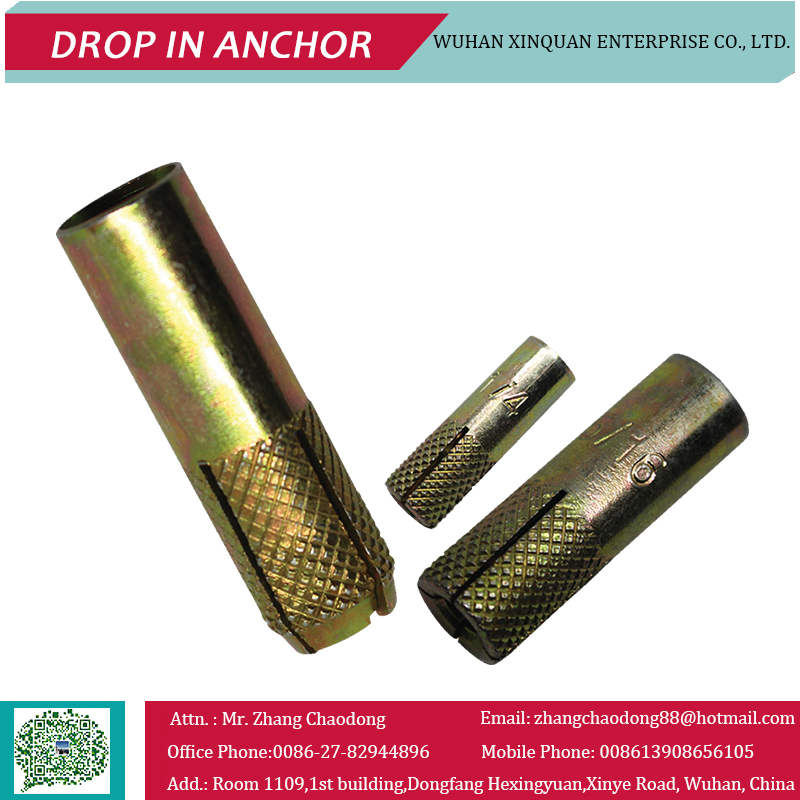
The manufacturing sequence for concrete anchors typically involves cold heading, thread rolling, heat treatment, and surface plating. Quality is won or lost in the precision of these steps. For example, wedge anchors rely entirely on the expansion clip (or collar) gripping the concrete. If the clip is stamped from inferior sheet metal or lacks the proper curvature, the anchor will slip under tension.
Before committing to a supplier, thorough factory audits are essential to verify their in-house tooling capabilities and testing equipment.
Critical QC Checkpoints for Concrete Anchors
- Dimensional accuracy of the unthreaded shank vs. the threaded section.
- Expansion clip integrity (material hardness and stamping precision).
- Thread run-out and profile to ensure smooth nut engagement after coating.
- Hydrogen embrittlement relief baking (crucial for high-tensile electroplated anchors).
- Torque testing to verify the anchor sets properly without shearing.
Implementing rigorous quality control prior to shipment is non-negotiable. Defects in a bulk shipment of fasteners are rarely isolated; a tooling misalignment can ruin an entire production run of hundreds of thousands of pieces.
Compliance and Performance Testing
Structural fasteners imported into major markets often require third-party certifications. In Europe, the European Technical Assessment (ETA) dictates strict performance criteria for structural anchors. In the United States, ICC-ES approvals are the gold standard.
Factories claiming to hold these certifications must be verified. The certification applies to specific product lines and designs, not the factory as a whole. Reliable suppliers will have in-house laboratories capable of performing tensile (pull-out) and shear load testing, salt spray testing for corrosion resistance, and metallurgical analysis. Engaging independent compliance and testing services is highly recommended for your first few production runs to validate the factory's internal reports.
Pricing, MOQs, and Lead Times
Fastener manufacturing is a high-volume, low-margin industry driven by economies of scale and raw material index prices.
Pricing is heavily influenced by the global cost of steel and zinc. When negotiating, be wary of prices that sit significantly below the market average. To achieve those costs, inferior factories will often use lower-grade steel, skip the hydrogen de-embrittlement baking process, or apply dangerously thin zinc coatings.
Optimize your fastener supply chain with transparent pricing and reliable production schedules.
Get a free consultationFrequently Asked Questions
Sourcing concrete anchors successfully means looking past the per-piece price and evaluating the manufacturer's engineering discipline. In structural hardware, consistency is your most valuable asset. Aligning with a factory that understands international load standards and maintains strict metallurgical controls ensures your brand delivers reliable performance on every job site.
Get Sourcing Help for Concrete Anchors
Tell us your requirements and our experts will connect you with verified manufacturers.