Collaborative Robots
Source Collaborative Robots directly from vetted manufacturers and suppliers in Asia. Designed for industrial distributors, procurement managers, and systems integrators buying in bulk or seeking OEM/ODM production. Secure competitive wholesale pricing on certified, high-precision cobots for your automation portfolio.
Sourcing collaborative robots (cobots) requires navigating a complex landscape of precision engineering, proprietary software ecosystems, and strict safety standards. For systems integrators, distributors, and automation brands, the challenge isn't just finding a factory that can assemble robotic arms. It is identifying a manufacturer capable of producing reliable joint modules, integrating highly sensitive torque sensors, and maintaining strict repeatability across high-volume production runs.
Defining Core Specifications
When evaluating a manufacturer's catalog or defining requirements for an OEM build, the specifications must align perfectly with your target end-user applications. Over-specifying drives up costs unnecessarily, while under-specifying leads to premature mechanical failure.
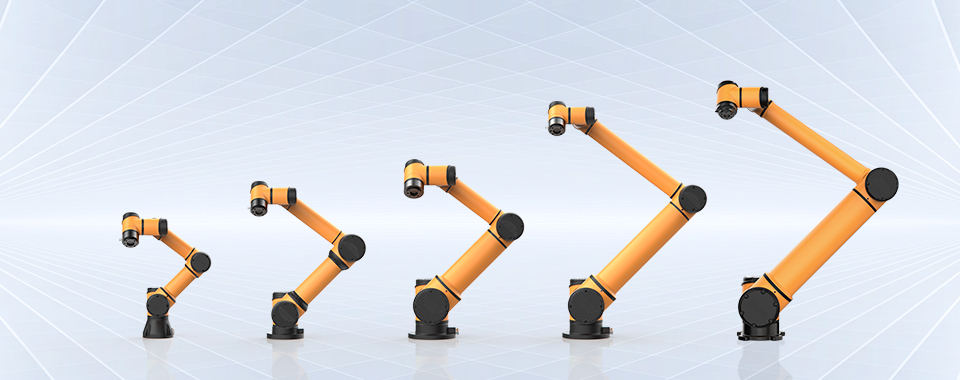
| Robot Class | Typical Payload | Typical Reach | Primary Applications |
|---|---|---|---|
| Light Duty | 3kg to 5kg | 500mm to 800mm | Electronics assembly, pick & place, lab automation |
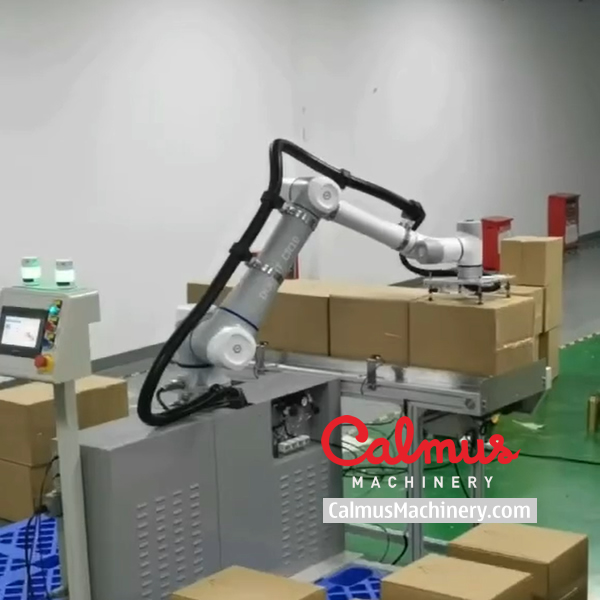
| Medium Duty | 10kg to 12kg | 1300mm | Machine tending, packaging, light palletizing |
| Heavy Duty | 16kg to 25kg | 1700mm | Heavy palletizing, welding, large part handling |
Beyond payload and reach, you must specify Degrees of Freedom (DoF) (typically 6-axis, though 7-axis models offer superior maneuverability in confined spaces) and Repeatability. High-quality cobots should consistently achieve a repeatability of ±0.03mm to ±0.05mm.
Where Quality is Won and Lost in Manufacturing
The core of any collaborative robot is its joint modules. Each joint is a dense package containing a servo motor, a harmonic drive (strain wave gear), an encoder, a holding brake, and often a torque sensor.
Poorly machined harmonic drives are the most common point of failure in lower-tier cobots, leading to excessive backlash and a rapid degradation of repeatability over time. Verifying the factory's machining tolerances and their sourcing of critical internal components is essential. This is where comprehensive Factory Audits become critical, allowing you to verify their CNC capabilities and assembly room conditions (which should be strictly climate- and dust-controlled).
Force Detection Mechanisms
Pay close attention to how the cobot detects collisions. Premium models use dedicated, built-in torque sensors at every joint for instant reaction times. Lower-cost models often rely on motor-current-based force detection, which is less sensitive and can result in harder impacts before the safety stop engages.
Essential Factory Validation Checks
What to look for on the assembly line
- End-of-line laser tracker calibration to verify stated repeatability.
- Burn-in testing protocols (typically 48 to 72 hours of continuous operation under load).
- Traceability of harmonic drives and absolute encoders back to reputable sub-suppliers.
- IP rating verification testing (especially for IP54 or IP67 models designed for harsh environments).
Need help validating a cobot manufacturer's technical capabilities and quality control systems?
Talk to our teamSafety Standards and Compliance
Because cobots operate uncaged alongside humans, regulatory compliance is non-negotiable. The manufacturer must provide verifiable documentation that their hardware and safety software comply with ISO 10218-1 (Safety requirements for industrial robots) and ISO/TS 15066 (Collaborative operation safety).
Additionally, the control cabinet and teach pendant must carry appropriate regional certifications, such as CE for Europe or UL/CSA for North America. If you are importing under your own brand, engaging professional Compliance & Testing services ensures that the specific units you import meet all destination market legal requirements.
Buying Mechanics: Pricing, MOQs, and Lead Times
The wholesale market for collaborative robots is highly competitive, but pricing varies significantly based on payload, sensor architecture, and the maturity of the included programming software.
For businesses looking to launch their own line of automation equipment, OEM/ODM Services allow for deep customization. This can range from simple white-labeling (rebranding the teach pendant UI and arm housing) to custom end-effector mounting plates and integrating specific communication protocols (like EtherCAT or PROFINET) into the controller.
Let's discuss your volume requirements, target pricing, and customization needs for your next cobot order.
Get a free consultationFrequently Asked Questions
Successfully sourcing collaborative robots requires balancing mechanical precision with software reliability and rigorous safety compliance. By partnering with vetted manufacturers and implementing strict pre-shipment Quality Control & Inspection, you can confidently import industrial-grade cobots that meet the exact demands of your market.
Get Sourcing Help for Collaborative Robots
Tell us your requirements and our experts will connect you with verified manufacturers.