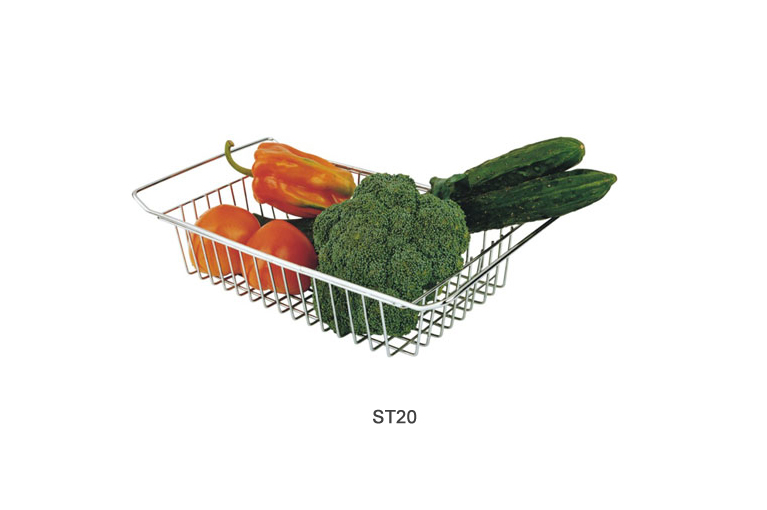
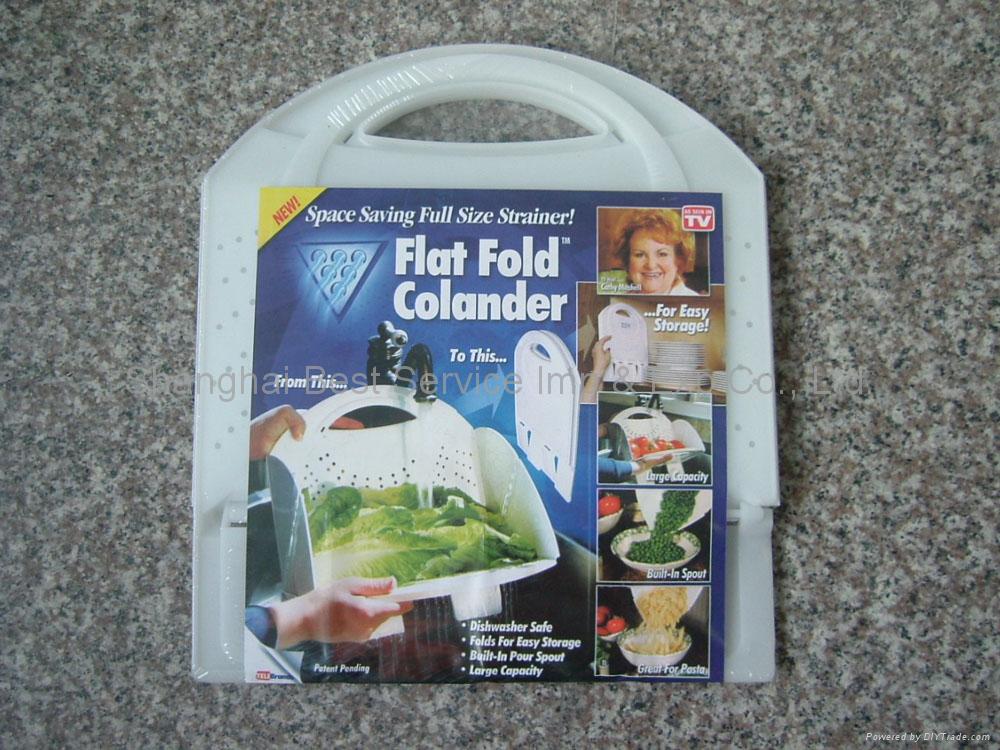
Colanders & Strainers
Source premium colanders and strainers in bulk directly from vetted manufacturers and suppliers. Designed for importers, wholesalers, and brands seeking reliable OEM and private-label production, our network delivers consistent quality at scale. Secure competitive pricing and reliable factory partnerships for your kitchenware lines.
Sourcing colanders and strainers at scale requires balancing material integrity with manufacturing efficiency. While these kitchen staples appear simple, the difference between a high-performing commercial tool and a rapidly degrading consumer product lies entirely in the factory's tooling precision, material grading, and finishing processes. For volume buyers, managing these variables directly impacts return rates and brand reputation.
Material Specifications & Manufacturing Tolerances
The core of any strainer or colander is its material. Stainless steel dominates the market, but the specific grade and fabrication method dictate both cost and lifespan.
When specifying stainless steel, buyers must choose between 201 and 304 grades. Grade 304 offers superior corrosion resistance due to higher nickel content, making it the standard for premium and commercial kitchenware. Grade 201 is highly common in budget lines but requires flawless electropolishing to prevent rapid oxidation in high-moisture environments.
| Specification | Grade 304 Stainless | Grade 201 Stainless | Silicone / PP |
|---|---|---|---|
| Corrosion Resistance | Excellent | Moderate (requires high polish) | Immune |
| Cost Profile | Premium | Economical | Mid-range (tooling dependent) |
| Best Application | Commercial, Premium Retail | Budget Retail, Promotions | Space-saving, Collapsible |
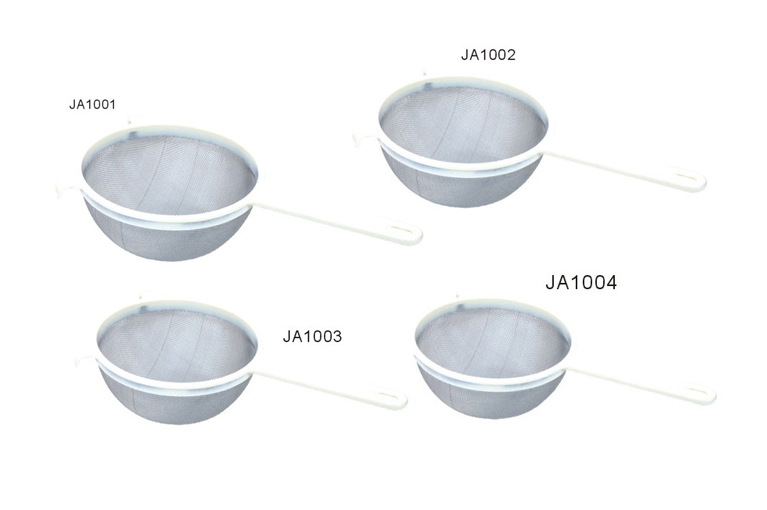
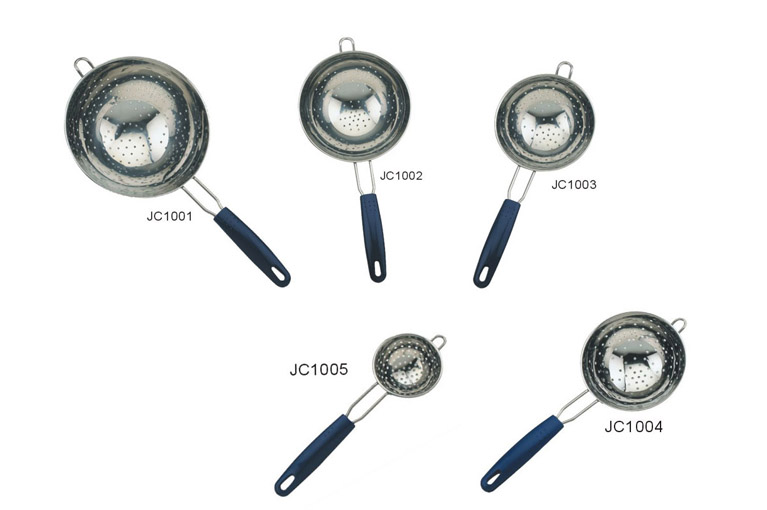
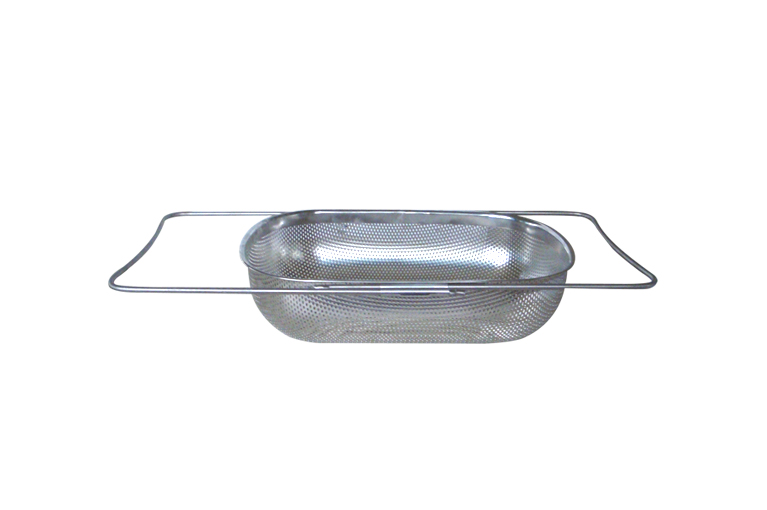
For mesh strainers, the wire gauge and mesh count (holes per square inch) must be strictly defined in your purchase order. A standard fine mesh strainer typically uses a 30 to 50 mesh count. For perforated colanders, the stamping process is critical; dull tooling leaves micro-burrs on the interior holes, which can trap food particles or cause injury.
Need help verifying factory tooling and material grades? Let's discuss your sourcing requirements.
Talk to our teamCritical Quality Control Points on the Factory Floor
Defects in this category often stem from rushed assembly or skipped finishing steps. Implementing rigorous quality control during and after production is non-negotiable.
The most common failure point is the handle attachment. Spot welding is the industry standard for attaching handles to strainer rims, but insufficient current or improper alignment during welding leads to handles snapping off under load. Additionally, the rim rolling process—where the metal edge is folded over to secure the mesh—must be tight and uniform. A loose roll allows the mesh to pull away, ruining the product.
Pre-Shipment Inspection Checklist for Strainers
- Verify spot weld integrity on handles (load testing).
- Inspect rim rolling for tightness and absence of sharp edges.
- Check perforated holes for burrs or rough stamping artifacts.
- Confirm electropolishing uniformity (no dull spots prone to rust).
- Test collapsible silicone models for hinge fatigue and material tearing.
Customization and Private Label Production
For brands looking to differentiate, modifying existing molds or creating entirely new designs is a standard path. Utilizing OEM/ODM services allows you to customize handle ergonomics, incorporate TPR (thermoplastic rubber) grips, or design unique perforation patterns.
When developing collapsible silicone colanders, the overmolding process—where silicone is molded directly onto a rigid plastic or steel frame—requires precise temperature control. Poor adhesion between the two materials is a frequent issue with lower-tier suppliers.
Production Economics: MOQs, Pricing, and Lead Times
Understanding the standard economic parameters of this category helps in negotiating with manufacturers and planning your supply chain.
Pricing is highly sensitive to raw material costs (specifically nickel for 304 stainless steel) and the extent of manual polishing required. Automated polishing lines reduce labor costs but may struggle with complex handle geometries. Before committing to a large order, conducting thorough factory audits ensures the supplier actually possesses the automated machinery they claim, rather than outsourcing the polishing to unverified sub-contractors.
Optimize your procurement strategy and secure competitive pricing from vetted manufacturers.
Get a free consultationFrequently Asked Questions
Successfully sourcing colanders and strainers in bulk means looking past surface aesthetics to verify material grades, tooling precision, and assembly strength. By tightly controlling these variables at the factory level, buyers can secure reliable, high-margin products that withstand the rigors of real-world use.
Get Sourcing Help for Colanders & Strainers
Tell us your requirements and our experts will connect you with verified manufacturers.