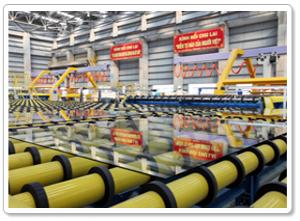
Clear Glass
Source premium Clear Glass from vetted suppliers and manufacturers across Asia. Designed for importers, wholesalers, and construction distributors, our network provides bulk standard and custom-cut float glass for architectural and industrial applications. Secure reliable volume production with strict quality control.
Clear float glass is the foundational substrate for the global architectural, automotive, and industrial glass markets. While it is a highly commoditized product, procuring it in bulk requires strict adherence to dimensional tolerances, optical clarity standards, and rigorous packaging protocols to prevent catastrophic yield loss during transit.
Defining Specifications for Clear Float Glass
Standard clear glass (annealed) is manufactured by floating molten glass on a bed of molten tin. When communicating with suppliers, precision in your specification sheet is critical to ensure the substrate meets the exact requirements for downstream processing, such as tempering, laminating, or coating.
The iron content in standard clear glass gives it a characteristic green tint at the edges, which becomes more pronounced as thickness increases. Buyers must specify exact thickness tolerances, as deviations can disrupt automated processing lines.
| Thickness Range | Light Transmittance | Common Applications |
|---|---|---|
| 2mm - 3mm | Over 90% | Picture frames, small windows, mirrors |
| 4mm - 6mm | 88% - 90% | Residential windows, doors, automotive |
| 8mm - 19mm | 85% - 88% | Frameless doors, partitions, structural glass |
Factory-Level Quality Control and Defect Mitigation
Yield loss is the biggest threat to profitability when importing glass. Defects originate either on the float line (inclusions, bubbles) or during handling and packing (scratches, edge chips). Implementing rigorous Quality Control & Inspection before the glass is packed is non-negotiable.
Struggling with inconsistent glass quality or high breakage rates? Let us manage your factory-level QC and logistics.
Talk to our teamWhen auditing a factory's output, inspectors should focus on the following critical parameters:
Pre-Shipment Optical and Physical Checks
- Optical distortion: Checking for draw lines or ream that distort transmitted light.
- Inclusions and bubbles: Ensuring stones, knots, and gaseous bubbles are within acceptable limits per square meter.
- Thickness uniformity: Verifying tolerances (typically +/- 0.2mm for standard thicknesses) using precision micrometers.
- Edge condition: Inspecting for micro-cracks or chips from the scoring and snapping process.
- Tin side identification: Ensuring the tin side is properly marked or oriented for buyers who will apply secondary coatings.
Packaging Protocols for Sea Freight
Glass is incredibly dense and fragile. Securing a reliable supply chain means ensuring the factory utilizes export-grade packaging. Improper packing leads to moisture damage (mildew) or physical breakage during transit.
Standard export packaging requires heavy-duty wooden A-frame crates or end-caps. Between each sheet of glass, factories must apply a specialized interleaving powder (often a mix of PMMA beads and adipic acid) or paper to prevent the glass sheets from fusing together and to absorb ambient moisture. Because glass maxes out container weight limits long before it fills the volume, coordinating Shipping & Freight requires precise load distribution to comply with international port and road weight restrictions.
Pricing Drivers, Lead Times, and MOQs
Float glass pricing is highly sensitive to raw material costs (soda ash, silica sand) and global energy prices (natural gas). Because of the continuous nature of float glass manufacturing, major lines rarely stop, meaning supply is steady but pricing fluctuates with macro-economic inputs.
To secure the best pricing, buyers must ensure they are purchasing directly from primary float lines or authorized tier-1 processors, rather than secondary brokers. Conducting thorough Factory Audits is essential to verify the supplier's actual production capabilities and financial stability.
Need transparent pricing and a verified supply chain for your glass imports? Connect with our sourcing experts.
Get a free consultationFrequently Asked Questions
Successfully importing clear glass at scale is a balancing act between securing competitive raw material pricing and executing flawless heavy logistics. When you are ready to stabilize your supply chain and eliminate transit breakage, our team is here to help you execute seamlessly.
Get Sourcing Help for Clear Glass
Tell us your requirements and our experts will connect you with verified manufacturers.