Cement Boards
Source high-performance cement boards in bulk directly from vetted manufacturers and wholesale suppliers. Designed for importers, construction distributors, and brands requiring reliable OEM production, our network delivers structural integrity and compliance at scale.
Sourcing cement boards at scale requires balancing structural integrity, moisture resistance, and aggressive unit costs. When importing by the container load, the primary challenge isn't just finding a supplier—it's verifying that their curing processes and raw material ratios yield boards that won't crack during transit or fail under load.
Critical Specifications for Bulk Procurement
Whether you are sourcing fiber cement boards for exterior cladding or standard cement backer boards for interior tile work, density and composition dictate performance. Importers must specify exact parameters to ensure the product meets local building codes.
| Specification | Medium Density | High Density |
|---|---|---|
| Typical Density | 1.0 to 1.2 g/cm3 | Over 1.4 g/cm3 |
| Primary Application | Interior ceilings, partition walls | Exterior cladding, heavy-duty flooring |
| Flexural Strength | Moderate (often under 10 MPa) | High (often 14 to 18+ MPa) |
Struggling to find a manufacturer that consistently meets high-density specifications? Let us vet the market for you.
Talk to our teamManufacturing Processes and Factory-Level Risks
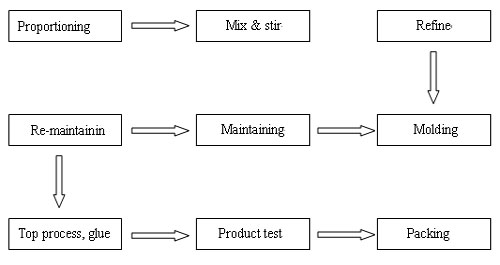
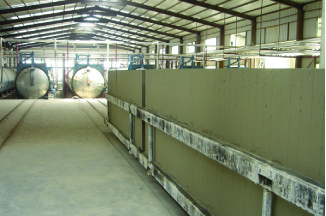
Most high-quality fiber cement boards are produced using the Hatschek process, followed by high-pressure autoclave curing. Factories looking to cut costs often rush the curing phase or lower the temperature in the autoclave to save on energy expenses. This results in brittle boards with poor dimensional stability and high moisture absorption rates.
When conducting Factory Audits, focus heavily on the curing infrastructure. A factory without adequate autoclave capacity will either bottleneck your production during peak seasons or ship under-cured boards.
Pre-Shipment Quality Control Checklist
- Verify dimensional tolerances (thickness variance must be under 0.5mm).
- Check edge integrity and squareness to prevent installation gaps.
- Review independent lab reports for 100 percent non-asbestos composition.
- Conduct flexural strength and moisture absorption tests on random batch samples.
Catching these issues requires rigorous Quality Control & Inspection before the boards are palletized. Once a defective board is shipped, the cost of replacement and disposal destroys project margins.
Compliance and Testing Requirements
Importing cement boards into North America, Europe, or Australia requires strict adherence to environmental and structural standards. The most critical regulatory hurdle is the absolute prohibition of asbestos. You must ensure your supplier uses safe reinforcement fibers, such as high-grade cellulose or PVA.
Relying solely on a factory's in-house test report is a massive liability. Buyers should mandate third-party Compliance & Testing to verify CE marking, ASTM compliance (such as ASTM C1186 or C1288), and fire-rating certifications (e.g., Class A1 non-combustible) before committing to a long-term supply agreement.
MOQs, Pricing Drivers, and Logistics
Cement boards are a low-margin, high-volume commodity. Pricing is heavily dependent on raw material costs (cement, silica, cellulose), board thickness, and surface finishing (sanded versus unsanded).
Because cement boards are exceptionally dense, logistics planning is critical. A standard 20-foot container will "weigh out" long before it "cubes out." Efficient palletization and secure lashing are mandatory to prevent transit damage. Coordinating these heavy shipments requires experienced Shipping & Freight management to optimize container loads, balance weight distribution, and avoid overweight penalties at the destination port.
Need help optimizing your container loads and securing the best freight rates for heavy building materials? Our logistics team can help.
Get a free consultationSuccessfully sourcing cement boards in bulk is an exercise in weight management and strict quality oversight. The difference between a profitable import program and a costly failure often comes down to verifying factory autoclave capabilities and ensuring flawless container loading. Focus on suppliers with transparent testing protocols and robust logistics experience to protect your margins.
Get Sourcing Help for Cement Boards
Tell us your requirements and our experts will connect you with verified manufacturers.