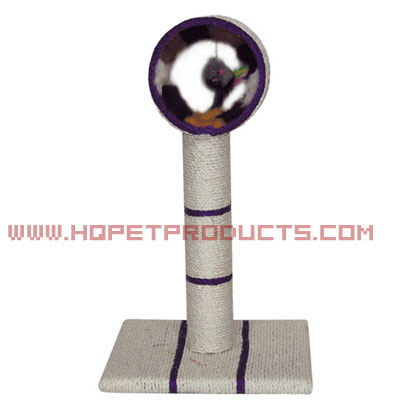
Cat Trees & Scratching Posts
Source premium Cat Trees & Scratching Posts from vetted manufacturers and wholesale suppliers. Built for importers, distributors, and pet brands seeking reliable OEM and private-label production, our network delivers durable, high-margin pet furniture designed for bulk procurement and retail success.
Sourcing cat trees and scratching posts at scale is a balancing act between structural integrity and shipping efficiency. Because these products are inherently bulky, the core procurement challenge lies in specifying materials that ensure stability for heavy feline use while optimizing flat-pack dimensions to keep container shipping costs viable.
Core Material Specifications
The durability and safety of a cat tree depend entirely on the raw materials specified in your Bill of Materials (BOM). Relying on a factory's "standard" spec often results in underweight bases, thin fabrics, and unraveling posts.
Structural Boards
The foundation of any cat tree dictates its stability. If the base board is too light or thin, the unit will tip.
| Board Material | Typical Thickness | Cost Impact | Best Application |
|---|---|---|---|
| Particle Board (Flakeboard) | 12mm - 15mm | Low | Entry-level to mid-tier retail |
| MDF (Medium Density Fiberboard) | 15mm - 20mm | Medium | Premium retail, heavy-duty models |
| Solid Wood / Plywood | 15mm - 18mm | High | High-end, eco-friendly, or aesthetic lines |
Note: Always specify CARB Phase 2 or EPA TSCA Title VI compliant boards to ensure formaldehyde emissions remain under legal limits for North American and European markets.
Coverings and Scratching Surfaces
- Plush Fabric: Measured in Grams per Square Meter (GSM). Standard factory plush is often around 300 GSM, which sheds easily. Premium OEM lines should specify 400 GSM or higher for density and tear resistance.
- Sisal Rope: The diameter of the sisal rope is critical. Budget models use 3mm to 4mm rope, which degrades quickly. Specify natural, untreated sisal at 5mm to 6mm for durability. Ensure the factory glues the rope entirely to the PVC or cardboard inner tube, rather than just stapling the ends.
Struggling to standardize material specs across different suppliers? We help brands lock in strict BOMs and identify factories capable of consistent execution.
Talk to our teamManufacturing Quality and Defect Control
Quality is won or lost during the cutting, gluing, and packaging phases. Because these items are assembled by the end consumer, hardware alignment and instruction clarity are just as important as the physical build. Implementing strict Quality Control & Inspection protocols before shipment is non-negotiable.
Critical Pre-Shipment Inspection Points
- Hardware Alignment: Pre-drilled holes must align perfectly with threaded inserts. A 2mm deviation will prevent consumer assembly.
- Wobble Test: Fully assembled units must not tip when subjected to a 5kg lateral pull at the highest resting platform.
- Staple Concealment: Industrial staples used to secure plush fabric must be fully driven and concealed to prevent pet injury.
- Moisture Content: Wood components must have a moisture content under 12% to prevent mold growth during transit.
- Drop Testing: Flat-pack cartons must pass ISTA 1A drop tests to ensure heavy components do not punch through the corrugated packaging.
Shipping Optimization and Flat-Pack Design
Cat trees are high-volume, low-density goods. Your landed cost is heavily dictated by how efficiently the product packs into a 40HQ container. Minor design adjustments—such as splitting a tall central pillar into two threaded halves or nesting curved platforms—can reduce carton volume by 15% to 30%. When engaging in OEM/ODM Services, work with factory engineers to optimize the breakdown of the unit specifically for freight density.
Typical MOQs, Pricing, and Lead Times
Don't let inefficient packaging destroy your margins. Let us help you engineer your products for optimal container loading and manage your end-to-end logistics.
Get a free consultationFrequently Asked Questions
Sourcing cat trees profitably requires strict oversight of material density, chemical compliance, and packaging geometry. By partnering with a sourcing team that understands the structural and logistical nuances of pet furniture, you can secure reliable production that protects both your margins and your brand reputation.
Get Sourcing Help for Cat Trees & Scratching Posts
Tell us your requirements and our experts will connect you with verified manufacturers.