Cargo Lifts
Source industrial cargo lifts directly from vetted Chinese manufacturers and suppliers. Designed for importers, wholesalers, and facility managers buying in bulk or seeking OEM production, our network delivers reliable vertical lifting solutions built to your exact capacity, dimension, and compliance requirements.
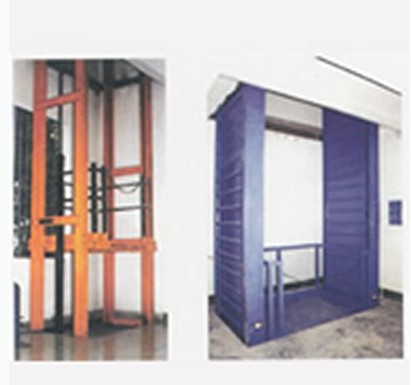
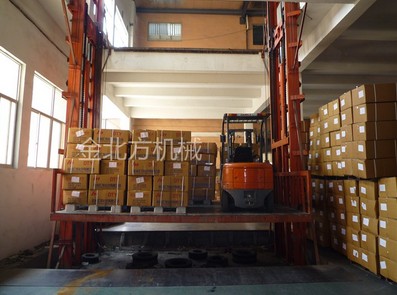
Cargo lifts—often referred to as vertical reciprocating conveyors (VRCs)—are critical infrastructure for multi-level warehouses, manufacturing facilities, and retail stockrooms. When sourcing these lifts directly from overseas manufacturers, the primary challenge is translating site-specific requirements into precise production specifications. A successful procurement strategy requires balancing structural integrity, drive-system reliability, and strict adherence to regional safety standards before the equipment ever leaves the factory floor.
Defining Your Core Specifications
Because cargo lifts are rarely off-the-shelf products, buyers must provide suppliers with exact parameters. Failing to specify the operational environment or duty cycle will result in an under-engineered lift that suffers from premature hydraulic wear or structural fatigue.
You must define:
- Load Capacity: Ranging from 500 kg to over 10,000 kg. Specify the maximum dynamic load, not just the static resting weight.
- Lifting Height & Stops: Total travel distance and the number of floor stops required.
- Platform Dimensions: Usable length and width. Ensure the supplier accounts for the structural footprint of the guide rails.
- Installation Environment: Indoor vs. outdoor (requires weatherproofing, galvanized finishes, and enclosed motors), and whether a foundation pit is available.
Drive System Comparison
The drive system dictates the lift's maintenance schedule, maximum height, and cost. Most manufacturers specialize in either hydraulic or mechanical systems.
| Specification | Hydraulic Guide Rail Lifts | Mechanical (Traction/Chain) Lifts |
|---|---|---|
| Primary Mechanism | Hydraulic cylinders and heavy-duty chains | Electric motor with wire rope or leaf chain |
| Optimal Travel Height | Up to 15 meters (best for 2-3 floors) | Over 15 meters (suitable for high-rises) |
| Maintenance Needs | Fluid changes, seal inspections | Motor maintenance, cable/chain lubrication |
| Cost Profile | Lower upfront cost, highly customizable | Higher upfront cost, highly efficient |
Need help matching your project specs to the right manufacturing facility? We can source and vet suppliers based on your technical requirements.
Talk to our teamWhere Quality is Won and Lost on the Factory Floor
Not all fabrication facilities have the engineering capability to produce safe, heavy-duty cargo lifts. Quality discrepancies often hide in the materials and components that are difficult to inspect once the unit is fully assembled.
Critical Manufacturing Quality Checkpoints
- Steel Grade: Ensure the primary structure uses high-strength structural steel (e.g., Q345) rather than standard mild steel (Q235) for high-capacity units.
- Hydraulic Seals: Leaks are the most common failure point. Specify imported seals (such as NOK from Japan) rather than generic domestic alternatives.
- Welding Standards: Structural welds must be continuous and slag-free. Ultrasonic testing on critical load-bearing joints is recommended.
- Safety Mechanisms: Mandatory inclusions are anti-fall locks, slack-chain sensors, and door interlocks that prevent operation if gates are open.
Verifying these elements remotely is risky. Executing thorough Factory Audits is essential to confirm the supplier has the necessary welding certifications, load-testing facilities, and engineering staff to safely execute your order.
Compliance and Safety Standards
Cargo lifts are heavily regulated. Even though they do not carry passengers, they must meet strict industrial machinery standards. In the European market, lifts must comply with the Machinery Directive 2006/42/EC and carry valid CE marking. In North America, ASME B20.1 (Safety Standard for Conveyors and Related Equipment) is the benchmark.
Do not rely on a supplier's self-issued certificates. Utilizing independent Compliance & Testing services ensures the specific unit design meets the regulatory requirements of your destination market before shipment.
Pricing, MOQs, and Logistics Reality
Because cargo lifts are capital equipment, purchasing dynamics differ significantly from standard consumer goods.
Managing International Freight
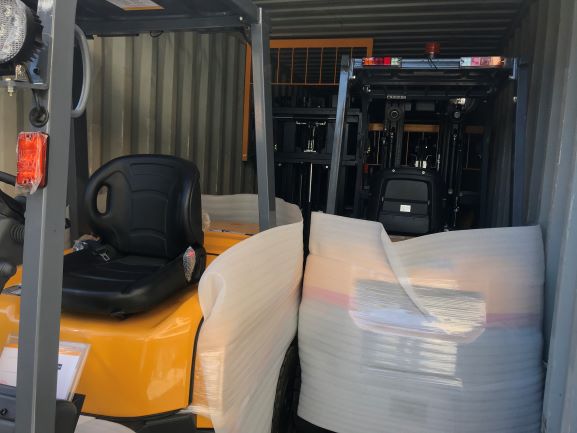
Shipping cargo lifts requires careful logistical planning. Guide rails can be exceptionally long, and platforms are bulky. Smart manufacturers will design the lift with modular, bolted connections rather than fully welded frames to allow the unit to be flat-packed into standard 20ft or 40ft shipping containers.
For exceptionally large units, open-top containers or break-bulk shipping may be required. Coordinating this effectively through professional Shipping & Freight services prevents unexpected port fees and ensures the equipment arrives without structural damage.
Optimize your capital equipment sourcing. Let us manage supplier negotiation, quality control, and heavy freight logistics for your cargo lift orders.
Get a free consultationFrequently Asked Questions
Sourcing cargo lifts successfully requires moving beyond basic price comparisons to rigorously evaluate a factory's engineering competence and quality control systems. By defining exact technical specifications and verifying compliance at the source, you can secure heavy-duty lifting equipment that delivers decades of reliable performance.
Get Sourcing Help for Cargo Lifts
Tell us your requirements and our experts will connect you with verified manufacturers.