Car Inspection Tools
Source professional-grade Car Inspection Tools directly from vetted manufacturers and wholesale suppliers. Built for automotive distributors, tool importers, and brands seeking reliable OEM/ODM production, our factory-direct network delivers high-performance diagnostic and inspection equipment at scale.
Sourcing automotive inspection tools in bulk requires navigating a complex supply chain of IC vendors, sensor manufacturers, and final assembly factories. Whether you are procuring diagnostic scanners, automotive borescopes, coating thickness gauges, or battery testers, the difference between a professional-grade unit and a consumer novelty lies entirely in the Bill of Materials (BOM) and firmware stability.
For professional buyers, success depends on specifying the right internal components and enforcing rigorous testing protocols on the factory floor.
Core Component Specifications & BOM Control
When negotiating with manufacturers, the external housing often masks the true quality of the tool. You must specify the exact grades of the internal components to ensure reliability in harsh automotive environments.
1. Microcontrollers and Processing ICs
Diagnostic tools rely heavily on processing speed to read live data streams without lag. Specify ARM Cortex-M series processors or equivalent for fast data rendering. Ensure the chipset supports all necessary automotive protocols (CAN, KWP2000, ISO9141, J1850) natively, rather than relying on software emulation which can cause connection drops.
2. Sensor Probes and Lenses
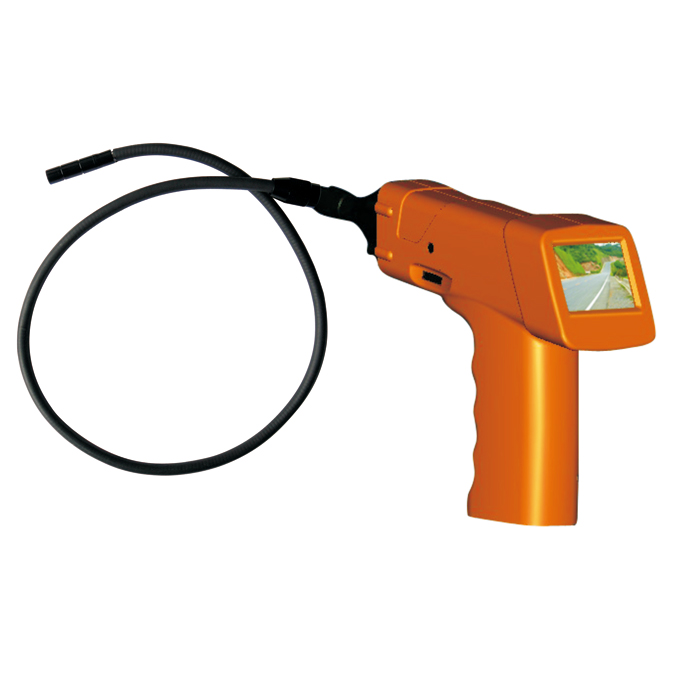
For visual inspection tools like borescopes, the CMOS sensor dictates image clarity. Specify a minimum of 1080p resolution with an articulating probe head. The camera module and cable must be rated IP67 or IP68, ensuring complete resistance to engine oil, coolant, and brake fluid. For thickness gauges, magnetic induction and eddy current sensors must be shielded against temperature fluctuations to maintain calibration.
3. Displays and Output
Garage environments are highly illuminated. Specify IPS LCD panels over standard TFT screens for wider viewing angles, and demand a minimum brightness of 400 nits to combat glare.
| Specification | Consumer/Entry-Level | Professional/Workshop Grade |
|---|---|---|
| Housing Material | Standard ABS plastic | Over-molded PC + TPU bumper |
| Drop Resistance | Not rated | 1.5 meters onto concrete |
| Cable Flexibility | Standard PVC | Memory-wire or Tungsten mesh |
| Operating Temp | 0°C to 40°C | -10°C to 60°C |
Struggling to verify supplier BOMs? We help you lock in component specifications and negotiate directly with capable factories.
Talk to our teamManufacturing & Quality Control
The primary failure points in car inspection tools occur during PCB assembly and firmware flashing. A supplier's ability to assemble a prototype is vastly different from their ability to yield 5,000 flawless units.
To prevent high defect rates, implement strict in-line Quality Control & Inspection focusing on the following areas:
Critical QC Checkpoints for Inspection Tools
- Connector Mating Cycles: Verify OBD or probe connectors withstand a minimum of 5,000 insertion cycles.
- Thermal Cycling: Test assembled units in environmental chambers to ensure solder joints hold under extreme temperature shifts.
- Calibration Verification: Ensure gauges and testers are calibrated against known masters before packaging.
- Firmware Stability: Perform simulated diagnostic runs to check for memory leaks or protocol handshake failures.
Thorough Factory Audits are essential before placing a deposit. You need to verify that the manufacturer has dedicated clean-room environments for lens assembly and automated optical inspection (AOI) machines for their PCB lines.
OEM/ODM Customization Capabilities
For brands looking to establish a proprietary line of inspection tools, utilizing a factory's OEM/ODM Services is the most efficient route.
- White-Labeling (OEM): Utilizing an existing factory mold but customizing the firmware UI (boot logos, color schemes), external branding, and silicone bumper colors. This requires lower MOQs and faster time-to-market.
- Custom Tooling (ODM): Designing a bespoke housing and proprietary PCB layout. This requires significant investment in plastic injection molds but offers complete market differentiation.
Typical MOQs, Pricing, and Lead Times
Wholesale pricing and minimum order quantities are heavily dependent on the level of customization and the complexity of the tool.
Ready to scale your product line? Let us handle factory negotiations, production oversight, and international logistics.
Get a free consultationBuyer FAQ
Securing reliable car inspection tools requires moving beyond superficial product catalogs and digging into the engineering capabilities of the manufacturer. By controlling the BOM, enforcing strict QC, and partnering with the right assembly facilities, you can build a highly profitable and dependable product line.
Get Sourcing Help for Car Inspection Tools
Tell us your requirements and our experts will connect you with verified manufacturers.