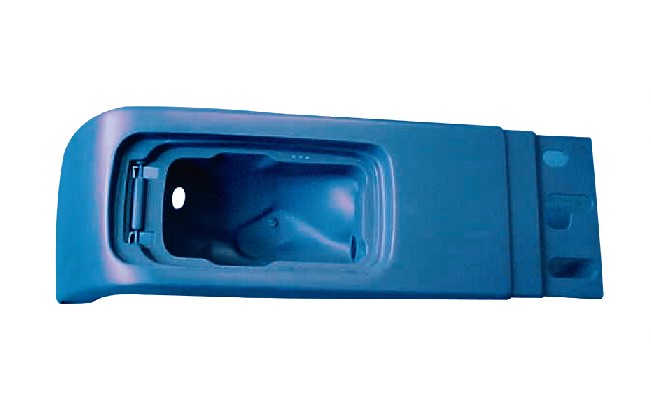
Automobile Body
Source high-quality Automobile Body parts from vetted manufacturers and suppliers in China and Asia. Designed for importers, wholesale distributors, and aftermarket brands seeking reliable OEM and replacement panel production in bulk with strict dimensional accuracy and competitive pricing.
Sourcing automobile body parts at scale requires balancing rigid dimensional tolerances with aggressive cost targets. Whether you are procuring aftermarket replacement panels, structural reinforcements, or developing custom body kits, the core challenge lies in tooling precision, material integrity, and surface treatment. A millimeter of deviation in a stamped fender or hood translates to massive fitment issues on the assembly line or in the body shop.
To secure reliable production, buyers must look beyond unit price and evaluate a factory's die-making capabilities, heavy stamping tonnage, and electrophoretic coating (e-coating) infrastructure.
Material Specifications and Stamping Capabilities
The foundation of any automotive body component is the raw material. Suppliers typically source steel coils from major domestic mills (like Baosteel or Ansteel in China). Specifying the exact material grade is critical, as substituting a lower-grade steel can lead to tearing during deep drawing or poor structural integrity in a crash.
| Material Type | Common Grades | Primary Applications | Formability |
|---|---|---|---|
| Cold Rolled Carbon Steel | DC01, DC03, SPCC | Fenders, door skins, roof panels | Excellent deep drawing |
| High-Strength Steel (HSS) | DP600, DP800, TRIP | A-pillars, B-pillars, structural rails | Lower formability, high yield strength |
| Aluminum Alloy | 5000 & 6000 Series | Lightweight hoods, luxury vehicle panels | Requires specialized tooling to prevent springback |
When evaluating a manufacturer, their press line tonnage dictates what they can produce. Small brackets might only require 200-ton presses, while large side panels or complete floor pans require tandem press lines or transfer presses exceeding 1,500 to 2,000 tons. Verifying these heavy-machinery capabilities in person or through rigorous on-site factory audits is essential before committing to a tooling investment.
Surface Treatment and Corrosion Resistance
Automobile body parts are highly susceptible to corrosion. Bare steel panels must undergo proper surface treatment at the factory before export. The industry standard is cathodic electrodeposition (commonly known as e-coating or EDP).
A proper e-coating process involves degreasing, phosphating, and electrocoating, followed by high-temperature baking. If the factory cuts corners during the phosphating stage, the e-coat will easily flake off during transit or subsequent painting.
Ensure your suppliers meet strict automotive manufacturing standards with our comprehensive factory vetting.
Talk to our teamQuality Control Checkpoints
Catching defects in body parts before they are packed into a shipping container is vital. Warped panels or surface imperfections are incredibly costly to rectify once they reach your domestic warehouse.
Implementing strict pre-shipment quality control should focus on these critical areas:
Critical Inspection Points for Body Panels
- Dimensional Accuracy: Verification against CAD data using Coordinate Measuring Machines (CMM) or custom checking fixtures.
- Surface Defect Inspection: Checking for stamping ripples, draw marks, necking, or micro-tears under specialized lighting.
- E-Coat Thickness: Measuring coating thickness (typically 15 to 25 microns) using a digital gauge.
- Salt Spray Testing: Reviewing factory batch test reports to ensure a minimum of 500 to 1,000 hours of corrosion resistance.
- Weld Integrity: For sub-assemblies, checking spot weld tear strength and penetration.
Pricing, MOQs, and Tooling Realities
The economics of sourcing auto body parts are heavily skewed by tooling costs. Because the dies used for automotive stamping are large, complex, and made from hardened tool steel, the initial capital expenditure is significant.
If you are sourcing standard aftermarket replacement parts (where the factory already owns the tooling), MOQs can be reasonably low. However, if you are utilizing OEM/ODM services to develop custom panels or exclusive aftermarket designs, you will bear the cost of die development.
Tooling amortization is a common negotiation point. Many tier-1 and tier-2 suppliers will agree to refund the tooling cost after a specific cumulative production volume is reached, but this must be explicitly detailed in your manufacturing agreement.
Navigating complex tooling agreements and production minimums? Let us help you structure a favorable manufacturing contract.
Get a free consultationFrequently Asked Questions
Success in sourcing automobile body components comes down to controlling the tooling phase, enforcing rigid dimensional tolerances, and maintaining strict oversight on surface treatments. When you are ready to scale your automotive parts supply chain, having experienced partners on the ground ensures your components arrive in spec and ready for the assembly line.
Get Sourcing Help for Automobile Body
Tell us your requirements and our experts will connect you with verified manufacturers.