ATMs
Source commercial-grade ATMs directly from vetted manufacturers and wholesale suppliers across Asia. Designed for independent deployers, distributors, and brands, our network supports bulk purchasing and OEM/ODM private-label production. Secure reliable hardware built to strict security and compliance standards.
Sourcing ATMs in bulk requires balancing mechanical durability with rigorous security standards and seamless software compatibility. The primary procurement challenge lies in ensuring that the internal hardware—specifically cash dispensers and note validators—can handle high-volume transactions without jamming, while the overarching system meets international payment compliance mandates. Buying at scale demands a deep understanding of component origins, safe ratings, and factory-level integration.
Core Specifications and Component Sourcing
An ATM is essentially an industrial PC integrated with highly specialized mechanical and security modules. When negotiating with manufacturers, professional buyers must specify the exact grade and origin of these internal components, as they dictate both the machine's lifespan and its unit cost.
- Cash Dispenser Unit (CDU): The most critical mechanical component. Specify the feeding mechanism (friction vs. vacuum pick) and the maximum note capacity per cassette (typically 2,000 to 3,000 notes). High-end manufacturers often integrate imported dispenser modules (e.g., Fujitsu, GRG) into their chassis, while budget options use domestic mechanisms.
- Encrypting PIN Pad (EPP): Must be hardware-encrypted and tamper-responsive. The EPP immediately erases its encryption keys if physical tampering is detected.
- Card Reader: Motorized or dip-style. Must include anti-skimming features such as jitter mechanisms (which alter the speed of the card as it enters) or active electromagnetic interference.
- Industrial PC (IPC): Specify wide-temperature tolerance, solid-state drives (SSDs) for reliability, and Trusted Platform Modules (TPM) for secure boot processes.
Safe Ratings and Physical Security
The enclosure housing the cash cassettes must meet specific regional and international standards for attack resistance.
| Rating Standard | Typical Application | Attack Resistance |
|---|---|---|
| UL 291 Business Hours | Retail, Convenience Stores | Basic physical attacks; requires surrounding security |
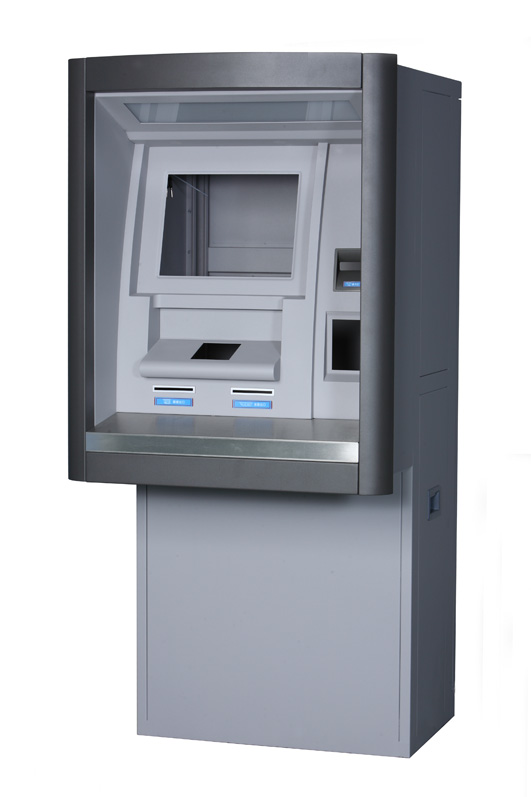
| UL 291 Level 1 | Through-the-wall, High-risk areas | Extended resistance to tools and physical breaches |
| CEN L / CEN 1 | European banking deployments | Standardized resistance against mechanical and thermal tools |
Compliance and Software Integration
Hardware is only half the equation; an ATM must securely communicate with payment networks. Ensure the factory can provide hardware that supports CEN/XFS (eXtensions for Financial Services) or J/XFS middleware, allowing your proprietary or third-party ATM application software to communicate with the mechanical modules regardless of the manufacturer.
Furthermore, payment hardware must pass rigorous certification. Navigating Compliance & Testing is non-negotiable. The EPP must carry valid PCI PTS (PIN Transaction Security) certification, and the card reader must be EMV Level 1 (hardware) and Level 2 (kernel) certified.
Need help verifying factory certifications and navigating PCI compliance for your hardware rollout?
Talk to our teamManufacturing Quality and Factory Audits
The assembly of an ATM involves precise calibration. Poor manufacturing oversight leads to misaligned cash transports (causing frequent jams), weak welds in the safe body, or improperly sealed enclosures that allow moisture to damage the IPC.
Conducting comprehensive Factory Audits before production is vital to verify the supplier's testing capabilities. A qualified factory should have a dedicated aging room where units are run continuously under thermal stress, and automated testing rigs for the CDU.
Critical Factory Acceptance Testing (FAT) Checks
- Continuous dispense test (minimum 10,000 notes without a jam)
- Tamper-response verification on the EPP and safe doors
- Thermal chamber aging test for the internal IPC and power supply
- Anti-skimming sensor calibration and interference testing
- Middleware (XFS) API response verification for all modules
Executing strict Quality Control & Inspection prior to shipment ensures that the modules specified in your contract are the exact ones installed in the final units.
Typical MOQs, Lead Times, and Pricing Drivers
Purchasing ATMs directly from manufacturers offers significant margin improvements, but requires realistic planning for production cycles and minimum order quantities.
Pricing is heavily influenced by the safe thickness (UL 291 Level 1 safes require significantly more steel and welding time than Business Hours safes) and the origin of the core modules. Brands looking to develop proprietary hardware enclosures can leverage OEM/ODM Services to design custom bezels, screen layouts, and branding while utilizing standardized, certified internal components.
Discuss your procurement schedule, module specifications, and target pricing with our sourcing experts.
Get a free consultationBuyer FAQ
Sourcing ATMs is fundamentally an exercise in risk management and technical precision. Success depends on the rigorous specification of internal modules, verifying compliance certificates directly with issuing bodies, and unyielding quality control during final assembly to ensure field reliability.
Get Sourcing Help for ATMs
Tell us your requirements and our experts will connect you with verified manufacturers.