Art Sets
Source premium and budget-friendly Art Sets from vetted suppliers and manufacturers across Asia. Designed for importers, wholesalers, educational distributors, and brands seeking reliable OEM and private-label production, our network delivers compliant, high-volume art kits tailored to your specific market requirements.
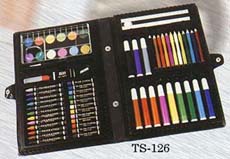
Sourcing mixed-media art sets at scale requires managing multiple distinct supply chains simultaneously. Because a single comprehensive set combines wood-cased pencils, liquid paints, alcohol- or water-based markers, pastels, and hardware-hinged cases, quality control must cover diverse manufacturing processes. A factory assembling the final kit rarely manufactures every component in-house; they act as integrators. Your sourcing strategy must account for the quality of the individual sub-suppliers as much as the final assembly.
Component Specifications and Tiering
The perceived value of an art set is driven by the quality of its media and the construction of its housing. When specifying a bill of materials (BOM) for your manufacturer, you must define the exact grade of each component. Relying on a factory's "standard" offering often results in a mix of acceptable pencils but dried-out markers or brittle pastels.
| Component | Student/Standard Grade | Premium/Professional Grade |
|---|---|---|
| Colored Pencils | Poplar wood, standard wax-based core (2.8mm) | Basswood or Cedar, high-pigment oil or wax core (3.3mm+) |
| Markers | Water-based ink, standard felt nibs, lower ink volume | Alcohol-based ink, Japanese brush nibs, high-capacity barrels |
| Paints (Acrylic/Watercolor) | High filler ratio, synthetic binders, lower lightfastness | High pigment load, natural binders (gum arabic), high lightfastness |
| Outer Case | Vacuum-formed plastic or basic MDF with paper veneer | Solid wood with dovetail joints, or reinforced aluminum with heavy-duty latches |
When developing custom kits, utilizing OEM/ODM Services allows you to specify exact component formulations and case dimensions rather than accepting off-the-shelf configurations.
Managing multi-component BOMs and ensuring every piece meets your standard is complex. Let our sourcing experts handle the supplier vetting and assembly coordination.
Talk to our teamChemical Compliance and Toxicity Standards
Art materials face strict regulatory scrutiny globally, particularly when marketed toward children or students. Because sets contain liquids, waxes, and pigments, chemical compliance is non-negotiable.
Ensure your factory can provide valid, recent test reports for the exact formulations being used. If they change their ink sub-supplier, previous test reports become invalid. Partnering with a firm that manages Compliance & Testing ensures your products meet destination-market regulations before they leave the factory.
Critical Regulatory Frameworks for Art Sets
- ASTM D-4236 / LHAMA (US): Mandatory labeling of hazardous art materials.
- EN71-3 (EU): Migration of certain elements (heavy metals in paints and coatings).
- REACH (EU): Restrictions on SVHCs (Substances of Very High Concern) in plastics and inks.
- CPSIA (US): Lead and phthalate limits for any set marketed to children 12 and under.
Quality Control in Final Assembly
The most common defects in multi-media art sets occur during the final packing phase. Because components have different shelf lives and environmental sensitivities, poor assembly line management leads to high defect rates. Rigorous Quality Control & Inspection must be implemented during both the component-gathering phase and post-assembly.
Watch for Component Dry-Out
Markers and liquid paints have a limited shelf life if not sealed properly. If an assembly factory holds these components in an uncontrolled warehouse for weeks waiting for custom wooden cases to arrive, the media may be compromised before the set is even packed.
During pre-shipment inspections, inspectors should check for:
- Cap fit and ink flow: Randomly testing markers for dry nibs or loose caps.
- Lead breakage: Inspecting colored pencils for off-center cores or internal breakage (often caused by rough handling during packing).
- Case integrity: Checking wooden cases for warped panels, misaligned hinges, or loose internal plastic blister trays.
- Pastel/Crayon cracking: Ensuring brittle media are properly seated in shock-absorbing EVA foam or blister cavities.
Packaging and Presentation
The outer case is often the primary selling point for consumer-facing art sets. A premium aluminum flight case or a polished wooden box elevates the perceived value of standard-grade components. If you are building a brand, custom packaging is where you differentiate. Engaging with Branding & Design services early ensures your internal trays (EVA foam, flocked plastic) perfectly secure the components while maximizing unboxing appeal.
MOQs, Pricing, and Lead Times
Because art sets require coordinating multiple component factories, minimum order quantities (MOQs) are generally dictated by the most restrictive component—often the custom outer case or specialized printed packaging.
Pricing is driven primarily by component count (e.g., a 150-piece set vs. a 64-piece set), the quality of the carrying case, and the grade of the pigments used.
Need accurate pricing for a custom art set configuration? We can break down component costs and negotiate minimums with top-tier assembly factories.
Get a free consultationFrequently Asked Questions
Successfully sourcing art sets requires looking past the final product to evaluate the factory's supply chain management capabilities. By defining strict component specifications and enforcing rigorous pre-shipment inspections, you can ensure consistent quality across every medium in the box.
Get Sourcing Help for Art Sets
Tell us your requirements and our experts will connect you with verified manufacturers.