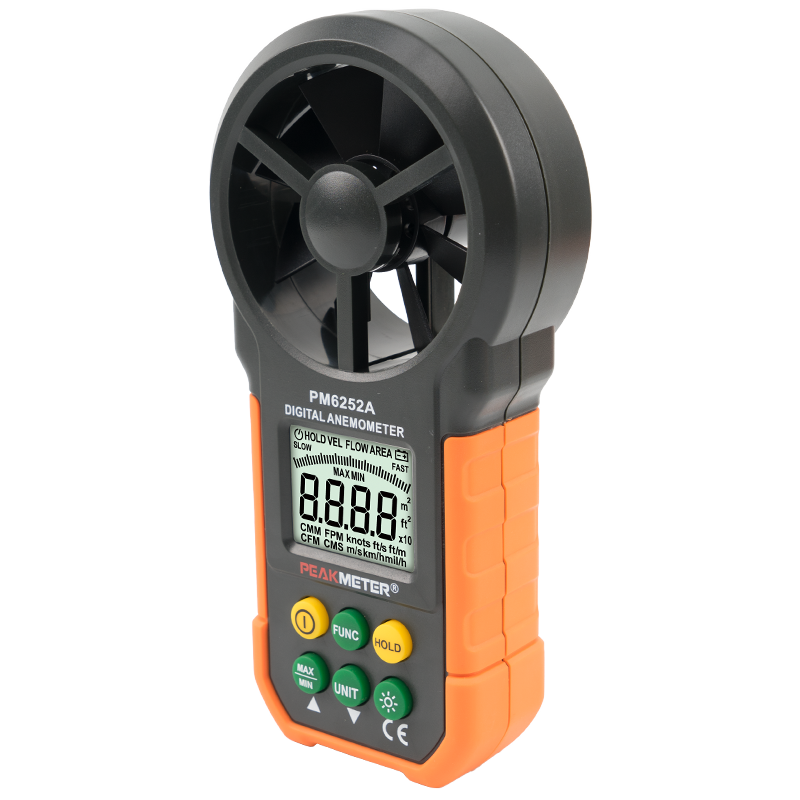
Anemometers
Source high-precision anemometers from vetted manufacturers and suppliers in China and across Asia. Designed for importers, distributors, and brands seeking reliable OEM or private-label production, our network delivers bulk environmental testing instruments built to exact specifications and international compliance standards.
Sourcing industrial and commercial anemometers requires a strict balance between sensor sensitivity and environmental durability. Whether you are procuring handheld diagnostic tools for HVAC technicians or fixed-mount meteorological sensors, the core procurement challenge remains the same: ensuring consistent calibration accuracy across high-volume production runs.
Defining Core Specifications by Sensor Type
The fundamental architecture of the anemometer dictates both its manufacturing cost and its vulnerability to quality fade. When evaluating suppliers, you must align the sensor technology with your target market's application while scrutinizing the specific components that drive accuracy.
| Sensor Technology | Primary Application | Critical Production Variable |
|---|---|---|
| Vane / Impeller | HVAC, general airflow diagnostics | Bearing friction causing low-speed inaccuracy |
| Hot Wire (Thermal) | Low-velocity airflow, duct inspection | Thermistor fragility and calibration drift |
| Cup (Meteorological) | Outdoor wind speed monitoring | Environmental sealing (IP rating) and UV resistance |
| Ultrasonic | High-end meteorological, marine | Transducer alignment and signal processing algorithms |
For any of these technologies, your specification sheet must clearly define the required measurement range (e.g., 0.3 to 30.0 m/s), resolution (e.g., 0.1 m/s), and acceptable error margins (typically ±5% for standard units, ±2% for professional grade).
Manufacturing Quality and Calibration Infrastructure
The most critical phase in anemometer manufacturing is not assembly, but calibration. A factory can source high-quality microcontrollers and displays, but if they lack proper wind tunnel infrastructure, the final product will fail in the field.
Look for manufacturers who maintain environmentally controlled, closed-loop wind tunnels. Each unit should be tested at multiple reference points (e.g., low, medium, and high velocity) to map the sensor's response curve accurately into the firmware.
Critical Factory Evaluation Points for Anemometers
- Verify the presence and maintenance logs of on-site calibration wind tunnels.
- Check sourcing records for critical components (e.g., Japanese or Swiss bearings for vane models).
- Review PCB assembly processes, specifically conformal coating for units exposed to high humidity.
- Assess aging tests for hot wire thermistors to ensure stability before final calibration.
Ensure your anemometer supplier has the required calibration infrastructure and quality management systems in place.
Talk to our teamImplementing robust Quality Control & Inspection protocols is essential. Pre-shipment inspections must include functional testing against a calibrated reference standard, not just visual checks for cosmetic defects.
OEM/ODM Customization and Smart Features
The market is rapidly shifting toward connected devices. If you are leveraging OEM/ODM Services to develop a private-label line, adding data-logging capabilities, Bluetooth connectivity, and companion mobile apps can significantly increase your product's margin.
When customizing smart anemometers, specify the required data export formats (CSV, PDF) and ensure the Bluetooth module complies with regional RF regulations (such as FCC for the US or CE-RED for Europe). Firmware stability is just as important as hardware reliability; ensure your supplier has the engineering capability to support OTA (Over-The-Air) updates if necessary.
Typical MOQs, Pricing, and Lead Times
Volume requirements and lead times depend heavily on the level of customization. Off-the-shelf white-label products offer lower barriers to entry, while custom-tooled housings require larger commitments.
Pricing is driven primarily by the sensor quality, the presence of multi-function capabilities (such as integrated hygrometers, thermometers, or barometers), and the display type (standard LCD vs. color TFT).
Need help negotiating MOQs or managing complex production schedules with Asian manufacturers?
Get a free consultationFrequently Asked Questions
Successfully sourcing bulk anemometers comes down to validating the manufacturer's testing environment. A supplier's ability to assemble a plastic housing is irrelevant if their wind tunnel calibration is flawed. Focusing your procurement efforts on factories with verifiable metrology standards ensures your instruments perform reliably in the field. If you need assistance identifying capable suppliers or managing the technical validation process, our sourcing specialists are available to help.
Get Sourcing Help for Anemometers
Tell us your requirements and our experts will connect you with verified manufacturers.